
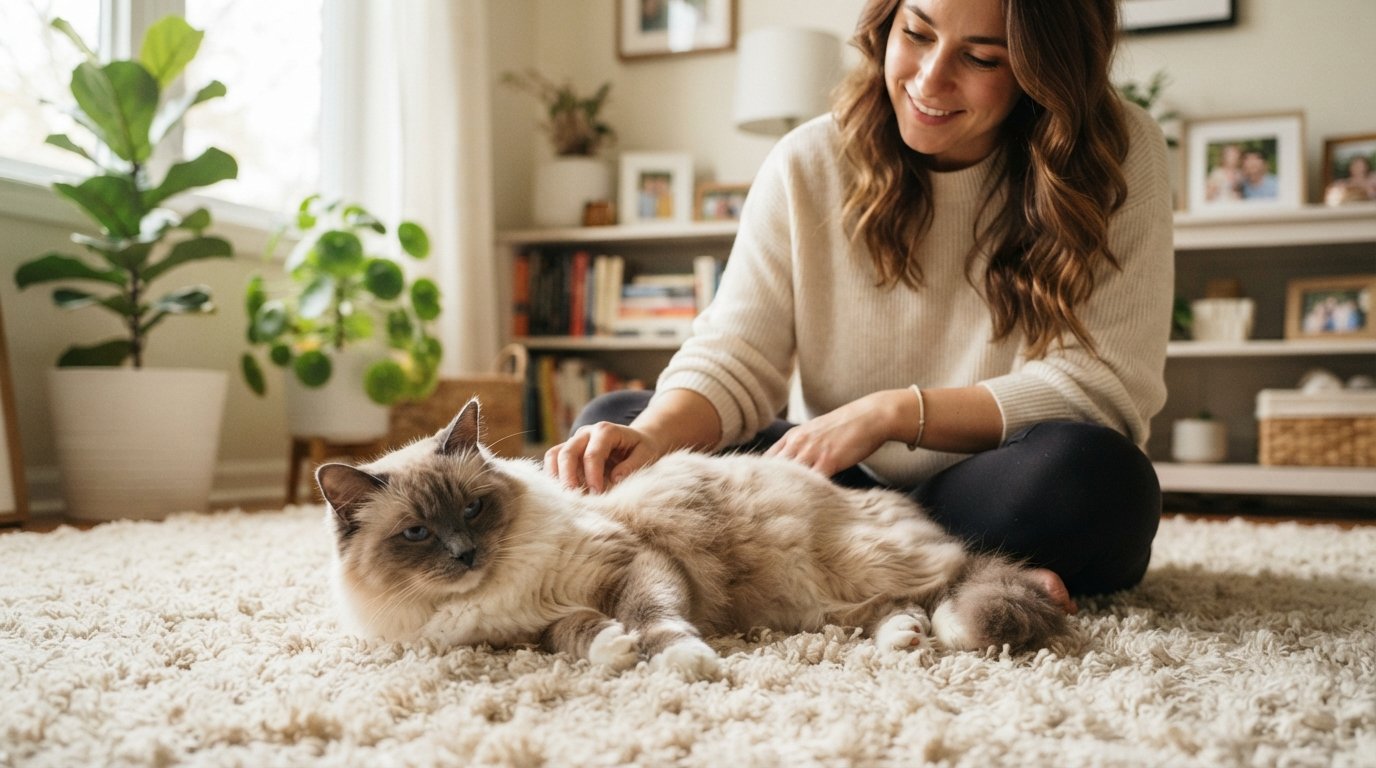
A rare coat can catch your eye, but your day-to-day fit with the cat matters just as much. Cinnamon is an unusual color, and a cinnamon Ragdoll cat may suit your home if its needs fit your routine. Still, coat color alone cannot tell you how a cat will act or whether one will be available.
Choosing a pet means weighing more than appearance. You may be planning for your first cat, adding to a busy home, or comparing breeds before you contact a breeder. The right choice depends on your time, household, and care plans.
This guide helps you understand the coat, its inheritance, and the care and health questions to consider. You can use those facts to plan adoption conversations and judge whether a particular cat fits your home. Keep health, temperament, and a good home match ahead of color alone.
Key Takeaways
- Cinnamon describes coat color, while a pattern describes how color and white markings appear.
- Both parents must pass a cinnamon allele for a kitten to show cinnamon.
- Color does not guarantee a certain temperament or show status.
- Review health records, registration papers, and written adoption terms.
- Plan for grooming, indoor enrichment, and care across many years.
What Is a Cinnamon Ragdoll Cat?
A cinnamon Ragdoll has a warm reddish-brown coat color, while the pattern describes where that color appears. Cinnamon names a coat color, not a separate breed or temperament. A cat’s color and pattern are separate traits, so one label cannot describe the whole coat.
In the Ragdoll breed, a cinnamon coat may appear with colorpoint, mitted, van, or bicolor patterns. Colorpoint cats have darker color on the face, ears, feet, and tail. Mitted cats have white paws and other white markings, while bicolor and van patterns show different amounts of white.
Fawn is the dilute form of cinnamon. The coat can look lighter or less intense, but the underlying color name remains distinct. White coverage depends on pattern, not on whether the base color is cinnamon or fawn.
The Cat Fanciers’ Association explains how coat color and pattern terms describe different features. When you compare photos, check the lighting as well as the markings. Indoor bulbs can shift reddish-brown fur toward orange or gray.
Look at the body and the points in natural light, then note where white appears. Judge the coat in natural light and identify color and pattern as two separate features.
How Is Cinnamon Inherited?
A kitten shows cinnamon only when it inherits a cinnamon allele from each parent. Each parent contributes one allele, so both must pass cinnamon for the kitten to show that color. An allele is one of the alternative forms of a gene inherited from a parent.
A cat can carry a cinnamon allele and show another color instead. Cinnamon is recessive, which means the kitten needs two copies to display it. The cinnamon gene entered one Ragdoll breeding program through an Abyssinian outcross.
Fawn requires cinnamon inheritance plus the dilute combination dd. That extra combination changes the coat to the dilute cinnamon color. Genetic testing can help identify inherited color traits, but the result should match the cat being discussed.
| Genotype | Visible color | Inheritance note |
|---|---|---|
| B present | black | dominant over chocolate and cinnamon |
| bb or bb’ | chocolate | no black allele |
| b’b’ | cinnamon | two cinnamon alleles |
| b’b’ plus dd | fawn | dilute cinnamon |
Recessive Alleles and Cinnamon Coat Color
The same gene group can produce black, chocolate, or cinnamon outcomes. A cat with one cinnamon allele may pass it to kittens without looking cinnamon itself. Ask breeders to explain the tested result in plain terms.
Are Chocolate Ragdoll Cats Rare?
Chocolate Ragdoll cats are uncommon, but chocolate and cinnamon are distinct outcomes in the same gene group. A chocolate-colored cat is not automatically a visible cinnamon cat. Chocolate can result from bb or bb’, while cinnamon requires b’b’.
Ask for documented genetic results if a particular coat color is essential to your choice.
How Do Patterns Change the Cinnamon Coat?
The pattern determines whether cinnamon is concentrated on the points, paired with white markings, or spread across more of the coat. Pattern names describe color placement, while cinnamon describes the color itself. This distinction helps you compare cats with similar color names but different appearances.
Colorpoint cats have darker points against a lighter body. Mitted cats add white paws and other white markings. Bicolor cats have broader white areas, while van cats show even more white coverage.
Pointed and Mitted Markings
With colorpoint markings, the face, ears, feet, and tail carry the strongest color. A mitted coat adds white paws, often with more white markings elsewhere. A cinnamon mitted cat can therefore look quite different from a cinnamon colorpoint cat.
Bicolor and van patterns change the amount and placement of white. The color name does not tell you how much white the cat has. Check photographs of the whole cat, not just a close-up of its face.
Mink, Sepia, and Solid Coats
Mink expression falls between colorpoint and sepia. Sepia coats are darker across the body than colorpoint coats, so the difference between points and body is less clear. Solid cats have pigment across the body rather than only at the points.
| Coat type | Where the color appears | Relative body-point contrast |
|---|---|---|
| colorpoint | points | strongest contrast |
| mink | points and a darker body | intermediate |
| sepia | points and a still darker body | less contrast |
| solid | across the body | no point-to-body contrast |
Registry rules for these coat types can differ, so do not assume every group treats them alike. Use pattern names alongside color names when describing the look you want.
How Does Cinnamon Color Develop as Kittens Grow?
A young cinnamon kitten may not show the full richness of its adult coat yet. Early coat color can look subtle and become richer and more defined as the kitten matures. Photos taken at different ages may not give a fair side-by-side comparison.
Pointed cats produce pigment in a temperature-sensitive way. Cooler body areas, such as the ears, feet, and tail, can show more pigment. This process affects coat appearance, not the kitten’s temperament or health.
Look for dated photos taken in similar light and compare the coat over time. Ask to see the parents’ colors and patterns, since they can help you understand the possible look. The parents’ coats do not guarantee an exact match.
Ask how the breeder distinguishes cinnamon from chocolate or fawn. A clear answer should refer to the cat’s records and coat, not just a sales description. Check that the kitten’s color label matches the terms used in its paperwork.
Use natural light for your own photos and keep the dates with them. Treat a breeder’s estimate of adult color as an informed prediction, not a guarantee.
Why Are Cinnamon Ragdolls Hard to Find?
Cinnamon is uncommon in part because two parents must pass on the recessive color allele. That requirement narrows the possible pairings and can limit the number of cinnamon kittens born. The coat may also appear with different patterns, so a breeder’s goal can narrow the options further.
Why the Color Is Uncommon
One breeder who called cinnamon and fawn ultra-rare bought a foundation pair in 2016. Their first litter had four kittens: two cinnamon mink bicolors, one cinnamon mink classic tabby, and one cinnamon classic tabby mitted.
That litter is a concrete example, not a promise of litter size or coat outcomes. A different pairing may produce different colors and patterns. A planned litter also cannot guarantee a specific kitten.
What a Waitlist Can and Cannot Promise
One solid cinnamon and chocolate waitlist gave a 1-2 year estimate. Its page carried a July 10, 2026 update date. That dated estimate describes one program, not a general timeline for cinnamon Ragdolls.
A waitlist may help a breeder track interest, but it cannot promise a birth date or exact coat. Before joining, get clear answers to these points:
- How often will you receive updates?
- What happens if your preferred color is not born?
- Can your deposit transfer to another litter or kitten?
Ask whether the estimate starts when you join or when a litter is planned. Confirm the current wait estimate directly before making plans around a specific litter.
What Do Ragdoll Registry and Show Rules Mean for These Colors?
A cat can be registered in a registry without being eligible for championship competition there. Registration, listed colors, and show status are separate questions. The answer depends on the rules of the cat registry named on the kitten’s papers.
PetMD lists seal, blue, chocolate, lilac, red, and cream as Ragdoll colors, with mitted, van, bicolor, and colorpoint patterns. A listed color or pattern does not prove every registry accepts it in the same way.
| Category | Examples | What to verify |
|---|---|---|
| listed Ragdoll colors | seal, blue, chocolate, lilac, red, cream | whether the chosen registry lists the color |
| listed patterns | mitted, van, bicolor, colorpoint | whether the pattern is eligible in the registry |
| mink, sepia, and solid | nontraditional categories | registration and championship rules |
Traditional Colors and Patterns
Some registries recognize a set of traditional colors and patterns for Ragdolls. Rules can change by registry, so the same cat may have different show options across groups. Check the rules for the group that issues the papers.
What Cherubim Kittens for Sale Means
Some breeders use Cherubim for solid, mink, or sepia cats. The name does not establish a universal official reclassification or prove show eligibility. Review the actual registration papers and the cat’s listed category.
One TICA breeding program described four generations of backcrosses to traditional Ragdolls for SBT papers. The program received its first SBT papers in 2007. That example does not establish rules for every breeder or registry.
Ask which registry governs the kitten’s papers and what class the cat can enter.
What Temperament Can You Expect?
Most Ragdolls are described as affectionate companions, but you should evaluate the individual cat rather than rely on a color or sex label. Ragdolls are generally calm, social, and people-oriented, but no breed trait guarantees one cat’s behavior. Early experience and inherited traits both shape temperament.
Many Ragdolls enjoy being near people and taking part in household routines. Some seek frequent contact, while others prefer more space. Ask to meet the cat and observe how it acts when people enter the room.
Ragdoll cats can learn routines and interactive games, though motivation varies by cat. Try a simple toy or a short play session if the breeder allows it. The cat’s response gives you more useful detail than a broad breed label.
Male or female cats are not automatically better companions. Sex alone does not reliably predict affection or household fit. Discuss the kitten’s observed behavior and your home’s needs with the breeder.
Ragdoll cats do not inherently smell. Odor often comes from litter, dental, skin, or health issues that need attention. A persistent smell deserves a closer look, not a breed-based explanation.
Ask the breeder how the kitten responds to ordinary handling, play, and household sounds. A cat’s comfort with these everyday events can help you judge the match.
How Much Grooming Does a Ragdoll Coat Need?
Start with a calm comb-through once or twice a week, then adjust to your cat’s undercoat. Some Ragdolls need combing once or twice weekly, while heavier undercoats need more attention. The coat in front of you matters more than a general “low-maintenance” label.
Use a comb gently and work in small areas. Check behind the ears and under the legs, where fur can tangle. If you find a knot, ease it apart without pulling the skin.
Keep early grooming sessions brief and calm. Let your cat sniff the comb, then pause if it becomes tense. A pleasant routine helps your cat accept regular coat checks.
Shedding and coat condition vary among cats and over time. Look for loose fur, knots, or changes in the skin instead of assuming every Ragdoll needs the same routine. Increase combing when the coat starts to tangle.
Stop if grooming causes pain or persistent distress and ask a veterinarian to check for skin or coat problems.
Which Health Tests and Records Should You Review?
A negative HCM result is useful evidence, but it does not guarantee that a Ragdoll will never develop heart disease. HCM is hereditary in Ragdolls, and DNA testing cannot rule out every case. The test can address the most common known cause, but it does not replace ongoing veterinary care.
HCM Testing and Its Limits
Max, a cinnamon bicolor Ragdoll, tested cinnamon and HCM N/N. Minnie, a cinnamon mink lynx Ragdoll, tested cinnamon mink and HCM N/N. These are examples of documented results, not proof that every related cat is disease-free.
A test result applies to the cat named on the report and to the condition tested. Check that the record is legible and matches the parent’s identity. Ask what the result means for that cat’s future care.
Records to Request for Both Parents
Review records for both parents, not only the kitten’s paperwork. Use this checklist when you talk with a breeder:
- Ask for the actual HCM result.
- Confirm the identity of each tested cat.
- Ask about veterinary follow-up.
- Review both parents’ records.
- Ask what conditions the program screens for.
For general pet-health guidance, read the site’s veterinary care disclaimer. A veterinarian can explain the limits of each result and advise you about follow-up.

Have your veterinarian review the records and explain what each test does and does not cover.
Should You Keep a Ragdoll Indoors?
Indoor living is the safer default for a companion cat, while a secure catio can offer controlled outdoor enrichment. Staying indoors avoids unsupervised exposure to traffic, predators, and infectious risks. This is a safety choice, not a claim that Ragdolls cannot go outdoors.
Give your cat secure windows, climbing spaces, and toys to explore. Rotate toys so familiar items stay interesting. A fully enclosed catio can add outdoor sights and smells without free roaming.
A harness outing takes gradual training and close supervision. Do not assume an unsecured yard is as safe as a catio. A startled cat can slip away quickly, even from a familiar space.
Check every opening that your cat could reach. A loose window screen or an open balcony gap can create an escape route. Make sure doors and access points close fully.
Check screens, balcony barriers, and catio latches before giving your cat access.
How Can You Manage Weight and Keep Your Cat Active?
For a Ragdoll, keeping a steady body condition can help limit avoidable strain on the joints. Weight gain can add to joint and mobility problems, including arthritis, as a cat ages. A healthy plan combines measured meals, movement, and regular checks.
Use the food label and your veterinarian’s guidance to set portions. A cat’s needs change with age, activity, and body condition. Measured meals make it easier to notice how much your cat eats.
Leaving unlimited food out can make portions hard to track. Feed measured amounts instead, then adjust with your veterinarian if your cat gains or loses weight. Avoid changing portions based on appearance alone.
Daily play gives your cat movement and mental stimulation. Use interactive toys that invite chasing or pouncing, and vary the game to keep your cat interested. Short play sessions can fit into a busy day.
Ask your veterinarian to set a healthy target and reassess it as your cat grows or becomes less active.
How Do You Choose a Responsible Cinnamon Cat Breeder?
A responsible cinnamon cat breeder should be willing to discuss health, registration, kitten care, and placement in specific terms. Ask for records that identify the tested cat and the condition each test covers. Clear answers help you assess the program before you commit.
Questions About Health and Registration
Verify the identity and records for both parents. Ask which registry issues the kitten’s papers, then request the written agreement before paying. A breeder’s list of tests does not replace the records themselves.
A stated screening panel may include HCM, polycystic kidney disease, retinal dystrophy, FIV, and FeLV. The relevant record should name the cat and condition. Ask whether the test applies to a parent, kitten, or both.
| Check | What to ask for | What it helps verify |
|---|---|---|
| HCM | result for the named parent | test identity and result |
| PKD | applicable screening record | condition screened |
| retinal dystrophy | applicable screening record | condition screened |
| FIV | test record | infectious-disease screening |
| FeLV | test record | infectious-disease screening |
Questions About Home Rearing and Placement
Ask where kittens are raised and how the breeder helps them get used to people and daily sounds. Find out how the breeder chooses homes and what support comes after placement. A careful breeder should answer without rushing you.
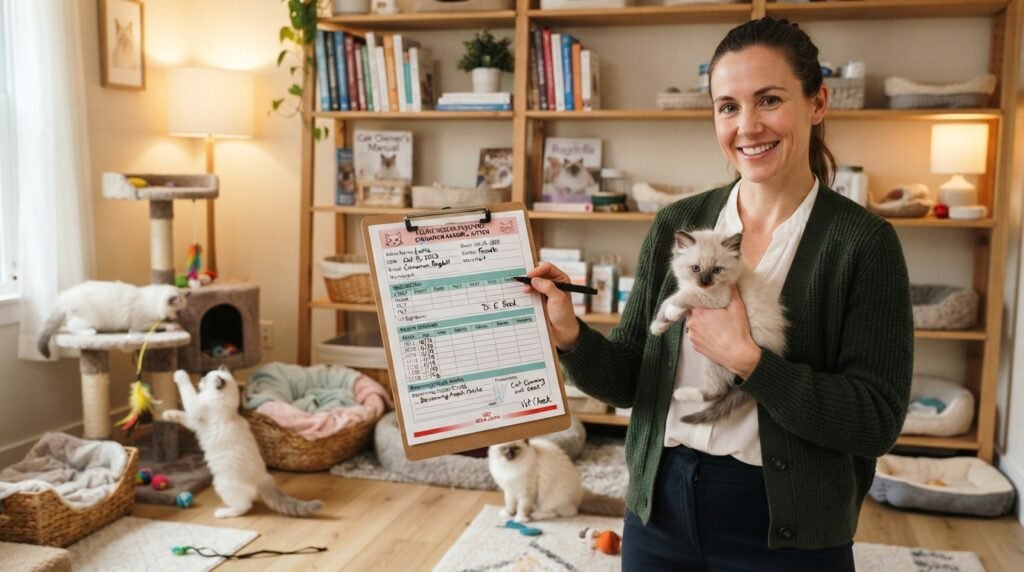
Request a signed agreement that explains the kitten’s placement terms. Pause if you cannot verify who owns the test records or what the written agreement covers.
How Should You Prepare for a Cinnamon Kitten?
Prepare one quiet room before your kitten arrives so the first change of home feels manageable. Ragdoll kittens are typically ready for adoption at 12-16 weeks, but the breeder and veterinarian should confirm each kitten’s readiness. A calm first space can help the kitten settle.
Set up the room before pickup, then keep the kitten there at first. Familiar surroundings and steady routines can make the move less stressful. Give the kitten time to explore before opening the rest of the home.
Prepare these four basics:
- Set up a litter box.
- Choose the kitten’s current food before changing diets.
- Provide a quiet resting space.
- Remove loose cords and unsafe plants within reach.
Keep the food change gradual if you later switch brands. Sudden changes can upset a kitten’s routine, so follow the breeder’s feeding advice at first. Place water where the kitten can reach it easily.
Ask for the kitten’s current feeding and litter routine before pickup.
What Are the Tradeoffs of Living With a Ragdoll?
The main tradeoff is a long-term commitment to companionship, coat care, and a stimulating indoor life. A Ragdoll can live up to 17 years, so plan for care over many years. That figure is a planning horizon, not a promise for any individual cat.
Many owners value the breed’s people-focused nature, but affectionate behavior does not remove daily needs. You will need to make time for play, routine veterinary care, and a safe indoor setting. Combing also remains part of coat care.
The downsides are regular grooming, daily interaction, indoor enrichment, and long-term care. These needs may feel manageable if they fit your routine, but they can be hard to maintain during busy periods.
Use these three checks before you decide:
- Can you keep up with a regular grooming routine?
- Can you offer daily play and interaction?
- Can you plan for care over many years?
Choose this breed only if its everyday needs fit the routine you can sustain.
How Do You Plan a Cinnamon Ragdoll Adoption?
Plan your adoption around verified health records and a realistic timeline, not color alone. Availability can be limited, and a planned litter is not confirmed until kittens are born and evaluated. A clear inquiry helps you compare options without treating a rare coat as a guaranteed product.
Cinnamon Cats for Sale and Availability
Prices vary by color, pattern, pedigree, and availability. Ask for a written breakdown of the individual breeder’s fees and terms rather than relying on a general figure. Cinnamon and chocolate kittens may call for advance planning because the color depends on a specific recessive pairing.
When you contact breeders about cinnamon cats for sale, ask whether they expect a litter or have kittens already born. A plan can change, and a kitten’s color or pattern may differ from what you hoped for. Ask how the breeder shares updates.
Adopting a Cinnamon Ragdoll Cat
For adoption of a cinnamon Ragdoll cat, ask about both adult cats and kittens. Confirm the location, transport arrangements, registration papers, and written agreement. Those details help you understand what the placement includes.
Adoption groups may have adult cats as well as kittens. Ask how they describe the cat’s coat and what is known about its history. An adult cat can be a good fit if you value an established temperament.

Before paying a deposit, get the kitten’s identity, the written terms, and the next update date in writing.
Conclusion
A cinnamon coat can make a Ragdoll distinctive, but a well-matched, well-cared-for cat matters more than rarity. Cinnamon is a coat color, not a promise of personality. The best choice balances the look you prefer with sound health records and a home that fits the cat’s needs.
Write down your preferred pattern and care questions, then use them to guide a conversation with a breeder or adoption organization.
FAQ
Do Ragdoll cats smell?
Ragdoll cats do not inherently smell. A lasting odor may come from the litter box, dental trouble, skin problems, or another health issue. Check whether the smell comes from the cat or its surroundings. If it stays after you clean the litter area, contact a veterinarian, especially if you notice changes in eating, grooming, or behavior.
What are the rarest Ragdoll cats?
Cinnamon and fawn are often described as ultra-rare Ragdoll colors. Their rarity depends on breeding lines and the pattern you want, so one color may be easier to find in one program than another. Both parents must pass the cinnamon trait for a kitten to show it, which can limit possible pairings.
What does a Ragdoll cat look like?
A traditional Ragdoll has a soft coat and often shows a colorpoint pattern, with darker color on the face, ears, feet, and tail. Mitted cats have white paws, while van and bicolor patterns show different amounts of white. Solid, mink, and sepia coats have different color expression and may follow different registry rules.
What is the prettiest Ragdoll color?
There is no objective prettiest Ragdoll color. Choose the color and pattern you enjoy seeing, whether you prefer strong points, broad white markings, or a darker body. Compare the whole coat in natural light, since indoor lighting can change how warm or cool a color looks. A cat’s health and fit matter more than a color label.
What are the downsides of a Ragdoll cat?
The main downsides are regular grooming, daily interaction, indoor enrichment, and long-term care. A Ragdoll can live up to 17 years, though each cat’s lifespan varies. You will need time for play, coat checks, and veterinary visits. Consider those daily and long-term tasks before choosing the breed, especially if your schedule often changes.
Why are Ragdolls not allowed outside?
Ragdolls can go outdoors with safeguards, but indoor living is the safer default. Traffic, predators, and infectious risks can harm any cat allowed to roam freely. A fully enclosed catio offers outdoor sights and smells with less risk. Harness outings may also work after gradual training, but you need to supervise closely.
Are boy or girl Ragdoll cats better?
Neither male nor female Ragdolls are automatically better companions. Sex alone does not reliably predict affection, play style, or fit with your household. Meet the individual cat when possible and ask how it responds to people, handling, and new sounds. Your home, the cat’s behavior, and the care you can offer matter more.
What’s the life expectancy of a Ragdoll cat?
A Ragdoll may live up to 17 years, but an individual cat’s lifespan varies. Health, care, and chance all affect how long a cat lives. Use that range as a planning horizon for food, veterinary visits, and daily attention, not as a promise. Ask your veterinarian what care best supports your cat through each life stage.