
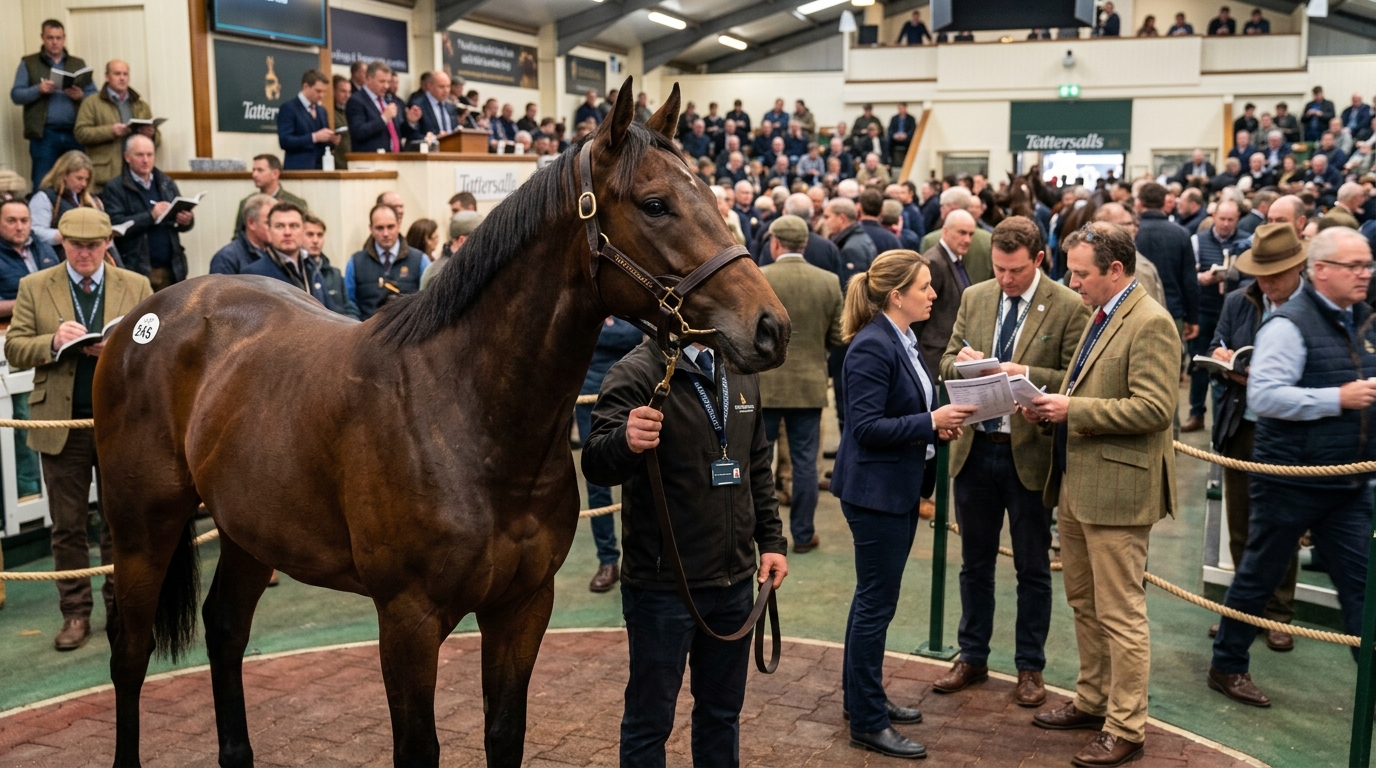
The Green Monkey’s story matters because the promise surrounding a sale and a racing career can diverge sharply. A striking sales moment became a lasting topic among racing fans, breeders, and bloodstock buyers. A breeze is a timed workout over a set distance, used to assess a young horse’s speed before a sale.
The gap between sale-ring hopes and racetrack results raises a broader question about what a fast time can predict. This story shows why one colt’s path still matters in the world of Thoroughbred racing and sales. Its record price also shaped discussion of how buyers judge young horses.
Key Takeaways
- A high sale price can set great expectations.
- A fast breeze does not ensure racing success.
- Pedigree can shape buyer interest.
- Racetrack results tell a different part of the story.
- The sale drew intense competition.
The circumstances behind that bidding explain how expectations climbed so high.
Why Did the Green Monkey Horse Sell for a Record Price?
Hartley/De Renzo bought the colt for $425,000 as a yearling, then sold him for far more at two. His $16 million sale set a record price for a horse in training.
His profile read: son Forestry, out of Magical Masquerade, an Unbridled mare. The Green Monkey horse pedigree joined Forestry with a mare from Unbridled’s line. The Green Monkey golf course in Barbados inspired his name.
Pedigree and expectations before the sale
Padua Stables bred the colt. Hartley/De Renzo bought him at the 2005 Fasig-Tipton Kentucky July Sale. At the next year’s Calder sale, his pedigree and build drew major buyers. The price also stood far above recent auction marks.
| Sale horse | Year and sale | Price |
|---|---|---|
| Seattle Dancer | 1985, Keeneland July Yearling Sale | $13.1 million |
| Tale of the Cat colt | 2005, Calder two-year-old sale | $5.2 million |
| The Green Monkey | 2006, Fasig-Tipton Calder two-year-olds in training sale | $16 million |
The breeze that fueled a bidding duel
A breeze is a timed workout over a set distance, used to judge a young horse’s speed before a sale. At Calder, the colt covered one furlong in 9 4/5 seconds. That time helped draw bids, though it could not promise success on the track.
Evaluators also noticed him cross-cantering during the breeze, a movement concern. Four signals fed the bidding:
- His physical appearance
- His pedigree
- His timed breeze
- Competition between major bidders
Demi O’Byrne bid for Coolmore, while John Ferguson, Sheikh Mohammed’s bloodstock adviser, met him in the final duel. Seattle Dancer had sold for $13.1 million in 1985. A Tale of the Cat colt brought $5.2 million at Calder the prior year.
The Green Monkey horse price in rupees depends on the exchange rate used. The sale also encouraged interest in Forestry and Unbridled matings. Oatsee’s 2008 Forestry foal became 2011 Preakness Stakes winner Shackleford. The auction’s promise now gives way to the racetrack record.
Why Did His Racing Career Fall Short?
A gluteal muscle injury delayed The Green Monkey’s first start until his three-year-old season. Trained by Todd Pletcher, he made three starts and never won.
The delay meant the colt had limited time to prove himself in races. A sales breeze had shown speed over one furlong, but race performance depends on more than one timed workout. Training also involves a horse’s health, movement, and ability to handle race conditions.
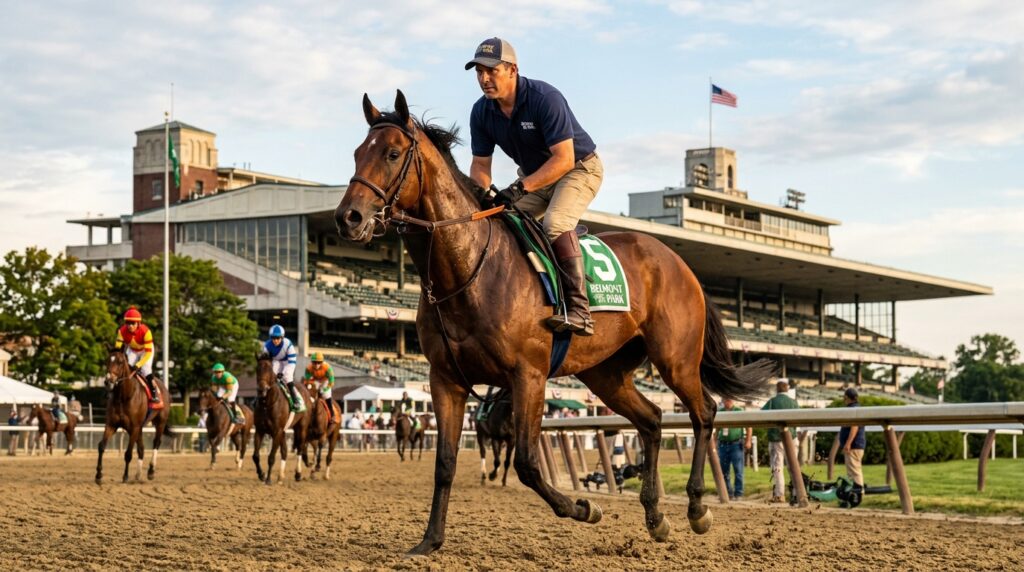
An injury delayed his debut
The injury affected a gluteal muscle, part of the hindquarters. It kept him from making an earlier debut and left his first race until September. Todd Pletcher trained him through the brief campaign.
Horse training can draw on calm cues and trust as well as daily work. Monty Roberts’ horse training methods offer one example of a communication-based approach. The Green Monkey’s injury, though, shaped when his racing career began.
Three starts, no wins
His first start came in a Belmont Park maiden race, a race for horses that had not won. He finished a well-beaten third. In another Belmont maiden, he finished fourth.
His last start came on turf at Hollywood Park that November. He again finished fourth, giving him one third and two fourths across three starts. He earned $10,440 and recorded no wins or second-place finishes.
The brief racing record gave way to a different role after retirement: life as a stallion.
What Happened to The Green Monkey After Racing?
Hartley/De Renzo bought back half of The Green Monkey when he retired and stood him at their Florida base. His stud fee was $5,000, and his first season drew 40 mares.
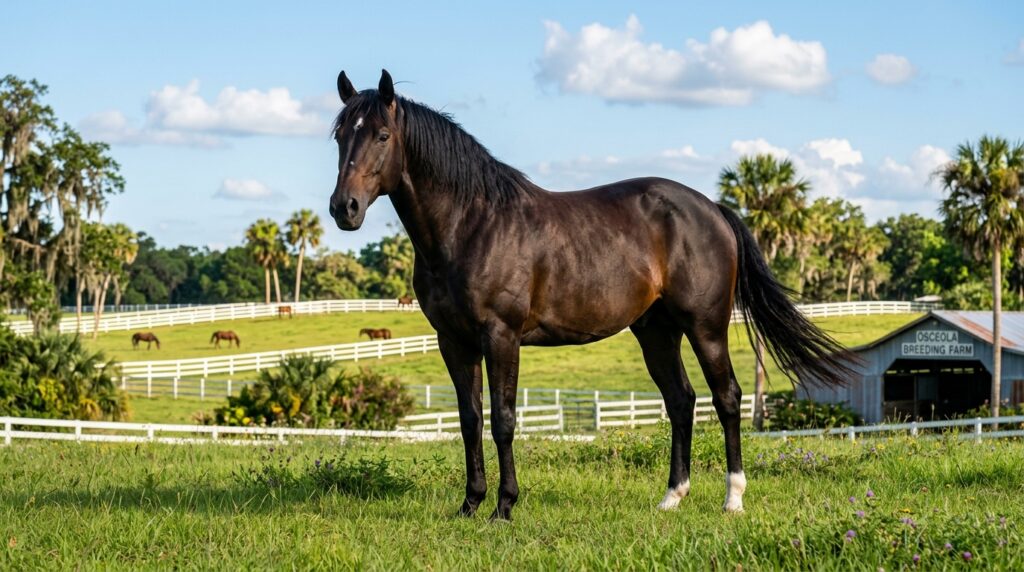
He covered no more than 12 mares in any later season. As a sire, he produced four black-type winners, horses whose wins counted in recognized stakes races. One was Monkey Business, who swept the 2015 filly Triple Crown in Panama.
For the Green Monkey horse owner question, Hartley/De Renzo held half ownership after buying him back. The Green Monkey stud fee began at $5,000. His horse’s children means his offspring, including his four black-type winners.
The Green Monkey horse death came in Florida in May 2018. He was 14 and suffered from laminitis, a painful hoof disease. His modest stud record and early death left his sale-ring fame in sharp contrast with his later career.
Conclusion
The Green Monkey’s career shows that a sales record and racing success measure different things. A breeze, pedigree, and bidding can raise a horse’s price, but only later racing can show what the horse achieves on the track.
That contrast remains useful to anyone following Thoroughbred sales. A headline about a record sale tells only part of a horse’s story, while later results reveal another part.
When exploring other Thoroughbred sales stories, compare auction headlines with the horses’ race records. That simple step puts the sale in context and gives the horse’s later career its proper weight.
FAQ
How much is a green monkey horse?
There is no current sale price established for The Green Monkey. His historical auction price was $16 million in 2006, when Demi O’Byrne bid for Coolmore. That figure records what buyers paid at one sale. It does not set a present-day value for him or any other horse.
Who was the fastest horse in history?
The Green Monkey was not known as the fastest horse in history. His 9 4/5-second time covered one furlong in a sales breeze, not a race. A breeze measures a young horse’s speed over a set distance before auction. It should not be treated as an all-time race-speed record.
What is the most expensive horse?
The Green Monkey’s $16 million figure was an auction price paid in 2006. It made him a record-setting sale horse, but an auction result is not the same as every kind of horse valuation. Breeding value, later sale prices, and private deals can use different measures and terms.
What was The Green Monkey named after?
The Green Monkey took his name from a golf course in Barbados. The course’s name was already in use before the colt’s sale and racing career. His name did not refer to his color or to a racehorse record. It connected him to a place in Barbados.
Did The Green Monkey win a race?
No, The Green Monkey did not win a race. He made three starts, finishing third once and fourth twice. His first finish came in a Belmont Park maiden race. He later finished fourth in another Belmont maiden and in his final start, on turf at Hollywood Park.