
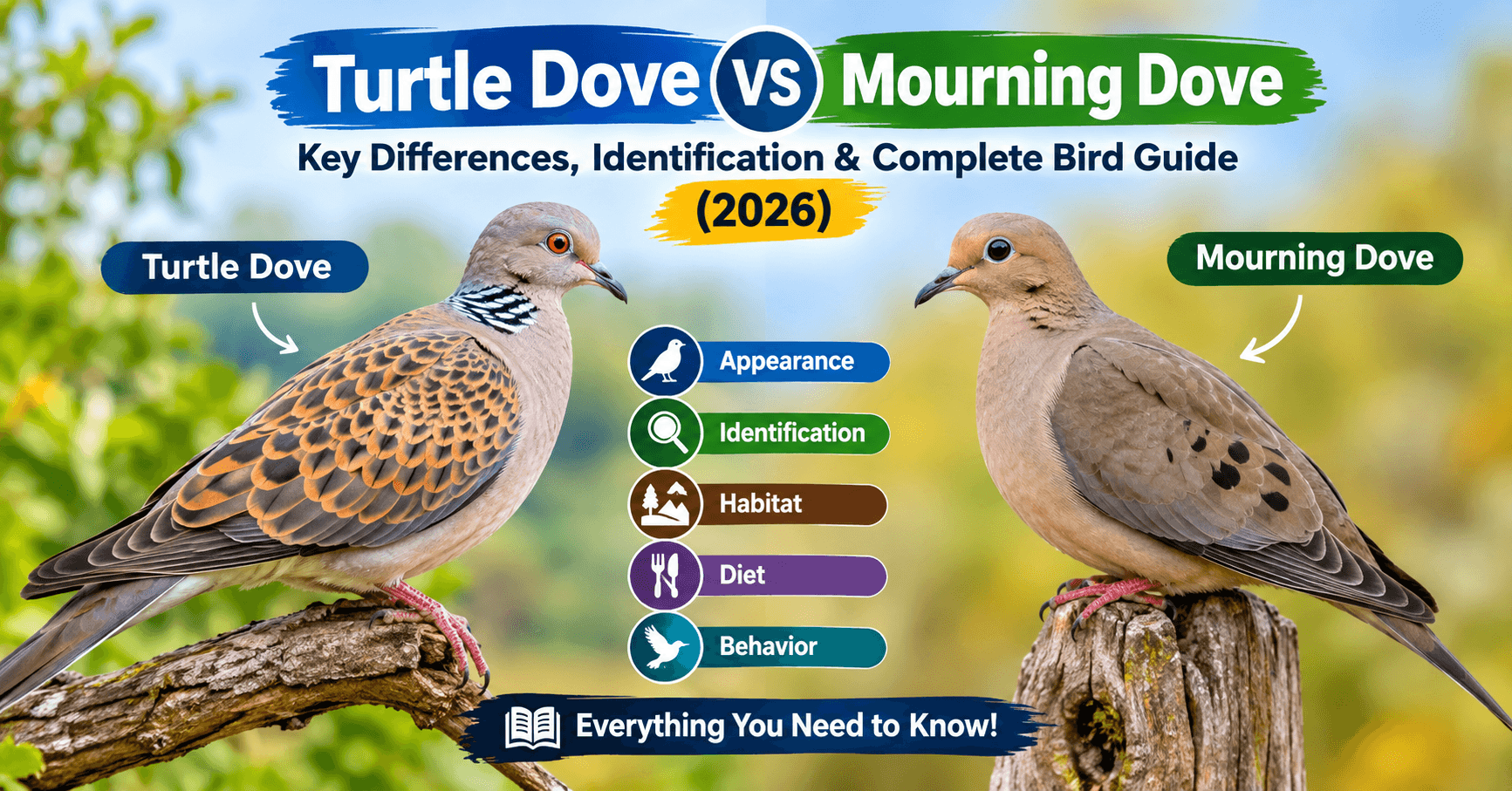
Turtle Dove vs Mourning Dove is a common identification puzzle, partly because many people picture “two turtle doves” from the Christmas carol and assume the grey-brown dove on their wires is one. In fact the two birds live on different continents, belong to different genera, and are in very different shape: the Mourning Dove is one of North America’s commonest birds, while the European Turtle Dove is threatened. This guide shows how to tell them apart by looks, voice, range, and behaviour.
Turtle Dove vs Mourning Dove: Quick Comparison
| Feature | European Turtle Dove | Mourning Dove |
| Scientific name | Streptopelia turtur | Zenaida macroura |
| Native range | Europe, western Asia, North Africa (winters in sub-Saharan Africa) | North America, into Mexico and Central America |
| Length | About 10–11 in (26–28 cm) | About 9–13 in (23–34 cm) |
| Tail | Fairly short and rounded, with white tips | Long and pointed, with white edges |
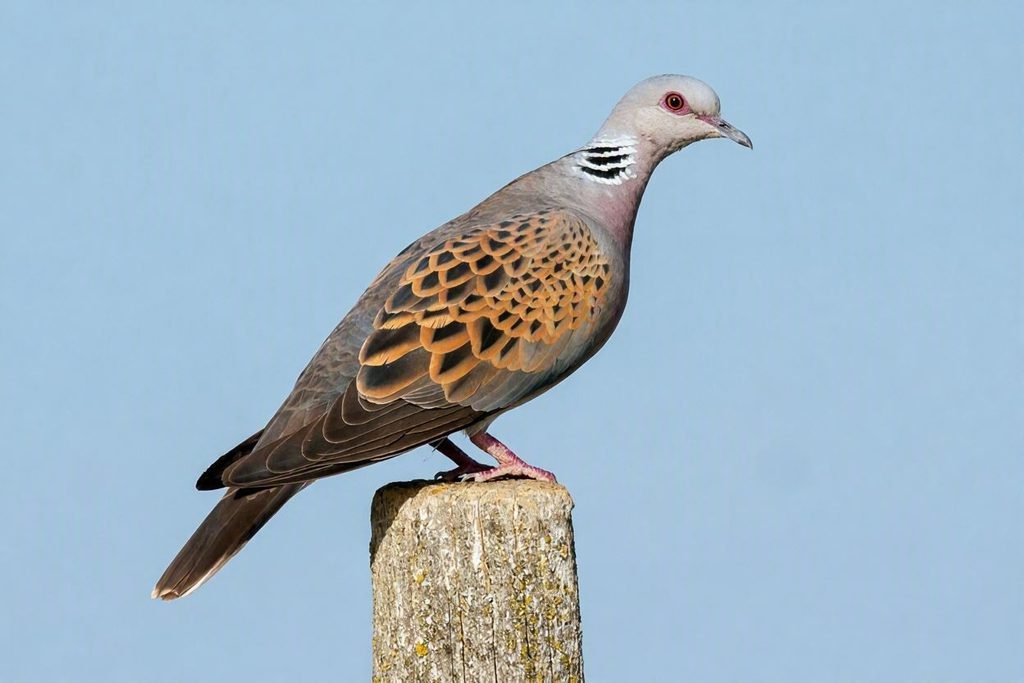
| Neck | Black-and-white striped patch on each side | No striped patch; a small dark spot below the cheek |
| Wings | Chestnut, scaly-looking feathers with dark centres | Plain grey-brown with scattered black spots |
| Call | Soft, purring “turrr” | Mournful “coo-OO-oo, oo, oo” |
| Status | Vulnerable (IUCN) | Abundant and widespread |
The quick rule: a long pointed tail and black wing spots on a plain grey-brown bird mean Mourning Dove. A striped neck patch and chestnut, scaly wings mean Turtle Dove.
What Is a Turtle Dove?
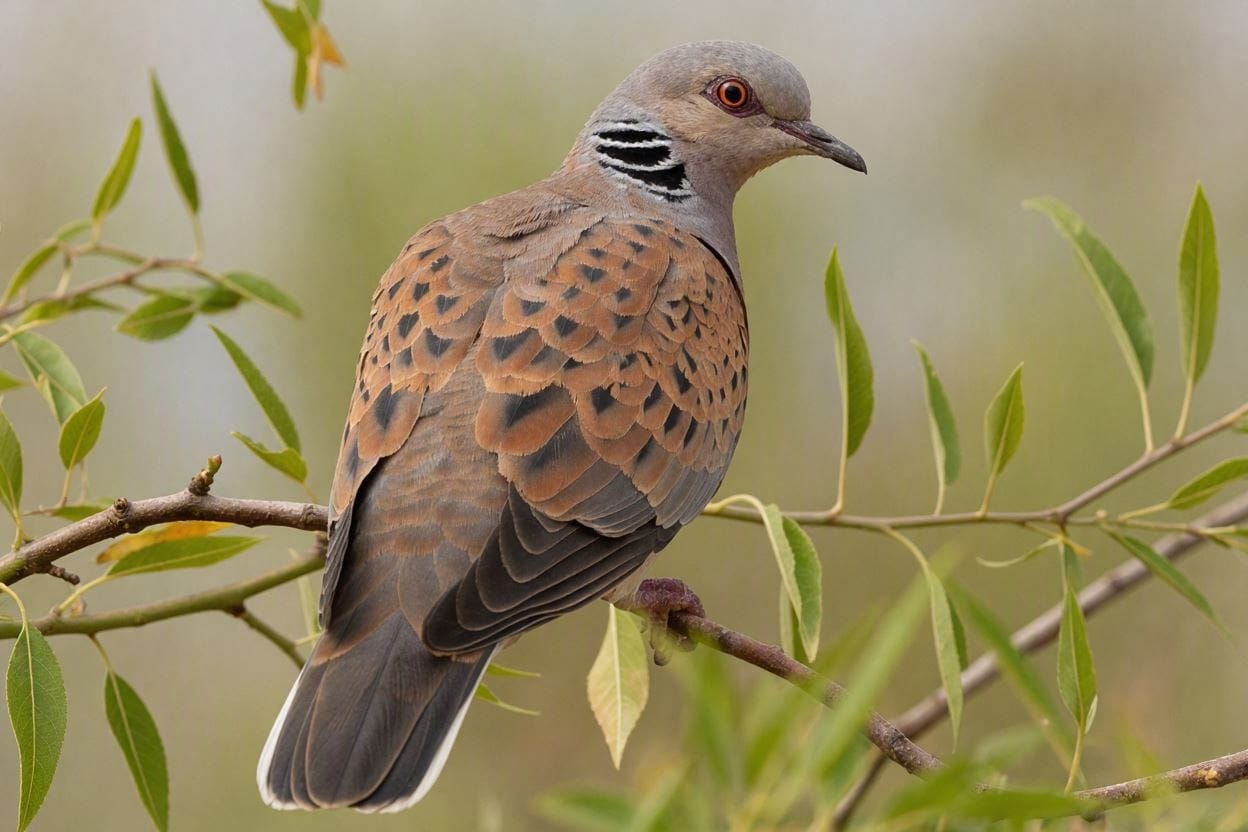
The European Turtle Dove (Streptopelia turtur) is a slim, graceful dove that breeds in Europe and western Asia and migrates to Africa for the winter. Its name has nothing to do with turtles. It comes from the Latin turtur, an imitation of its soft purring call.
It prefers open woodland, scrub, and farmland with thick hedgerows, and it feeds mainly on seeds from field weeds and crops. It is far shyer than the Mourning Dove and rarely visits garden feeders.
What Is a Mourning Dove?
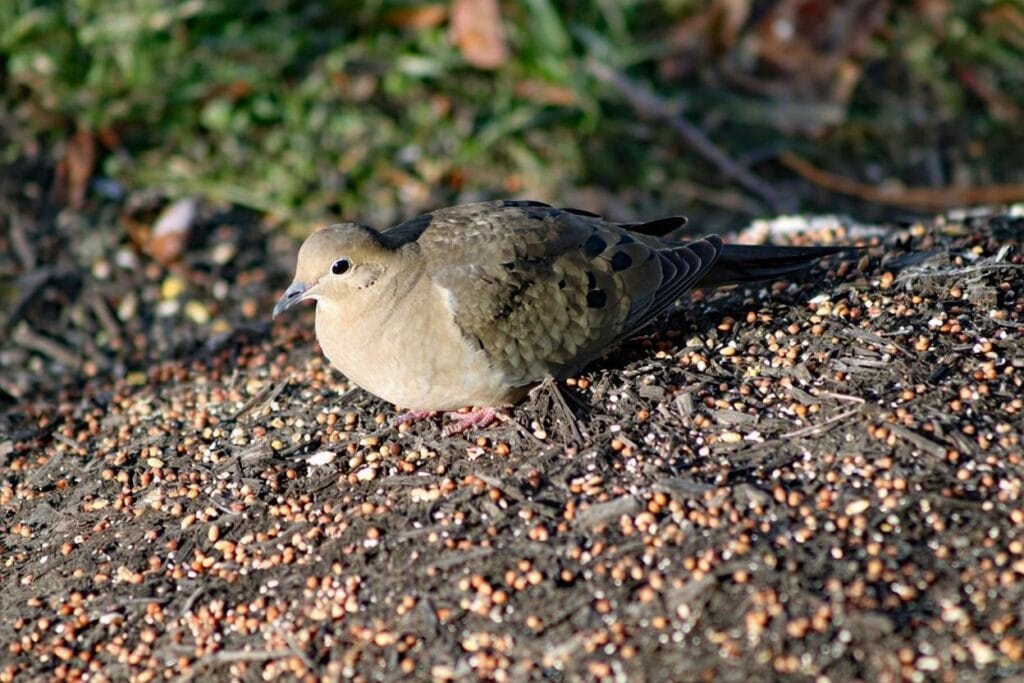
The Mourning Dove (Zenaida macroura) is one of the most abundant and widespread birds in North America. It lives in towns, farmland, deserts, grassland, and woodland edges, and it is a regular visitor to ground feeders. Its name comes from its soft, sad-sounding call, not from its colour.
Mourning Doves often perch on wires and fly fast and straight, and their wings make a whistling sound as they take off. They are also a legal game bird in many US states, so their numbers are managed through hunting regulations.
Looks: How to Tell Them Apart
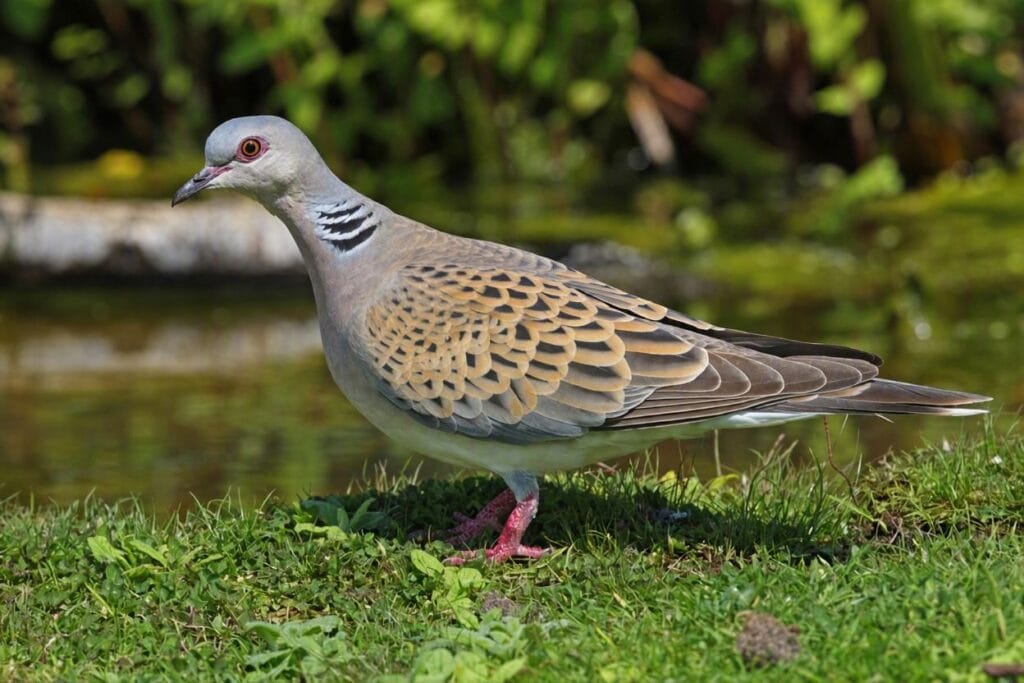
Turtle Dove
A striped black-and-white neck patch, chestnut wing feathers with dark centres that look like scales, a pinkish-grey head and breast, and a dark tail with white tips.
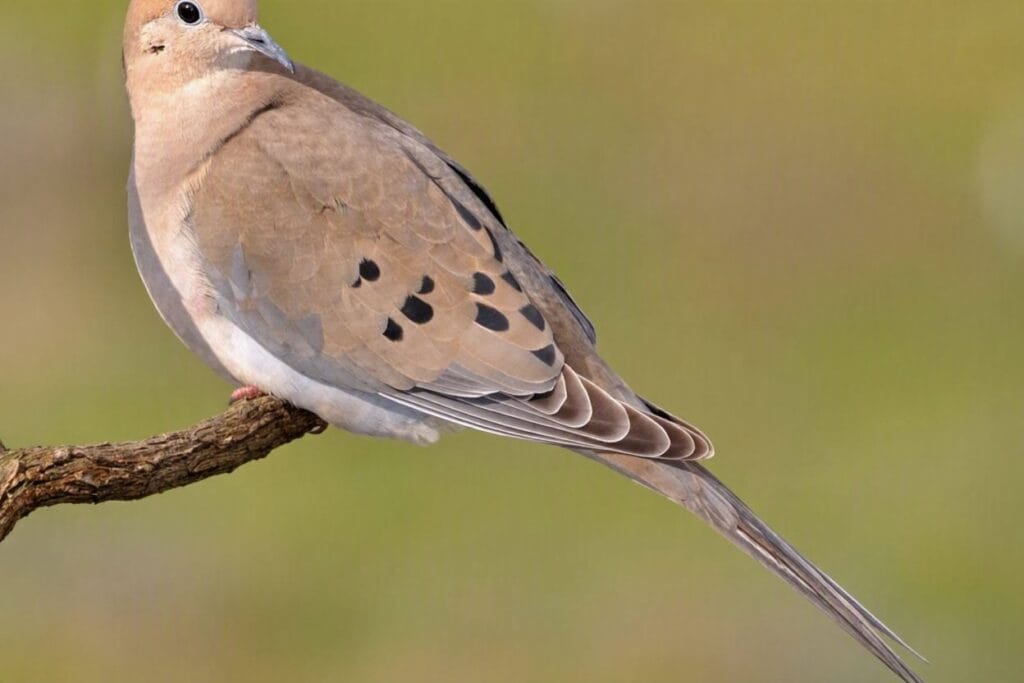
Mourning Dove
A soft grey-brown body with a pinkish wash on the breast, black spots on the folded wings, a small dark spot below the eye, and a long, pointed tail edged in white. It has no striped neck patch.
Key Identification Checklist
- Turtle Dove: neck stripes, chestnut scaly wings, shorter rounded tail
- Mourning Dove: black wing spots, long pointed tail, plain grey-brown colour
Habitat and Range
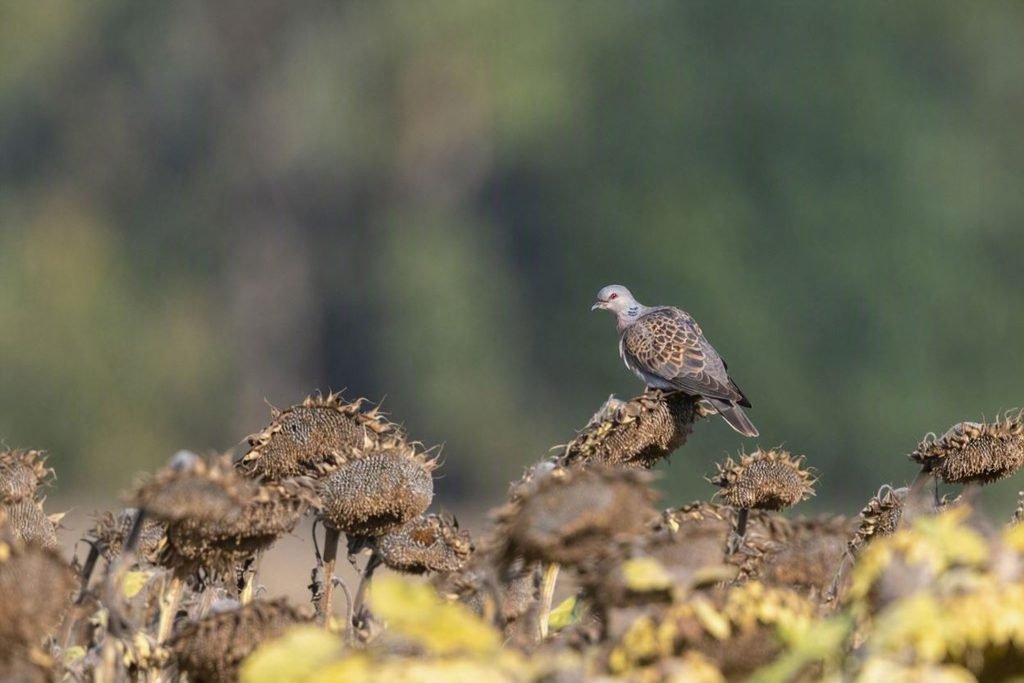
Location is often the quickest clue. If you are in North America, a dove at your feeder is almost certainly a Mourning Dove. If you are in Europe, the dove with a striped neck is a Turtle Dove.
Turtle Dove Habitat
- Hedgerows and scrub
- Open woodland
- Farmland with weedy margins
- Winters in sub-Saharan Africa
Mourning Dove Habitat
- Suburbs, parks, and gardens
- Farmland and grassland
- Desert scrub and woodland edges
European Turtle Doves are rare vagrants in North America, so a sighting there would be exceptional and should be well documented.
Calls and Sounds: Which Dove Am I Hearing?
Voice is often easier than plumage, especially when the bird stays hidden in foliage.
| Dove | Call |
| Turtle Dove | A soft, rolling, purring “turrr…turrr” |
| Mourning Dove | A mournful “coo-OO-oo, oo, oo” |
Behaviour and Feeding
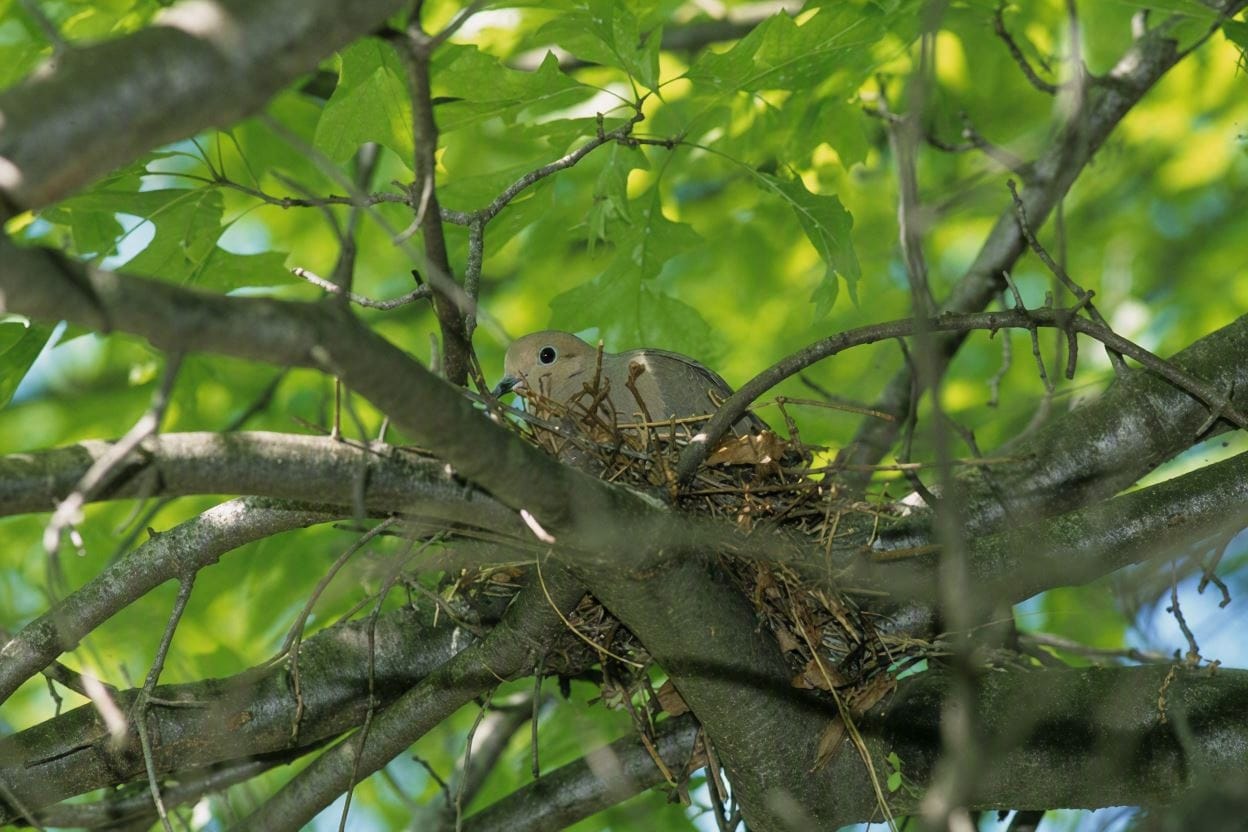
Both birds eat mainly seeds, build a flimsy nest of twigs in a tree or shrub, and lay small clutches. Both feed their chicks “crop milk,” a nutritious secretion produced in the parent’s throat. The big difference is tolerance of people: Mourning Doves adapt readily to gardens and feeders, while Turtle Doves stay in quiet countryside.
Migration
Turtle Dove
A long-distance migrant. Birds breeding in Europe travel across the Mediterranean and the Sahara to winter in sub-Saharan Africa and return in spring. BirdLife International says the journey is dangerous, with illegal killing among the threats.
Mourning Dove
A partial migrant. Many birds in the south stay all year, while northern birds move south for winter, usually over shorter distances than Turtle Doves.
Conservation Status
Turtle Dove: Vulnerable
The IUCN lists the European Turtle Dove as Vulnerable, and it has been declining across Europe. In the UK the fall has been steep: the first national survey in 2021 estimated about 2,092 breeding territories, a decline of around 98% since the early 1970s, according to the British Trust for Ornithology. The causes are not fully understood, but the main suspects are:
- Loss of weedy seed food and nesting scrub on intensively farmed land
- Hunting along the migration route; about a million birds were shot each year in south-west Europe until recently, and hunting bans began in France, Spain, and Portugal in 2021
- Disease, including trichomonosis
Mourning Dove: Common
It is abundant across most of North America, and hunting and habitat change do not currently threaten the species as a whole.
Symbolism and Culture
Turtle doves have long stood for love and faithfulness. The turtledove appears in the Song of Solomon, and two turtle doves feature in the Christmas carol “The Twelve Days of Christmas.” Mourning Doves are widely seen as symbols of peace, hope, and remembrance in North America, partly because of their gentle call.
Attracting Doves to Your Garden
In North America, the Mourning Dove is the dove you will attract. They feed mostly on the ground, so scatter seed on the ground or use a low platform feeder.
- Millet and sunflower seeds
- Cracked corn
- A ground-level or low platform feeder
- Fresh water, changed often
Turtle Doves are unlikely to visit feeders. To help them in Europe, support farms and conservation projects that leave weedy field margins, tall hedgerows, and seed-rich habitat.
Related Reading on Pets News Life
- Spotted Nutcracker Bird Sound: Listen and Identify
- Chaffinch Bird: 12 Fascinating Facts, Habitat, and Behavior
- The “Miraculous” Eagle With a Broken Wing Returns
External Resources
- Cornell Lab of Ornithology: Mourning Dove
- BirdLife International: Migratory bird of the month, Turtle Dove
- BTO: Status of the UK breeding European Turtle Dove in 2021
Turtle Dove vs Mourning Dove: Final Verdict
The two doves are easy to separate once you know what to look for. The Turtle Dove (Streptopelia) is an Old World bird with a striped neck, chestnut scaly wings, and an epic migration, and it is Vulnerable. The Mourning Dove (Zenaida) is a New World bird with a long pointed tail and a mournful coo, and it thrives alongside people. Check where you are, then tail, neck, wings, and voice, and you will rarely go wrong.
FAQs
1. What is the easiest way to tell a turtle dove from a mourning dove?
Look at the tail and neck. A Mourning Dove has a long pointed tail and no neck stripes, while a Turtle Dove has a shorter rounded tail and a striped neck patch.
2. Do turtle doves and mourning doves live in the same places?
No. Turtle Doves breed in Europe and western Asia, and Mourning Doves live in North America, so they do not normally share a range.
3. Are turtle doves endangered?
The IUCN lists the European Turtle Dove as Vulnerable. In the UK the breeding population has fallen by about 98% since the early 1970s.
4. Why is it called a mourning dove?
The name comes from its soft, sad-sounding call, not from its colour.
5. Are the turtle dove and mourning dove closely related?
Both belong to the dove and pigeon family, but they are in different genera (Streptopelia and Zenaida) and live on different continents, so they are not especially close relatives.
6. What does a turtle dove sound like?
A soft, rolling purr, often written as “turrr.” A Mourning Dove’s song is a longer, mournful coo.
2 thoughts on “Turtle Dove vs Mourning Dove: Key Differences, Identification & Complete Bird Guide (2026)”