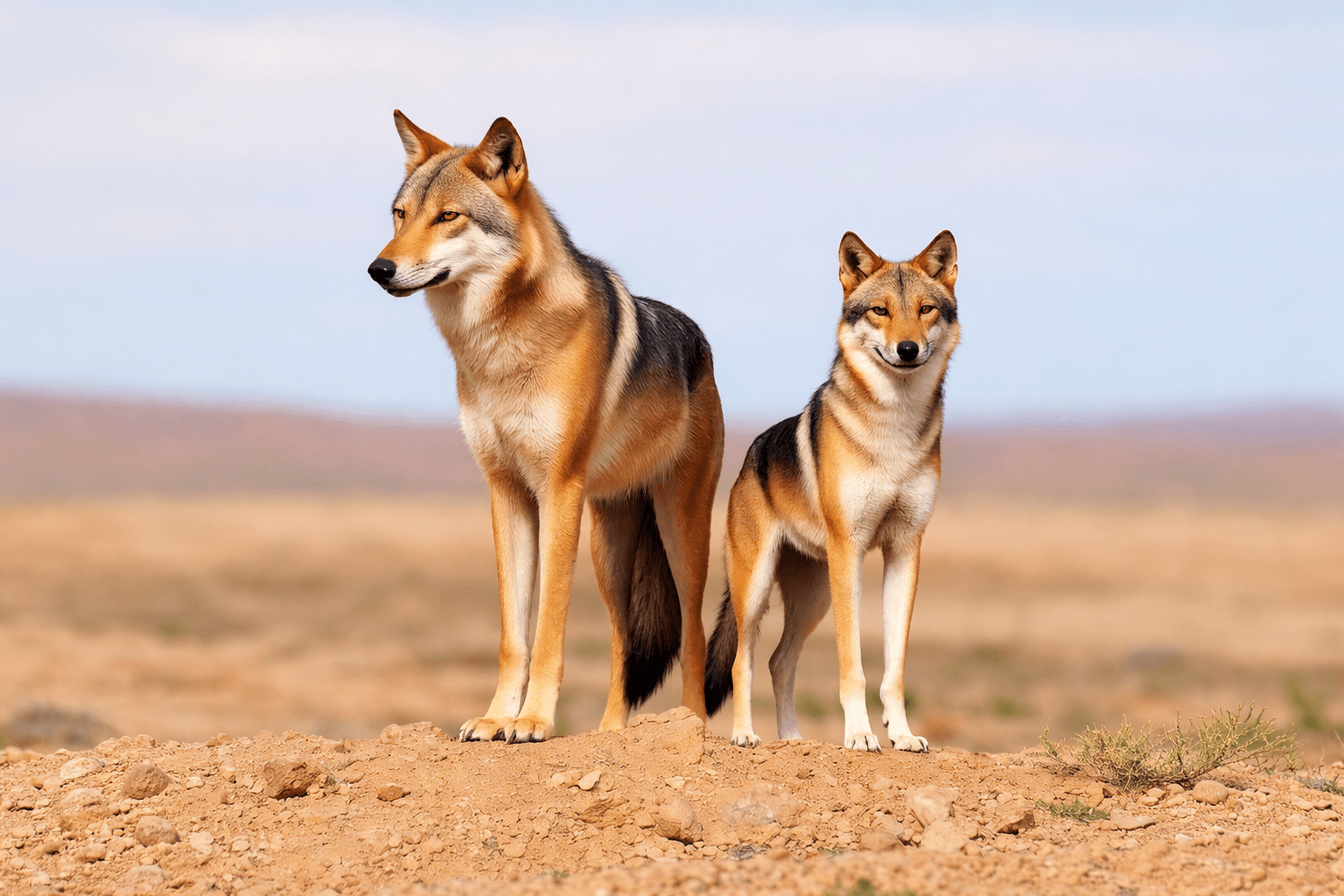
Introduction: Is this a coyote or a wolf?
Is This a Coyote or a Wolf? People often wonder this after seeing a wild dog-like animal outside. Right away, the two might seem alike – yet their sizes differ, so do how they act and where they live.
Coyotes roam behind homes, while gray wolves live in dense forests. Seeing one different from the other changes how people react outside. One may dart down the road in the evening, while the other rarely comes near homes. Knowing which animal left its tracks helps avoid danger. Wildlife decisions rely on clear facts: Is this a coyote or a wolf? Not on guesswork. Conservation works better when species aren’t confused.
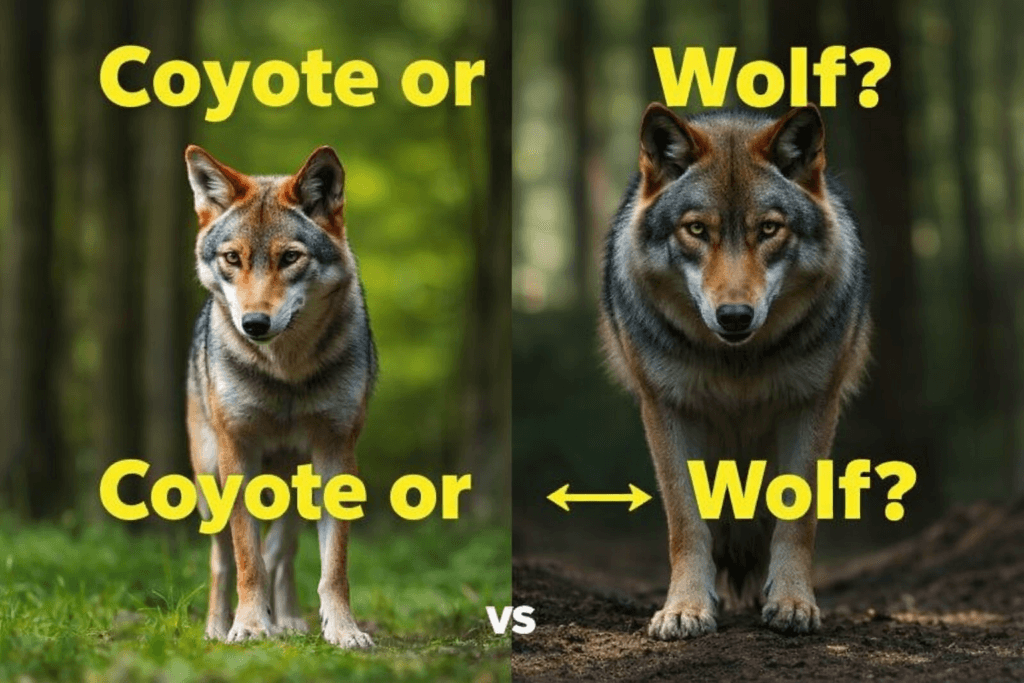
Curious about people and their connections to creatures?
Take a look at the list of 10 Deadliest Animals That Claim the Most Lives Every Year – offers clues on the habits of wildlife while showing risks they pose. While learning about bites or attacks might sound intense, understanding them changes how we stay safe near nature.
What is a Coyote?
A sly figure of the wild, the coyote roams widely through North America. Though built for open country, it slips into cities just as easily as sand dunes or thick woods.
Key Characteristics:
- Weight: 9–23 kg
- Slender body with long legs
- Narrow snout and pointed ears
A thick tail hangs down close to the ground
Fox-like but tougher, these animals think fast when cities crowd in. Survival comes not just from smarts – adapting on the fly matters more.
Wolf Basics? Is this a coyote or a wolf?
A creature built for power, the gray wolf towers over many rivals. Out in distant wilds, these animals make their home where few people go. What stands out most is how tightly they stick together, moving as one through snow and silence.
Key Characteristics:
- Weight: 30–80 kg
- Broad chest and large head
- Heavy coat paired with a strong frame
- Tail held straight
Few animals sit higher on the food chain than wolves – these hunters help keep nature running smoothly. Their presence shapes entire landscapes, even if unseen.
Coyotes vs Wolves:
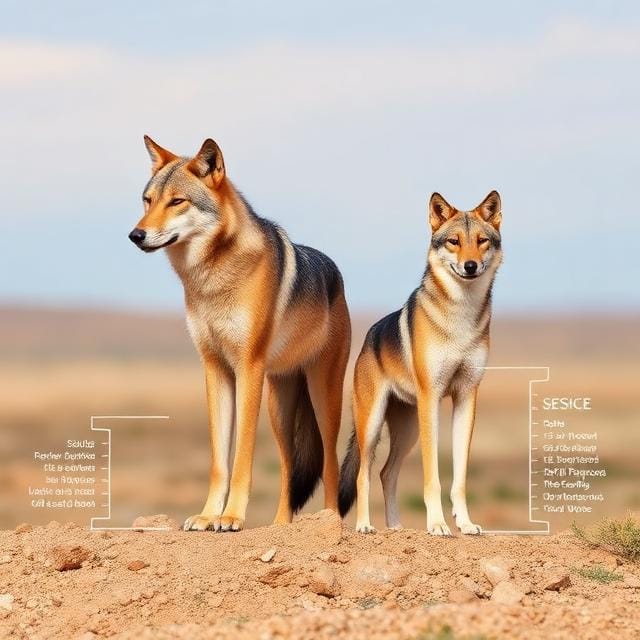
1. Size and Weight
Size stands out first. What you notice right away isn’t shape or color – it’s how big it looks.
- Wolves are much larger and heavier
- Fewer pounds pack onto a coyote compared to others.
- Smaller frames set them apart easily
Should you spot something the size of a hefty hound, chances are high it’s a wolf.
2. Face and Snout
- Coyotes have a narrow, pointed snout
- Wolves have a broad, blocky face
A quick way to spot the difference? This method stands out. It cuts through confusion without extra steps.
3. Ears and Tail
Those wild dogs?
- Big ears stand out.
- Tail drags low behind them
- Fur covers their shorter ears, which sit close to a rounded skull.
A wolf moves with its tail held stiff, almost like a rod behind it.
4. Behavior Around Humans
Out here, coyotes stick close to people. Wolves, though, take a different path – always slipping away.
- Coyotes: Often seen near towns
- Wolves: Prefer remote wilderness
5. Pack Structure
A single wolf follows strict pack rules, whereas a lone coyote adapts easily.
Structure shapes their lives differently – rigid for one, loose for the other.
- Wolves: Strong pack hierarchy
- Coyotes: Usually caught by hunting solo or in small packs
6. Vocalizations
- Coyotes Make Loud Yips and Howls
- Wolves Howling Long and Loud
Once you tune your ear, their noises stand apart clearly.
7. Prints and Tracks
- Coyote tracks are only a fraction of the size of wolf tracks.
- Wolf prints are typically much wider and more rounded, almost circular.
- Their shape stands out when compared to others nearby
- Coyote Tracks Are Smaller and Narrower
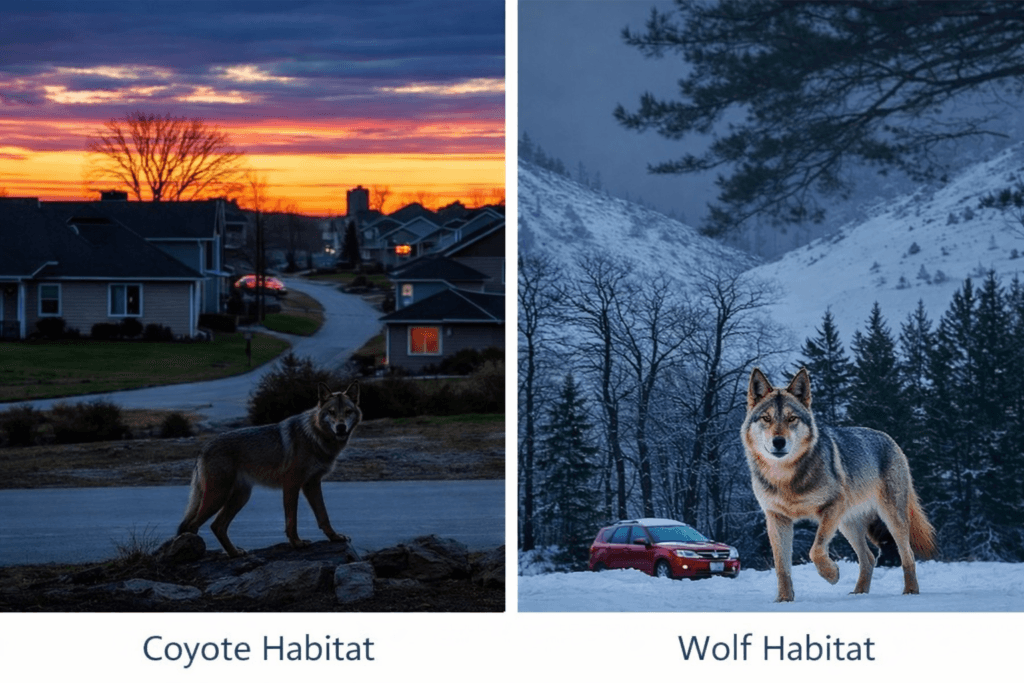
Is This a Coyote or a Wolf? Habitat Differences
Far from city lights, coyotes roam while wolves stick to deeper woods.
Coyotes:
- Urban areas
- Suburbs
- Open landscapes
Wolves:
- Forests
- Mountains
- Remote wilderness
People spot coyotes more these days because of that gap. Sometimes it’s just how things line up around neighborhoods.
Is This a Coyote or a Wolf? People Mix Up Coyotes and Wolves
There are several reasons for confusion:
- Similar appearance
- Hybrid species (like coy wolves)
- Lack of awareness
Start by watching how creatures act; it clears up misunderstandings. Take Bonbons Animal: The Peaceful Ape That Mirrors Humanity – shows differences between kinds of beings.
Safety Tips When You Spot One?
If You See a Coyote
- Stay calm
- Make yourself look bigger
- Avoid feeding
If You See a Wolf
- Keep your distance
- Do not run
- Back away slowly
They most certainly avoid people, but you still need to be on your toes. They are wary of humans, but it is no harm to be cautious.
Coyotes and Wolves in Natural Systems
One helps the other stay in check, keeping things steady. Their presence shapes how life flows through the environment.
Coyotes:
- Control rodent populations
- Adapt to environmental changes
Wolves:
- Regulate prey populations
- Maintain ecosystem health
Protection of such species matters deeply to groups, including the World Wildlife Fund.
Internal Linking
- 10 Deadliest Animals That Claim the Most Lives Every Year
- Bonobos Animal: The Peaceful Ape That Mirrors Humanity
- Are Our Pampered Pets Really Living Their Best Life?
External Link
Conclusion: Is it a coyote or a wolf?
What you’re seeing might surprise you. Size gives it away fast – wolves tower over their smaller cousins. Behavior tells another story entirely, one of pack depth versus lone movement. Habitat shapes each animal differently, forests favoring one, open lands the other. Clarity comes not from guessing but from noticing these details closely.
Though these creatures seem alike up close, each one fits into nature in its own way, best admired without getting too near. Spotting the differences between them adds to what you know about wildlife while helping humans live more quietly alongside it.
Frequently Asked Questions: Is this a coyote or a wolf?
1. In an instant, what distinguishes a coyote from a wolf when they’re running?
Faces are wider, and wolves are also bigger when you check the dimensions. Size matters most when comparing skull shapes.
2. Coyotes: Are they a threat to us?
Fed by people, they usually lose fear – yet stay harmless unless pushed too far.
3. Do Wolves Attack?
Wolves typically avoid people. Attacks happen rarely.
4. Are limpets and wolves able to breed?
Now here come coy wolves – mixes showing up now and then across certain areas.
5. What shows up more often?
Far more widespread than most expect, coyotes thrive even in cities.