A person looking for an animal of the year may be asking about a calendar sign or an award title. The calendar label returns on a set cycle, while an award can recognize a different kind of achievement. A lunar calendar tracks time by cycles of the moon.
The boundary between calendar years can affect which sign belongs to a January or February birthday. An annual award title may refer to a contest or a public recognition, not a zodiac sign. It first separates those meanings, then helps readers identify the calendar animal.
Key Takeaways
- The Chinese zodiac assigns an animal sign to each year in a repeating cycle.
- An animal-themed award is separate from a calendar sign.
- Your birth date matters when your birthday falls near the new year.
- Most people use Chinese New Year as the zodiac-year boundary.
- Some traditionalists and professional astrologers use Start of Spring instead.
Animal of the Year: How the Chinese Zodiac Works
The Chinese zodiac’s animal is a calendar label, not a yearly contest winner. Each year in the Chinese zodiac has one animal sign, and the signs repeat in a 12-year cycle. Past zodiac “winners” are recurring labels, not animals ranked against one another.
An award called Animal of the Year has a different meaning. Its organizer sets the rules and decides what achievement the title recognizes. A conservation recognition, for example, might honor an animal’s work detecting an invasive species.
That kind of title does not change the Chinese zodiac calendar. A separate wildlife photography award can raise awareness through images and public voting. The Wildlife Photographer of the Year People’s Choice Award is one example of an award linked to wildlife and conservation awareness.
The calendar label and the award title
The zodiac gives people a way to name a year through an animal sign. An award gives an organizer a way to recognize a subject, action, or achievement. Both can use animal names, but they answer different questions.
If you see a list of past zodiac “winners,” read it as a calendar record. Each entry says which animal belongs to that year. An award list, by contrast, follows the choices and rules of its organizer.
What the distinction means for you
Before looking up a sign, decide whether you mean the Chinese zodiac or a separate award. That small check prevents an award result from being mistaken for a birth-year sign.
The zodiac uses a fixed set of animal names in a set order. The next step is to learn those names so the year labels make sense.
What Are the 12 Chinese Zodiac Animals?
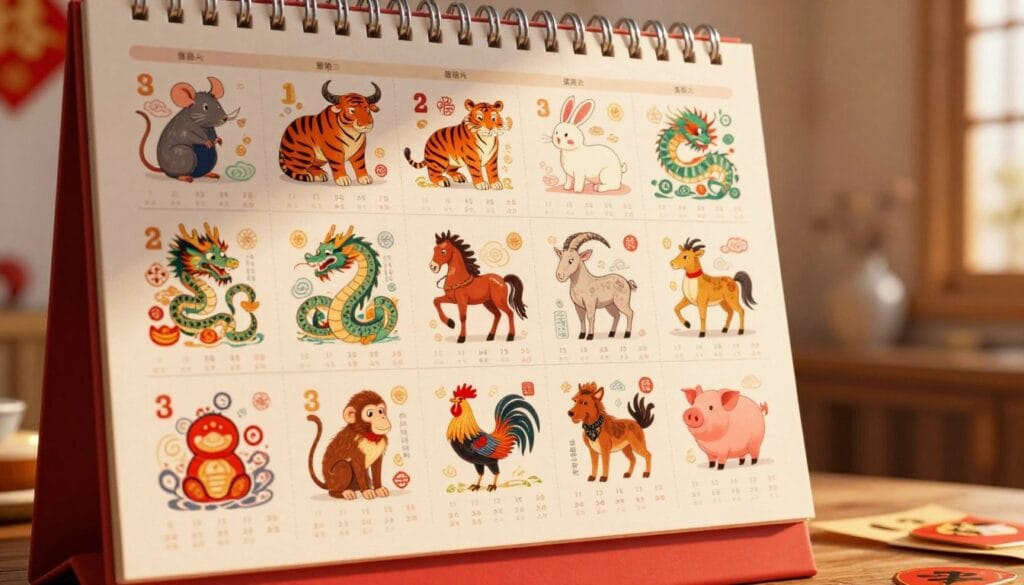
The Chinese zodiac has 12 signs, beginning with the Rat and ending with the Pig. The animals in their traditional order are Rat, Ox, Tiger, Rabbit, Dragon, Snake, Horse, Goat, Monkey, Rooster, Dog, and Pig.
This sequence gives each year its animal label, then starts again after 12 years. The Chinese New Year animals in 2023 included the Rabbit, since 2023 was a Rabbit year.
The animals in their traditional order
What are all the zodiac signs? The list below shows all 12 in order, grouped into four sets of three.
- Rat, Ox, Tiger
- Rabbit, Dragon, Snake
- Horse, Goat, Monkey
- Rooster, Dog, Pig
Each animal has a place in the sequence, but the signs do not rank people or years. The order helps you identify a zodiac animal when you know the relevant calendar year.
What animal traits traditionally represent
Traditional animal traits are cultural interpretations, not facts about every person born under a sign. The Rabbit may suggest care or calm, while the Dragon may suggest strength or leadership.
These ideas can appear in art, stories, family customs, and New Year greetings. People may find them meaningful as symbols without treating them as fixed rules for behavior.
A zodiac animal is not a reliable personality test. Two people with the same sign can have very different lives, choices, and temperaments.
Once you know the sign names, the next task is matching one to a birth date.
How Do You Find Your Chinese Zodiac Animal?
Someone born in January may have a different zodiac sign from a person born later in the same Gregorian year. Find your birth animal by checking your full birth date against the zodiac-year boundary, not by using the Gregorian year alone.
Most people use Chinese New Year as the boundary for the animal year. Chinese New Year falls between January 21 and February 20, so the date shifts each year.
Start with the birth year, then check the boundary
Use these four steps when you look up a birth sign. The exact date matters most for birthdays near the start of the Gregorian year.
- Note your full birth date, including the month and day.
- Identify the relevant Chinese New Year date for that year.
- Compare your birthday with that boundary date.
- Check which boundary convention the lookup uses.
If your birthday falls after Chinese New Year, use the animal for the new zodiac year. If it falls before that date, use the prior animal year.
Choose the convention for January and February birthdays
Some traditionalists and professional astrologers use the Start of Spring convention. Start of Spring is the first of the 24 Solar Terms and begins on February 3 or 4.
A January or February 1997 birthday may map to Rat or Ox, depending on its exact date and the boundary convention. Check both the birthday and the rule used by the calendar you consult.
The Chinese New Year animal this year, 2026, is Horse. So, the Chinese New Year animal in 2026 is the Horse, though a birth sign still depends on the date boundary.
With the date rule clear, a year-to-animal lookup can help you check familiar years.
Which Animal Matches Each Chinese Zodiac Year?
A zodiac animal returns every 12 years, so a short lookup can connect familiar calendar years. Each animal year repeats after 12 years, but the zodiac list is not a ranking of winners.
The table shows five recent years and the next year when each animal returns. Use it for a quick check after accounting for the calendar boundary.
Recent years and their animals
| Gregorian year | Zodiac animal | Next matching year |
|---|---|---|
| 2021 | Ox | 2033 |
| 2022 | Tiger | 2034 |
| 2023 | Rabbit | 2035 |
| 2024 | Dragon | 2036 |
| 2025 | Snake | 2037 |
Earlier examples help show the same pattern: 2019 was the Year of the Pig, and 2020 was the Year of the Rat. For future dates, 2030 is the Year of the Dog, while 2031 is the Year of the Pig.
The Chinese New Year animal in 2030 is Dog. The phrase 2031 year of the Pig points to the next Pig year after 2019.
How the 12-year cycle repeats
A Year of animals list follows the same 12-year cycle each time. It does not name an annual winner or suggest that one animal is better than another.
For example, add 12 to 2023 to reach 2035, the next Rabbit year. The cycle makes past and future labels easier to compare.
Keep the date boundary in mind when you use a year lookup for a birthday. The Gregorian year can contain dates from two zodiac years.
From year labels, move to what people traditionally believe those signs mean.
What Do Chinese Zodiac Signs Say About Personality?
A zodiac profile describes a tradition, not a dependable measure of someone’s character. The meaning of Chinese New Year animals comes from symbolic cultural interpretations, not proven personality rules.
Traditional descriptions link the Rat with ambition and the Ox with patience. The Rabbit often represents caution or peace, while the Dragon is tied to leadership.
Traditional traits are symbolic
Other familiar traits include courage for the Tiger, wisdom for the Snake, and energy for the Horse. People may also connect the Goat with creativity and the Monkey with intelligence.
The Rooster is often linked with dedication to work, the Dog with loyalty, and the Pig with sincerity. These descriptions can shape stories and customs, but they do not define every person.
The Dragon is a highly coveted sign in Chinese culture. That cultural regard does not make it an objective measure of luck or worth.
Luck claims and stereotypes need context
No zodiac sign is objectively the luckiest or the fakest. A saying that “nine out of ten Goats are inadequate” is an outdated superstition, not a fact about people.
Such claims can still affect real choices and relationships. A family might judge a child or a potential partner through a sign-based stereotype.
Use this checklist when you read trait claims:
- Label the claim as tradition or symbolism.
- Avoid treating a sign as someone’s destiny.
- Check whether the claim repeats a harmful stereotype.
- Separate personal belief from evidence about people.
Friends can share these traditions without assuming that a sign predicts behavior. After separating symbolism from fact, the story behind the animal order offers another view of the zodiac.
What Is the Chinese Zodiac Story Behind the Animal Order?
In the familiar race tale, the Jade Emperor asks animals to compete for places at the Heavenly Gate. This popular story explains the order as folklore, not as a historical account.
The animals race toward the gate, and their arrival sets their places in the sequence. The Rat comes first, while the Pig finishes last.
The race story and the Rat’s place
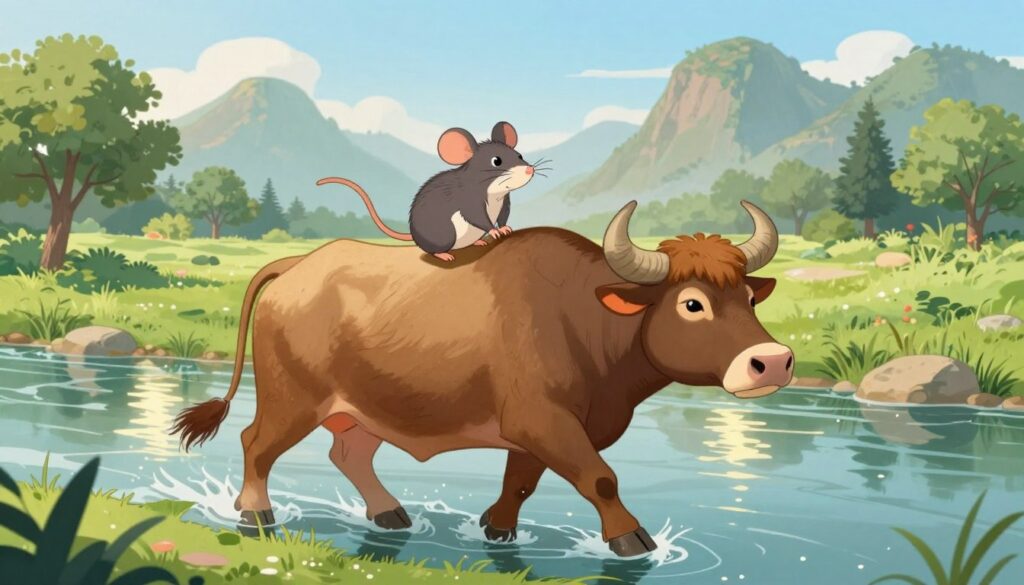
In one version, the Rat and Cat ride across a river on the Ox’s back. Near the end, the Rat pushes the Cat into the water and reaches the gate first.
The Ox arrives next, while the Cat misses the ranking. This tale gives the Rat a clever role and offers a story for why the Cat is absent.
The race is one way to remember the order, not proof that the animals competed in real life. Its details change across tellings.
Why the cat is left out
The Chinese zodiac story about the cat says the Rat’s action kept the Cat from joining the animal sequence. Other versions may tell the tale differently or leave out that conflict.
Another telling says the animals arrived every two hours. Their arrival times marked the periods of a 24-hour day, giving the signs a link to daily time as well as years.
Stories like these help explain how people have passed down the zodiac. They are folklore, and their value lies in cultural meaning rather than a record of events.
The story’s familiar cast is not identical across every culture, so regional versions deserve comparison.
How Do Zodiac Animals Differ Across Asian Countries?
The Chinese zodiac’s influence crosses borders, but the animal set is not identical everywhere. Some countries share China’s 12 signs, while others use different animals in certain positions.
These changes reflect local traditions, so one familiar zodiac animal label does not guarantee identical details. The table gives examples of shared signs and substitutions.
Shared signs and different animal names
| Country or tradition | Animal difference | Concrete example |
|---|---|---|
| South Korea | Same 12 animals as China | Same animal sequence |
| Japan | Pig represented as Boar | Boar |
| Vietnam | Ox and Rabbit positions differ | Buffalo and Cat |
| Thailand | Dragon position differs | Naga |
| Myanmar | Animal set differs from China’s | Garuda, Lion, Guinea Pig |
Country examples of substitutions
North Korea, Singapore, and Cambodia share the same 12 animal signs as China. Japan uses Boar where the Chinese sequence uses Pig.
Vietnam uses Buffalo and Cat in place of Ox and Rabbit. Thailand uses Naga in the position associated with Dragon.
A Burmese cycle includes Garuda, Tiger, Lion, Elephant with tusks, Rat, Guinea Pig, and Dragon. The Myanmar row shows several of its animals, not a complete cycle.
These country examples show why a sign name can change across borders. A lookup must match the tradition as well as the birth date.
Regional differences are one reason to check which calendar convention and tradition a birth-sign lookup uses.
Why Does the Chinese Zodiac Year Start on a Different Date?
January 1 marks the Gregorian year, but it does not automatically change the Chinese zodiac animal. Lunar New Year follows moon-based timing, so its Gregorian date shifts from year to year.
The Chinese calendar uses a lunar calendar, a calendar that tracks time by cycles of the moon. The Gregorian calendar used in daily life begins each year on January 1.
Lunar New Year does not follow January 1
Chinese New Year, the first day of the Chinese lunar year, falls between January 21 and February 20. Its changing date means a Gregorian year can overlap two zodiac animal years.
For example, 2024 began on February 10 and was the Year of the Wood Dragon. The date matters when you compare a birthday with its zodiac year.
The lunar calendar and its elements
Animal years can also be paired with one of five elements: wood, fire, earth, metal, and water. These elements add another layer to the Chinese calendar.
In this pattern, 2025 was the Year of the Wood Snake, following 2024’s Wood Dragon. The animal and element combine in a repeating pattern.
You can use the calendar details for your own birth date by finding the year’s Chinese New Year and comparing it with your birthday. A source using Start of Spring may give a different boundary for some dates.
Finish by keeping that boundary in view when you check a birth sign.
Conclusion
A reliable zodiac lookup starts with the full birth date, not just the year printed on a calendar. Animal labels repeat every 12 years, while the right sign depends on the date boundary.
Write down your birth year, month, and day, then compare that date with Chinese New Year. If a lookup follows the Start of Spring convention instead, its result may differ for a January or February birthday.
Before adopting a sign label, check the boundary used for your birth date.
FAQ
What is the origin story of the Chinese zodiac?
A popular folklore story says the Jade Emperor held a race for places at the Heavenly Gate. The Rat reached the gate first, and the Pig arrived last. In one telling, the Rat and Cat cross a river on the Ox’s back, but the Rat pushes the Cat into the water. The story explains the order through a tale, not a historical record.
What animal sign is year 2019?
2019 was the Year of the Pig in the Chinese zodiac. The animal cycle repeats every 12 years, so the Pig returns after that interval. A birthday near the start of the Gregorian year can fall under the previous zodiac year, depending on the date boundary. Check the full birth date if you are identifying a person’s sign.
Is Pig lucky in 2026?
An animal sign alone cannot show whether 2026 will be lucky for someone born in a Pig year. The zodiac does not have an objective luck ranking that predicts how a person’s year will go. 2026 is the Year of the Horse, and Pig traits or forecasts remain cultural beliefs rather than reliable measures of future events.
What is the animal sign of 2020?
2020 was the Year of the Rat in the Chinese zodiac. The Rat begins the traditional animal sequence, which returns to the same animal every 12 years. If you are checking a January or February birthday, use the exact date and the zodiac-year boundary. The Gregorian year alone may not give the right sign.
Who is the fakest zodiac?
No zodiac sign is objectively the fakest. Sign profiles are traditional interpretations, not evidence-based judgments of a person’s honesty or character. A claim about a sign may reflect a cultural belief or stereotype, but it does not prove that everyone born under that sign acts alike. Judge people by their choices and actions, not a zodiac label.
Is 2026 a bad year for the Rat?
The Chinese zodiac label does not establish that 2026 will be a bad year for Rats. 2026 is the Year of the Horse, but that calendar fact does not predict events for people born in a Rat year. Forecasts based on zodiac signs belong to personal or cultural belief, not a dependable way to know what will happen.