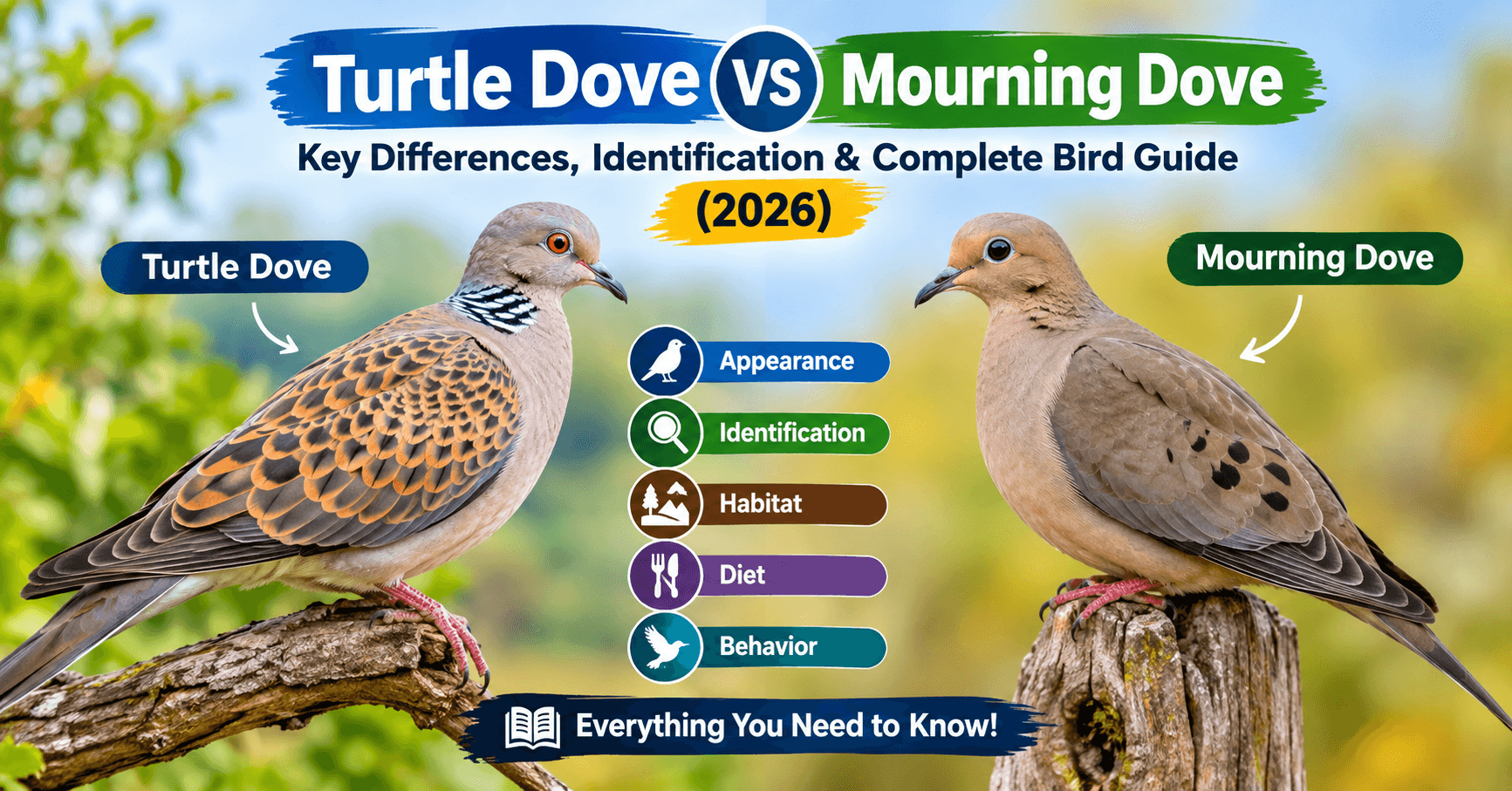
Introduction
When folks hear the Christmas legend “two turtle doves, they logically think of the same cute little bird that can be found on telephone lines throughout North America. But after the original Dutch discoveries, descriptions of the two species conflicted, especially in plumage, distribution, and even song; migration and conservation also differ for both birds. So, this short guide can help you tell whether the nesting dove in your yard is a turtle dove or a mourning dove.
Turtle Dove vs Mourning Dove
| Feature | Turtle Dove | Mourning Dove |
| Scientific name | Streptopelia turtur | Zenaida macroura |
| Native range | Europe, Asia & North Africa | North America |
| Size | 10–11 inches | 9–13 inches |
| Tail shape | Wedge-shaped with white tip | Long, pointed tail |
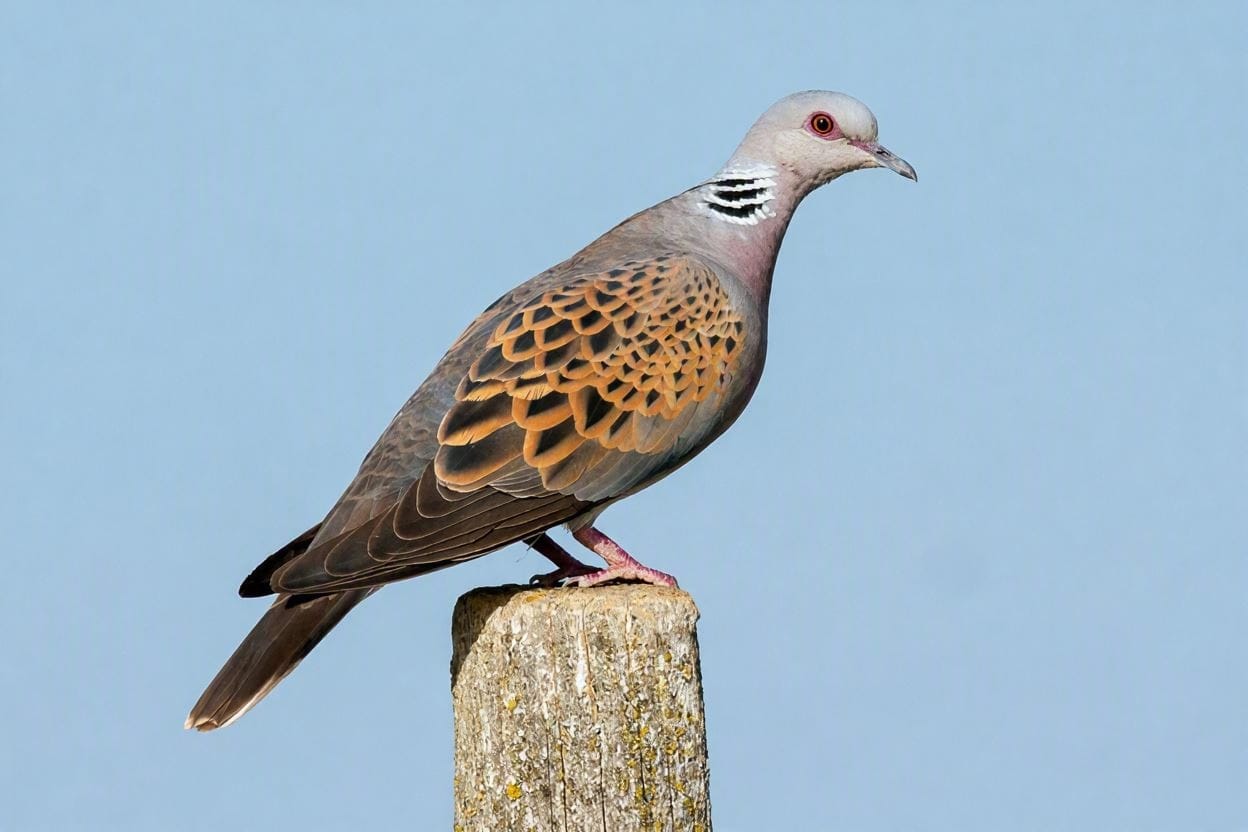
| Neck marking | Black-and-white striped patch | No striped neck patch |
| Wing pattern | Scaly chestnut feathers | Plain gray-brown with black spots |
| Migration | Long-distance migrant | Partial migrant/resident |
| Conservation | Declining population | Common and widespread |
How to spot them is easy: if you catch a long, pointed tail and black spots on its wings, that’s a mourning dove, most likely. If you see a striped neck patch with a beautifully patterned chestnut wing, that’s a turtle dove.
What’s a Turtle Dove?
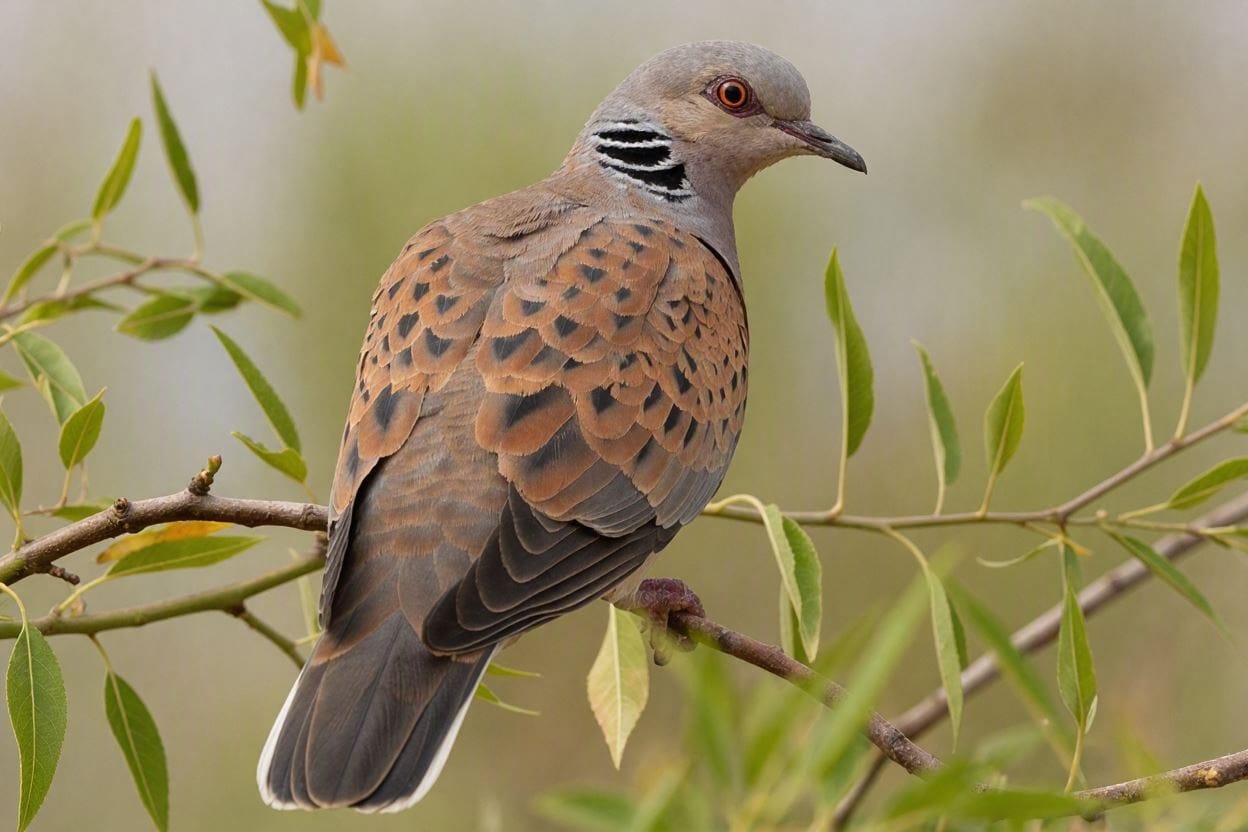
The European Turtle Dove (Streptopelia turtur) is a common songbird in Europe, which winters in Africa. The name comes from the Latin term “turtur” and is nothing to do with turtles. These birds can be found in dovecotes, forests, and open woodlands during the breeding season. Turtle Doves are a species of great conservation concern due to their high rate of population decrease throughout most of Europe.
Their plumage of warm cinnamon and white markings makes them among the most beautiful birds in the dove family. Unlike other pigeons and doves, turtle doves are more commonly found in farmlands and hedgerows, and less so in urban areas. This is due to the birds’ reliance on natural habitats such as woodland clearings and sunny grasslands. The species’ future is still bleak due to agricultural change and human encroachment destroying their natural habitats.
What Is a Mourning Dove?
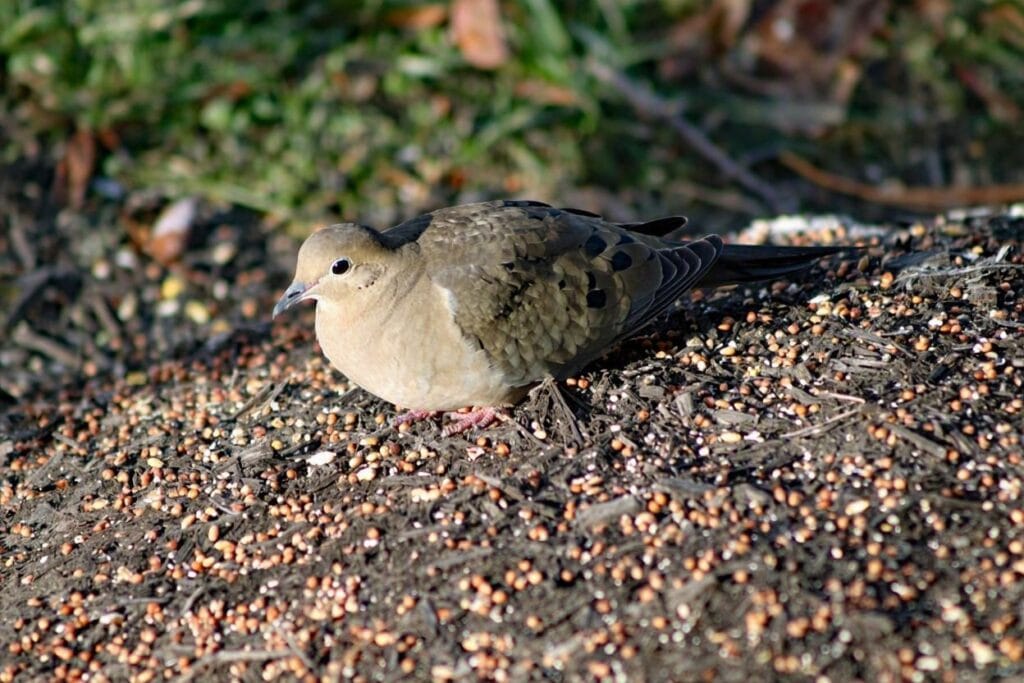
Mourning Doves rank as one of North America’s most abundant birds. They live everywhere, in urban environments, suburban environments, deserts, farms, grasslands, and the edges of forests. They are slightly less colorful than their relative, the turtle dove, but have a certain beauty in their flight, and the sound of their song is simply incredible.
The name ‘mourning’ actually derives from the sound of their call, as it is supposedly quite sad, and not from their appearance. They usually perch on power lines or search the ground for seeds. Their tail is long and tapers at the end, and their flight is a fast one, like bullets, making them easy to spot. So, if you wish to know how to find them, look out for utility lines with some birds sitting on them or flying in a pattern like the one mentioned above.
Looks: Spotting The Difference
Their body is compact, and their head is small, but their plumage is another matter.
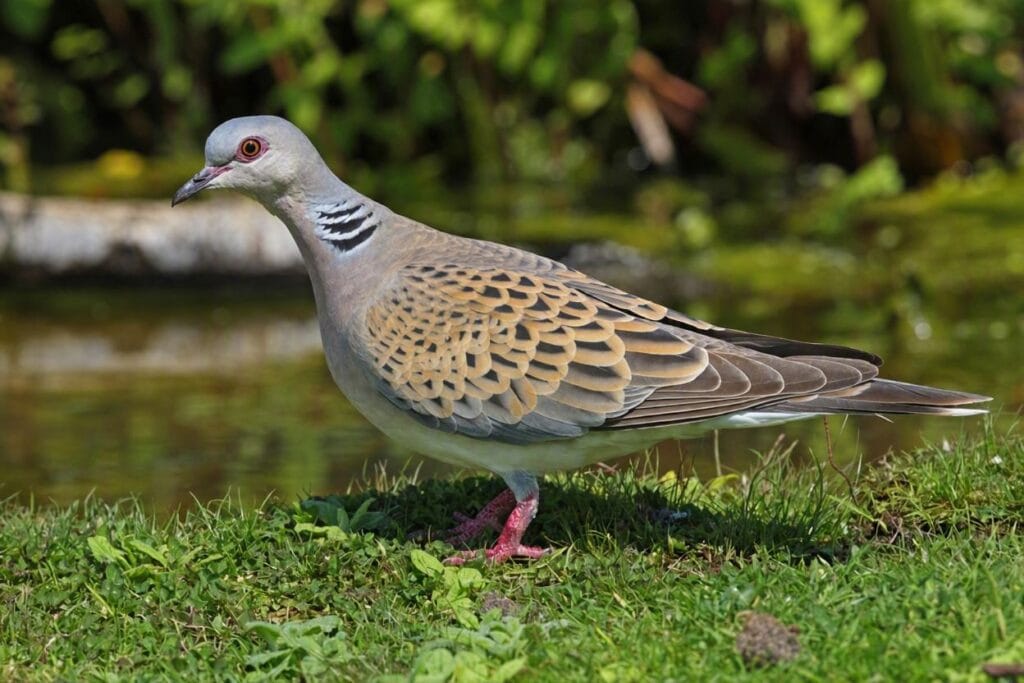
Turtle Dove
Notice the striped neck patch and chestnut, scale-like wing feathers.
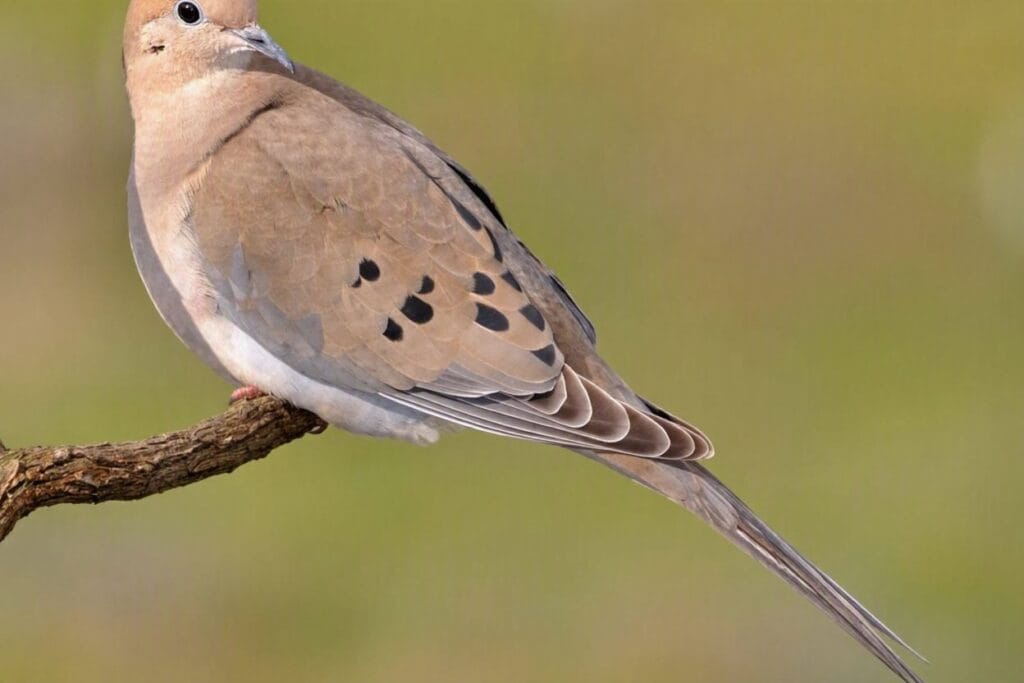
Morning Dove
The body is plain grayish brown, with black spots on the wings, and a long tail.
The black scalloped plumage of the Turtle Dove resembles that of fish scales. It has a striped patch on both sides of its neck.
The Morning Dove is nothing to look at beside its relative. Its wings are a light grey-brown with a peach wash on the breast. On the folded wings there is a small black spot, and the long, pointed tail feathers have a white edge.
Key Identification Checklist
• Tourterelle des bois : rayure sur le cou, ailes marron, queue en forme de coin
• Tourterelle matin : taches noires sur les ailes, longue queue pointue, coloration gris-brun
Habitat and Geographic Distribution
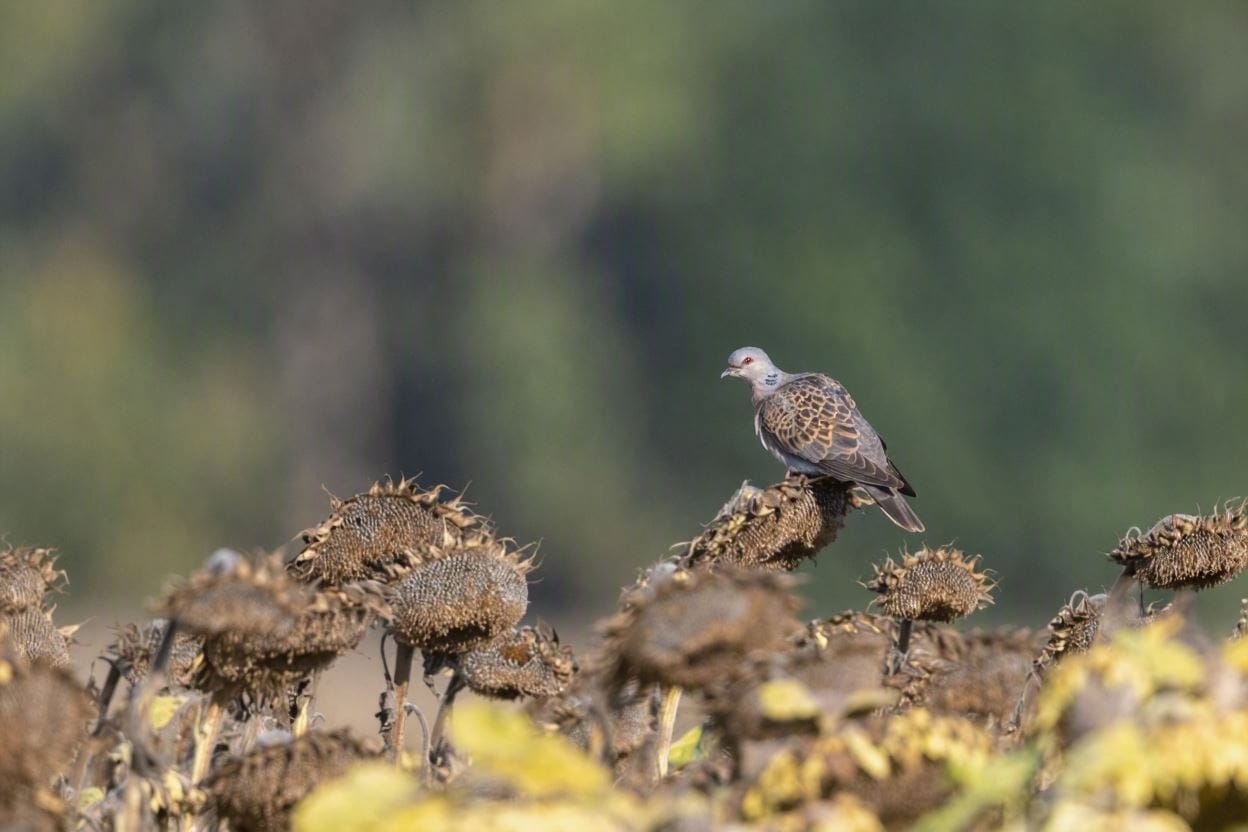
Living location is actually one of the biggest dissimilarities among these birds.
Turtle Dove environment
I know the turtle doves of Europe, Western Asia and North Africa. They are autumn migrants over the Mediterranean Sea to winter in sub-Saharan Africa.
- Hedgerows
- Open woodland
- Farmland
- Shrubland
- Sunny rural landscapes
Habitat of Mourning Dove
Mourning doves are found in almost all regions of North America (southern Canada and the US), with distributions extending into Mexico and Central America.
They thrive in:
- Suburbs
- Parks
- Gardens
- Agricultural fields
- Desert scrub
- Woodland edges
Let me tell you about doves in the US for birders… the most common dove you’ll see on your feeder in the US is the Mourning Dove. European turtle doves are an incredibly rare wild vagrant to North America.
Calls and Sounds: What Dove Am I Hearing?
This sonogram might help you identify a coo: Pigeon-birdsong is often easier to recognize than feathers, especially when the bird hides in trees.
Turtle Dove Call
The turtle dove produces a gentle rolling “turrr… turrr…” or rhythmic purring sound. Its call feels soft, warm, and repetitive, inspiring its ancient Latin name.
Mourning Dove call
The song of the mourning dove is a lamenting series of whistles comprised of three notes: “coo-OOO-oooo, ooo, ooo.” This eerie sound gave the bird its popular name and is well known throughout North America.
A useful memory trick is this:
| Dove | Call style |
| Turtle Dove | Soft purring “turrr” |
| Mourning Dove Long | Sustained cooing sound |
Behavior and Feeding Habits
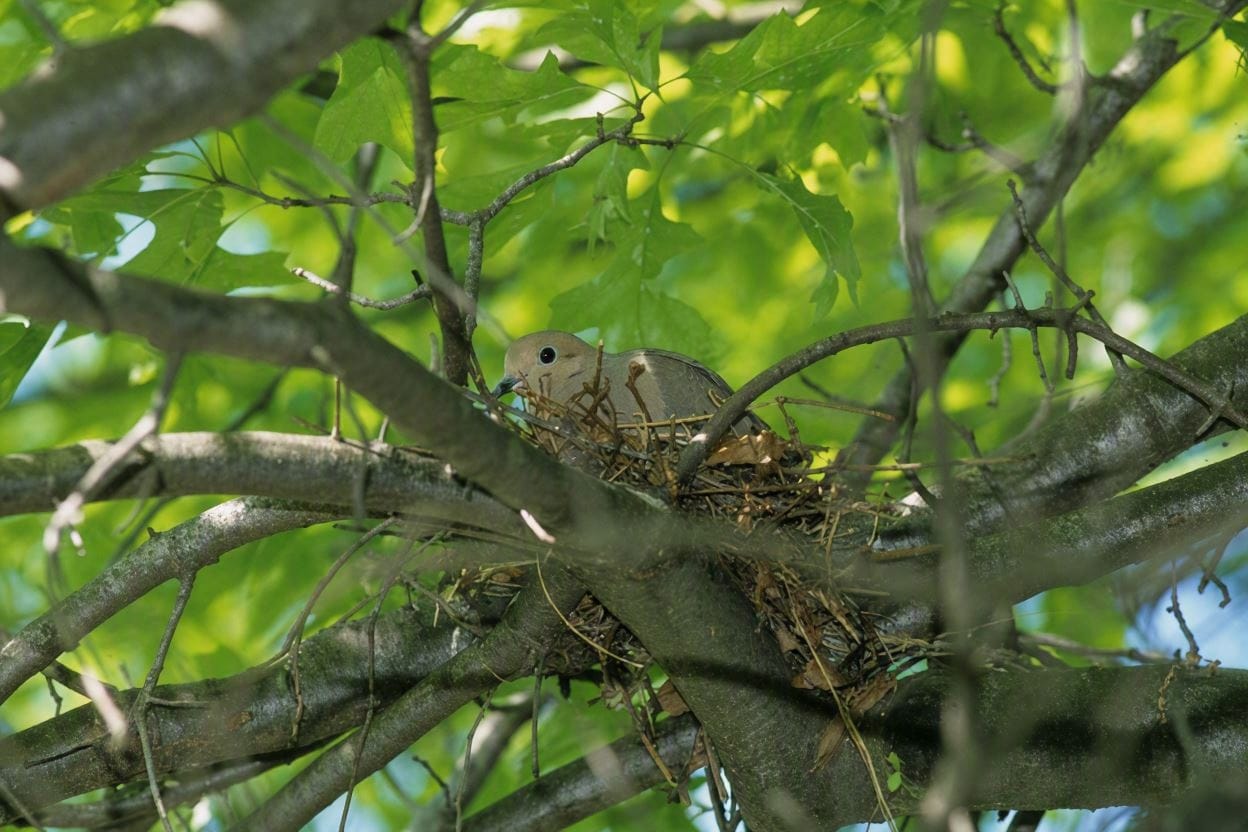
Despite the differences, both birds have a set of similar behaviors common to most dove species.
Both birds eat mostly seeds, grains, and wild plants. They also build nests of sticks, usually in trees or bushes, where females lay eggs that the males and females care for. Moreover, the birds’ peaceful nature and attachment to their partners have been associated with the symbol of love. Yet there are notable differences between the two birds. Such as, mourning doves are regular visitors to our backyards and bird feeders. In addition, they can better adjust to the environment than turtledoves. The latter prefers to avoid people and live in their own habitat in the natural environment, including farmland.
Migration Patterns
Migration is another defining characteristic.
Turtle Dove
- Migrates thousands of kilometers annually
- Winters in sub-Saharan Africa
- Returns to Europe during spring breeding season
Mourning Dove
- Many populations remain year-round
- Northern birds migrate shorter distances south
- Southern populations may not migrate at all
This makes the turtle dove one of Europe’s outstanding long-distance migratory songbirds, while the mourning dove is more adaptable concerning climate.
Conservation Status: Which Bird Needs More Protection?
The conservation status of these two birds is considerably different.
Mourning Dove
Is numerous throughout most of North America and is generally quite abundant.
Turtle Dove
Is sadly declining throughout Europe due to habitat loss, food shortages, and changes in agricultural practices. It is regarded as a conservation priority by conservation organizations.
Conservation action for turtle doves should be directed towards protecting the species’ habitat, especially areas with hedges, wildflowers, and traditional agriculture.
Symbolism & Cultural Meanings
Both have been emblematic birds in poetry, the religious sphere, and mythology. Although similarities between the two birds exist, the symbolism and cultural meaning are different.
The evening dove has been identified by scholars with the “Turtledove” of the Song of Solomon, a representation of idealized love in Hebrew thinking and poetry. Turtle doves have long been a symbol of true love and fidelity and are referred to in several Christmas carols such as “The Twelve Days of Christmas.” Peace, hope, memory, and healing are what the mourning doves represent. The dove’s coo resembles a gentle prayer, and for that and other reasons, it has been used as a symbol of peace in North America for more than a century.
Entertaining Forest Doves in Your Backyard: Which One Should You Choose?
In North America. For beautiful doves in your garden, the mourning dove is the undisputed champion if you live in North America.
Mourning doves may be attracted with the following:
- Millet
- Cracked corn
- Sunflower seeds
- Ground feeding areas
- Fresh water
Turtle doves are not commonly found at backyard feeders, except within their native range of Europe. Therefore, birders in Europe who are lucky enough to see one will be more likely to see it in a hedgerow or on a farm than in their gardens.
External Link
Internal Links
- Mourning Dove Bird Guide
- Capercaillie Bird: Complete Species Guide
- Achalinus mirabilis: The Miraculous Odd-Scaled Snake
- The “Miraculous” Eagle With a Broken Wing Returns
Turtle Dove Vs Praying. Mourning Dove: Final Verdict
While the turtle dove and mourning dove can appear to be some sort of elegant bird, they are entirely different birds. The turtle dove belongs to the Old World genus Streptopelia; it has a striped neck, bright feathers, and amazing migration routes across Africa and Europe. The mourning dove is of the New World genus Zenaida and also has a long, pointed tail as well as a drooping, mournful coo that is a familiar sound in many American towns and cities.
Birding in your backyard or through your binoculars at a smiling stranger on the train might not seem like an ” always on the go‖ type of activity, but being able to distinguish between two perplexingly similar species always seems to add a bit more bounce to your step.
FAQs
1. Are there any other differences in the calls of these birds, apart from their names?
Morning Dove has a gentle and melodious “coo-oo-oo; hence the name, and the Turtle Dove has a deeper and growling or rolling sound.
2. Which of these represents love and peace?
These birds, if not beautiful to look at, have certainly been identified with love, peace and devotion. Turtle doves have been multiplied in literature, as among others in the Christmas carol “The Twelve Days of Christmas”. The mourning dove has been linked with hope, remembrance, and peace.
3. The mourning dove identification?
The best indication is the Eastern’s long, pointed tail and the bird’s body color: gray-brown with some black spots on their wings.
4. What is causing Turtle Doves to become extinct?
The greatest threats are the loss and conversion of forest, with associated degradation, due to the spread of farming, and a loss of food and nesting materials in their surroundings.
5. Can Turtle Doves and Mourning Doves coexist?
There’s no conflict – they just live in different habitats, so it’s unusual. The turtle dove (Europe, Asia, North Africa) and the mourning dove (North America) are sister species.