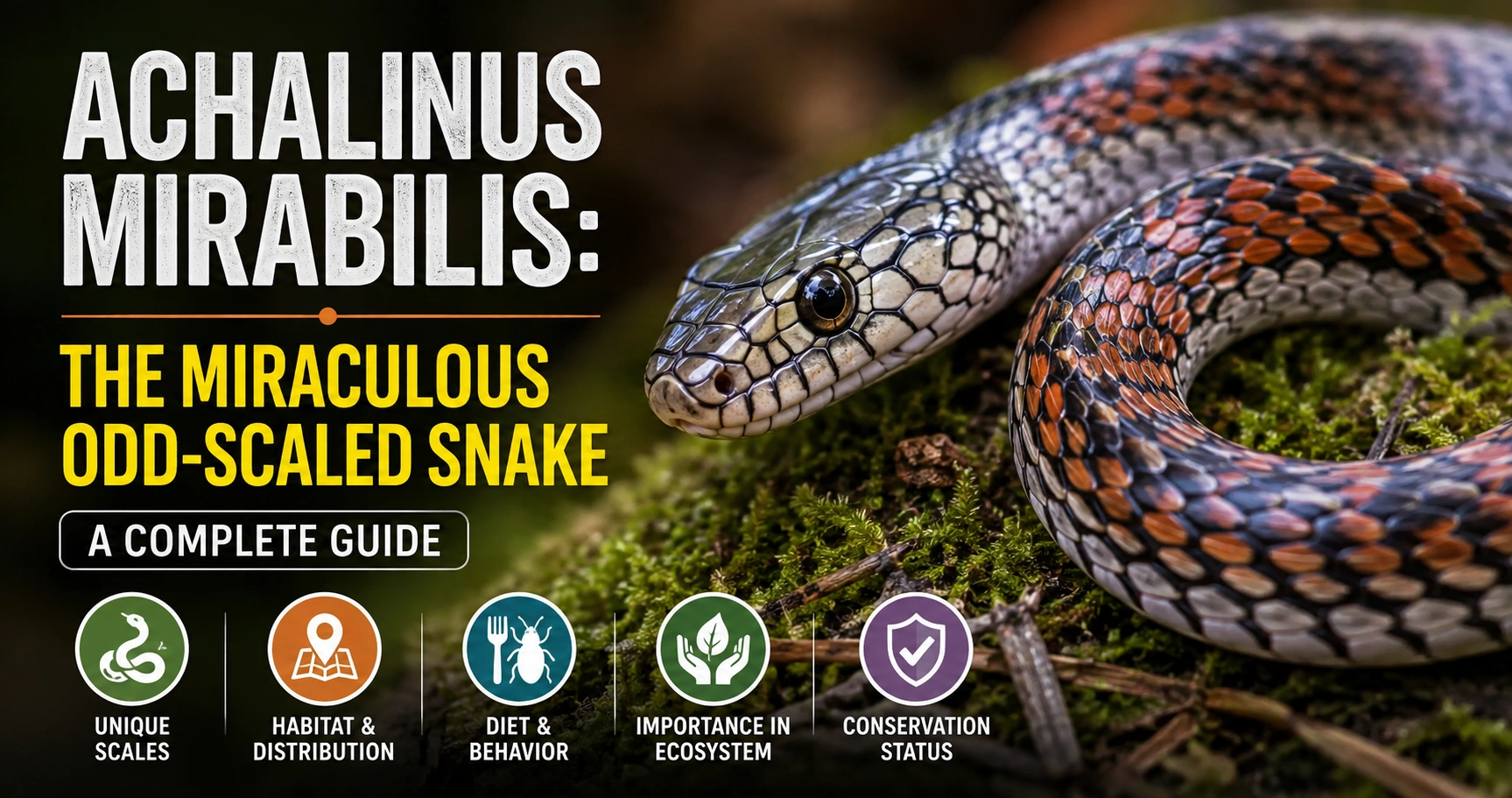
Complete guide to the mysterious and rare Achalinus mirabilis species, its habitat, appearance, and behavior.
Many snakes are truly amazing creatures that inhabit various parts of the world. However, there is one snake that seems to be more mysterious than most – the elusive Miraculous odd-scaled snake. This rare and low-key species of snake is part of one of the most bizarre genera in Asia. Unlike many of the region’s other snakes, which are often venomous, Achalinus mirabilis has eluded attempts by scientists to get close and understand it.
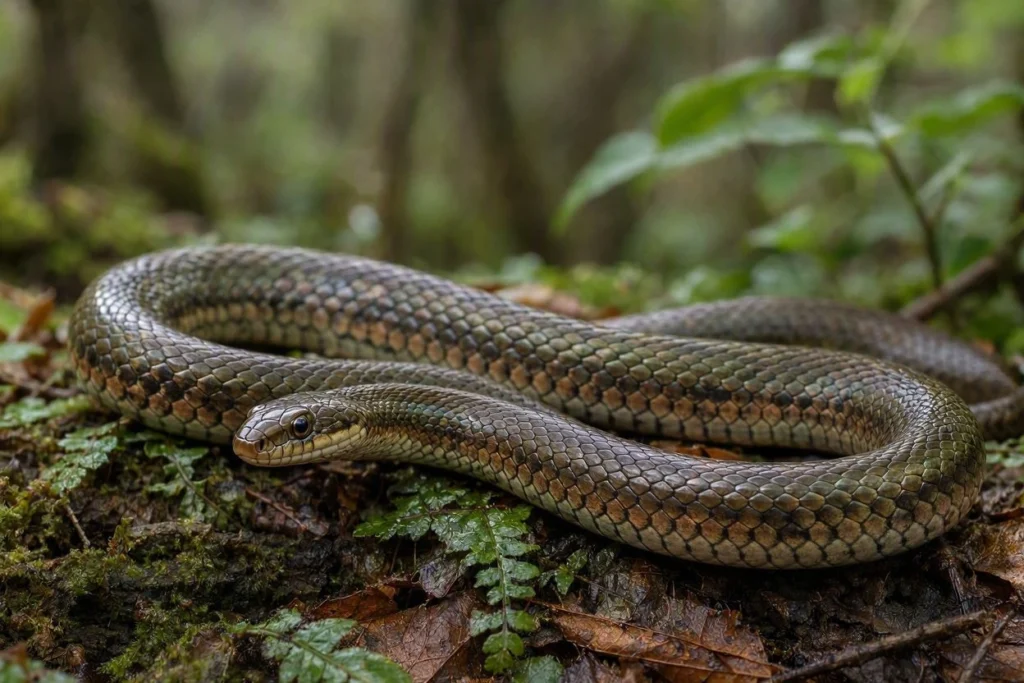
A creature of the night that wanders among the soil and detritus on the floor of the forest, burrowing into leaves and earth, disruption is a formidable challenge to most would-be-experts. If you’re a beginner herpetologist looking to get a good grounding in the Miraculous odd-scaled snake and quell some of that curiosity, then you’ve come to the right place. With this article, you will get a good insight into the species. We are going to discuss the snake’s taxonomy, habitat, and behavior, as well as other interesting information.
What is Achalinus mirabilis?
The odd-scaled snake, Achalinus mirabilis (non-venomous) is a species of snake in the family Xenodermatidae, endemic to Taiwan. Related species of secretive snakes do occur throughout eastern and southeastern Asia, with A. mirabilis ranked among the rarest and most secretive.
Biological classification
| Category | Classification |
| Regnum | Animalia |
| Phy/lum | Cordata |
| Classis | Reptilia |
| Ordo | Squamata |
| Familia | Xenodermidae |
| Genus | Achalinus |
| Species | A. mirabilis |
The specific name mirabilis is from Latin, meaning “wonderful” or “remarkable,” referring to how it looks.
Physical appearance
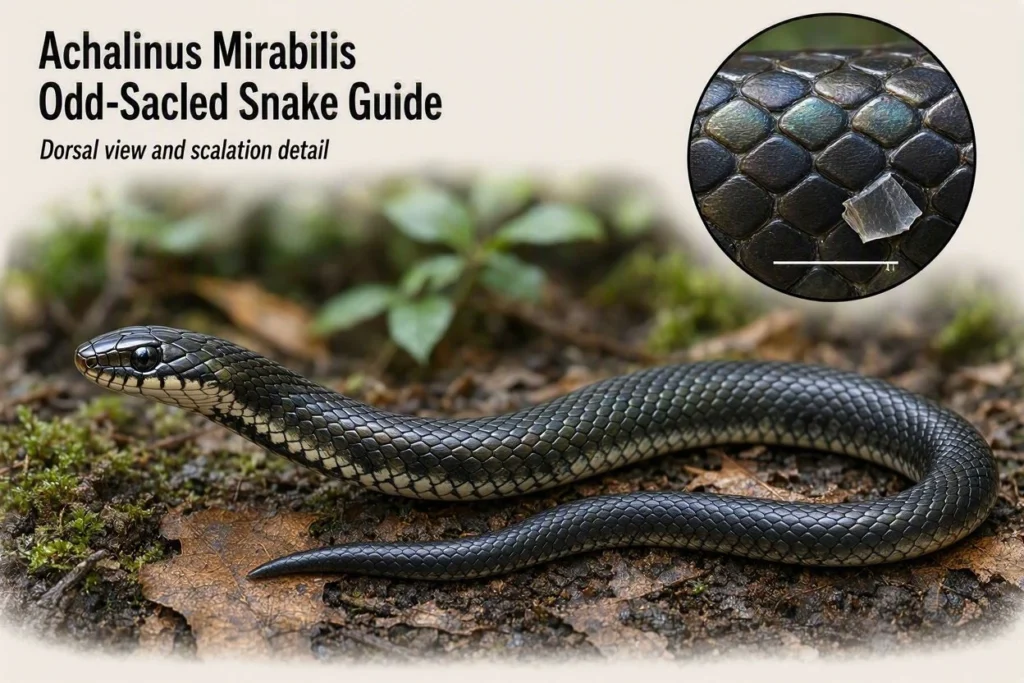
The skin of a snake is one of its most distinctive features. Unlike most snakes, however, the scales of A. mirabilis are not arranged in rows that run up and down the snake’s body, but rather in a pattern that is unique to this species and that gives the snake a silky appearance.
Other notable characteristics:
- Size: 30-60 cm (12-24 in)
- Tapering cylindrical body
- Dark brown to black color
- Iridescent or metallic quality to the scales
- Small eyes, adapted to seeing in the dark
- Rounded head that is barely distinguishable from the neck
The snake’s glossy scales often resemble different shades of blue, purple, or even green, depending on the angle of observation. This makes it one of Asia’s most beautiful and eye-catching snakes.
What does the living environment of Achalinus mirabilis look like?
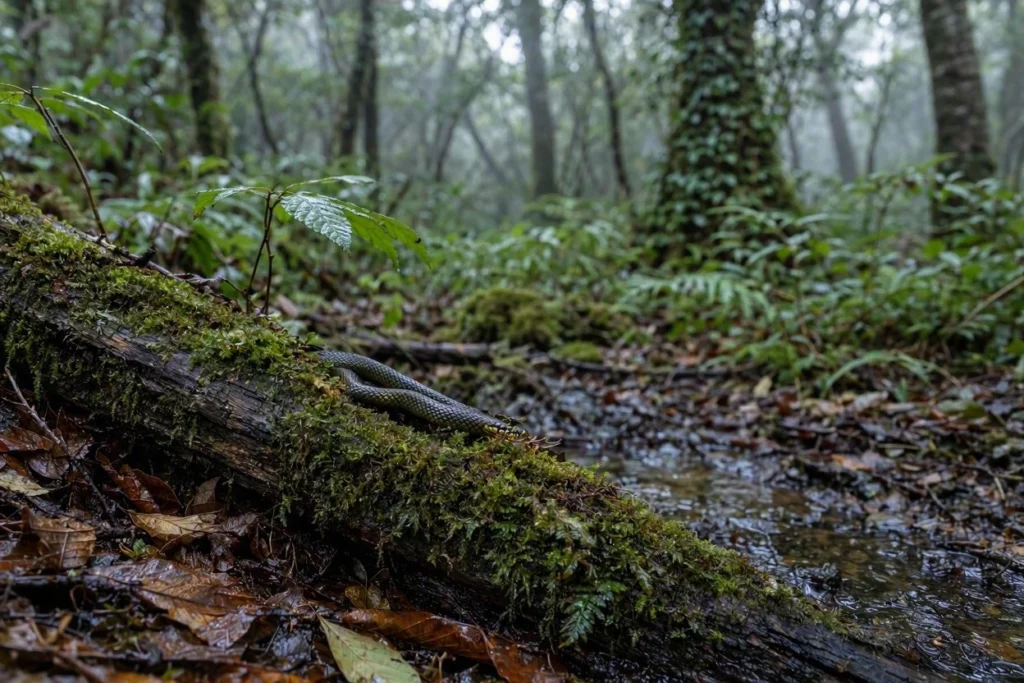
The environment of Achalinus mirabilis is a moist and cold montane forest. It occurs in southeastern China and northern Vietnam.
It does well in:
- Dense evergreen forests
- Thick leaf litter
- Moist soil
- Moss-covered rocks
- Rotten logs
- Mountain elevations with high humidity
Since it lives most of its life underground or under natural litter, its appearances are very rare.
Why is it called an odd-scaled snake?
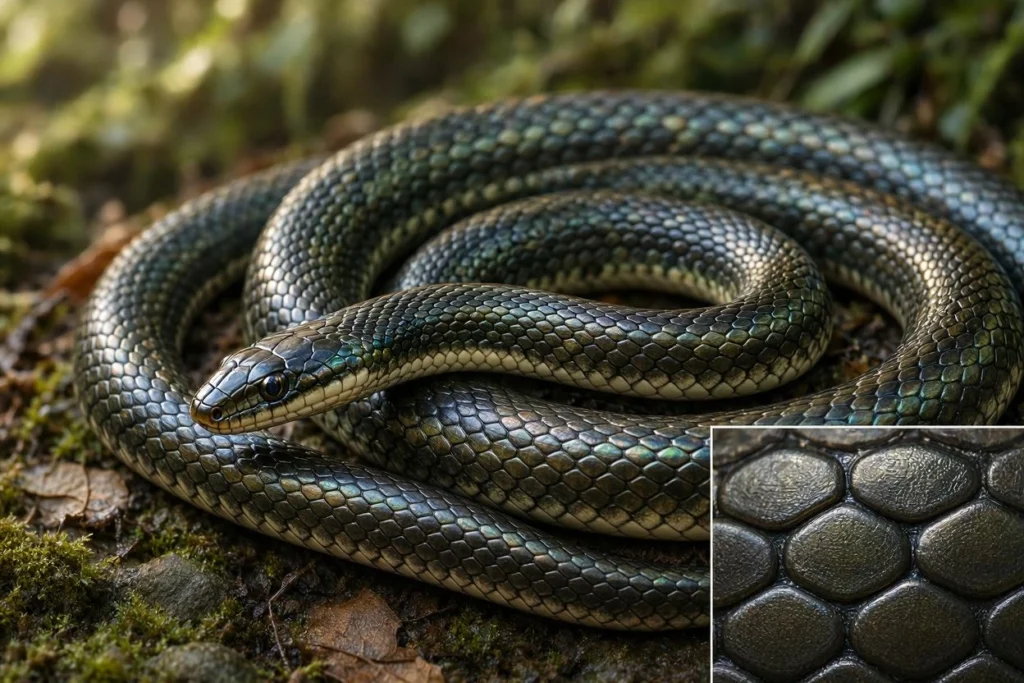
Xenodermidae gets its name from the unusual scales that cover the snakes belonging to this family. Unlike most other snakes that have overlapping scales, odd-scaled snakes have a variety of differently sized scales.
Researchers believe these scales allow the snake to do the following:
- Create better camouflage against wet leaves
- Turn more easily in loose soil
- Retain moisture
- Reduce its chances of being seen by predators
Researchers are still working to fully understand the different ways odd-scaled snakes use their unique scales. However, it has been suggested that the scales have much to do with the snake’s secretive nature.
Behavior and lifestyle
Activity at night
Achalinus simus, or Liangshan odd-scaled snake, is diurnal; the other three Achalinus species are nocturnal and feed when grow dark and hide under logs or stones during the day or in leaf litter. This behavior may obscure predation.
Secretive nature
This secretive snake is rarely seen by people, despite having been studied for many years, which has limited scientific knowledge of it.
Defensive behavior
Even when encountered by people, it is generally safe to leave the snake alone, as it will avoid fighting by doing any of the following:
- Keeping still
- Hiding beneath leaf litter
- Escaping into the ground
- Using its coloration to hide rather than attacking
So, it can be concluded that this defensive behavior is why the snake is generally not dangerous to people.
Feeding and diet
The Miraculous Odd-Scaled Snake is known to prey on small invertebrates of the moist forest environment.
Typical prey consists of:
- Earthworms
- Slugs
- Soft-bodied insects
- Small larvae
- Tiny forest invertebrates
The flexible jaw and slender head of the snake enable it to be a hunter in small enclaves beneath the earth.
Reproduction
The reproduction mode of the species Achalinus mirabilis is poorly understood since, like many other species in the genus, it is most likely oviparous, which means that females lay eggs.
Studies on such aspects of the species’ biology as
- Seasonality in reproduction,
- Clutch size,
- Egg incubation,
- And juvenile growth
are ongoing, since animals are rare and few populations have been visited.
Ecological importance
Although diminutive and invisible under leaf litter, Iriomote’s Achalinus mirabilis is nonetheless an important part of the local ecology.
Ecosystem benefits
- Controls the numbers of some invertebrates
- Plays a part in the nutrient cycle
- Provides food for large animals
- Indicates the presence of a healthy forest
- Maintains biodiversity
This snake’s presence signifies a healthy environment. It’s habitat-dependent, and the right habitat (usually forest) is needed.
Is Achalinus mirabilis toxic?
This species of snake is non-venomous, and Achalinus mirabilis is an innocent snake which has a very little danger to humans.
A: Observe; to be advised:
- Do not touch the animal.
- Keep a safe distance.
- Let the snake leave of its own accord.
- Leave protected species alone.
We need to respect wildlife and the delicate balancing act of the environment.
Conservation status
The conservation status of the species Achalinus mirabilis is currently under review, as the population size of this animal is poorly understood. Nevertheless, it was stated that habitat loss is potentially the most significant threat to the species’ survival.
Major threats
- Human-induced deforestation
- Habitat fragmentation
- Urbanization
- Agricultural expansion
- Climate change
- Illegal collecting
Native forest retention is key to this species’ survival and to biodiversity at large, as hundreds of plant and animal species reside in these biomes.
Interesting facts about Achalinus mirabilis
- The word “mirabilis” in its scientific name means “remarkable in Latin.
- It is part of the strange family of odd-scaled snakes called Xenodermidae.
- Achalinus mirabilis snakes are non-venomous.
- Their scales have a nice iridescent property.
- They spend most of their time underground.
- There is still little information about their reproductive strategy.
- And they do good work for the forest soil community.
- These snakes belong to one of the rarest subtropical Asian forest species.
Achalinus mirabilis vs. common forest snakes
| Feature | Achalinus mirabilis | Typical Forest Snake |
| Venom | No | Varies |
| Activity | Nocturnal | Day or night |
| Habitat | Leaf litter & damp soil | Trees or shrubs or ground |
| Scales | Odd and iridescent | Regular overlapping scales |
| Human encounters | Extremely rare | More common |
| Behavior | Secretive | Variable |
External Links
- International Union for Conservation of Nature (IUCN)
- Reptile Database
- Smithsonian National Museum of Natural History
- Amphibian & Reptile Conservation Trust
Internal Link
Learn more about Achalinus mirabilis, the rare Miraculous Odd-Scaled Snake, including its habitat, behavior, diet, and conservation in our complete species guide: Achalinus mirabilis.
Conclusion
A new and mysterious snake species, Achalinus mirabilis, is one of the least understood animals in Asia. This species has the most amazing feature that attracts people’s attention – the iridescent, odd scales. Except for the serpents’ own secretive and nocturnal habits, the snake’s elusiveness and relative rarity—despite its presence in forests—make it an intriguing object of investigation. At the same time, the snake species is not dangerous to humans; thus, it needs to be left alone to avoid disrupting the local ecosystem.
Indeed, researchers and science enthusiasts should leave this particular species alone since it is a new finding for scientists, meaning that there is still much to learn about it. However, the population should support conservation efforts to leave the snake’s habitat undisturbed by humans and ensure the survival of the species.
FAQs
1. What is Achalinus mirabilis?
The strange-faced snake Achalinus mirabilis is a rare forest-dwelling species of the harmless genus found in East Asia. The Miraculous Odd-Scaled Snake Miraculous Odd-Scaled Snakes are Eccenthal with Aventon wings and is a rare species in the leaf litter of subtropical East Asian forests.
2. Is the Miraculous Odd-Scaled Snake toxic?
Earthworms, slugs, and other invertebrates of forest soils; larvae. This species poses no threat, and actually it only runs when you approach too closely. The name seems a bit scary, but it’s completely non-venomous and a very shy snake that truly always runs away rather than fighting.
3. Where does the Miraculous Odd-Scaled Snake live?
The Miraculous primary odd-scaled snake is found in southern, humid montane forests in both China and northern Vietnam. Miraculous Odd-Scaled Snake inhabits the southern, humid montane forests of China and northern Vietnam.
4. Why does the snake have an odd-scaled skin?
This pattern of scales makes the snake’s skin super smooth and shiny. The snake’s scales are arranged in an unusual way on its skin, and scales further away from its body are full of water.
5. How important is the Miraculous Odd-Scaled Snake?
The Miraculous Odd-Scaled Snake is part and parcel of the forest’s life and death, and indeed survival, as its common name would indicate. It is essential to high-biodiversity, healthy ecosystems.