What Is a Bonobos Animals?
The bonobo animal (scientific name Pan paniscus) is one of the nearest living relatives of human beings, and it contains about 98–99% our DNA, similarly to the chimpanzees. (National Geographic) Close kinship ties bind bonobo animals tightly to chimps under the name Pan, yet how they act and live together shows clear contrasts. Scientists once believed these animals were only a chimp subtype, calling them “pygmy chimpanzees” even today. By 1933, distinct body traits plus observed actions earned them recognition as a separate species. (Encyclopedia Britannica)
It’s not only their DNA similarity to humans that grabs attention – it’s the way bonobo Animal’s groups function day to day. While many creatures operate through brute strength and fight for rank, these primates take a different path altogether.
Cooperation shapes their daily lives far more than power plays ever do. Bonds between individuals matter deeply, often eased through touch and shared moments rather than tension. Because of this unique setup, researchers keep returning to observe their behavior, hoping to see reflections of our own distant past unfold quietly before them. What if you met a family member who acts like a flipped take on how people live?
That’s bonobos, animals for researchers – unexpected, yet familiar. A twist unfolds when watching them move through life so differently, yet somehow recognizable. They carry themselves in manners that echo our own patterns, only rearranged. Not quite opposites, but more like reflections seen sideways. Scientists keep finding clues in their actions, ones that whisper about where we came from. Their world runs on bonds, quiet shifts of power, shared warmth. It’s not chaos. The order shows up, just shaped unlike ours.
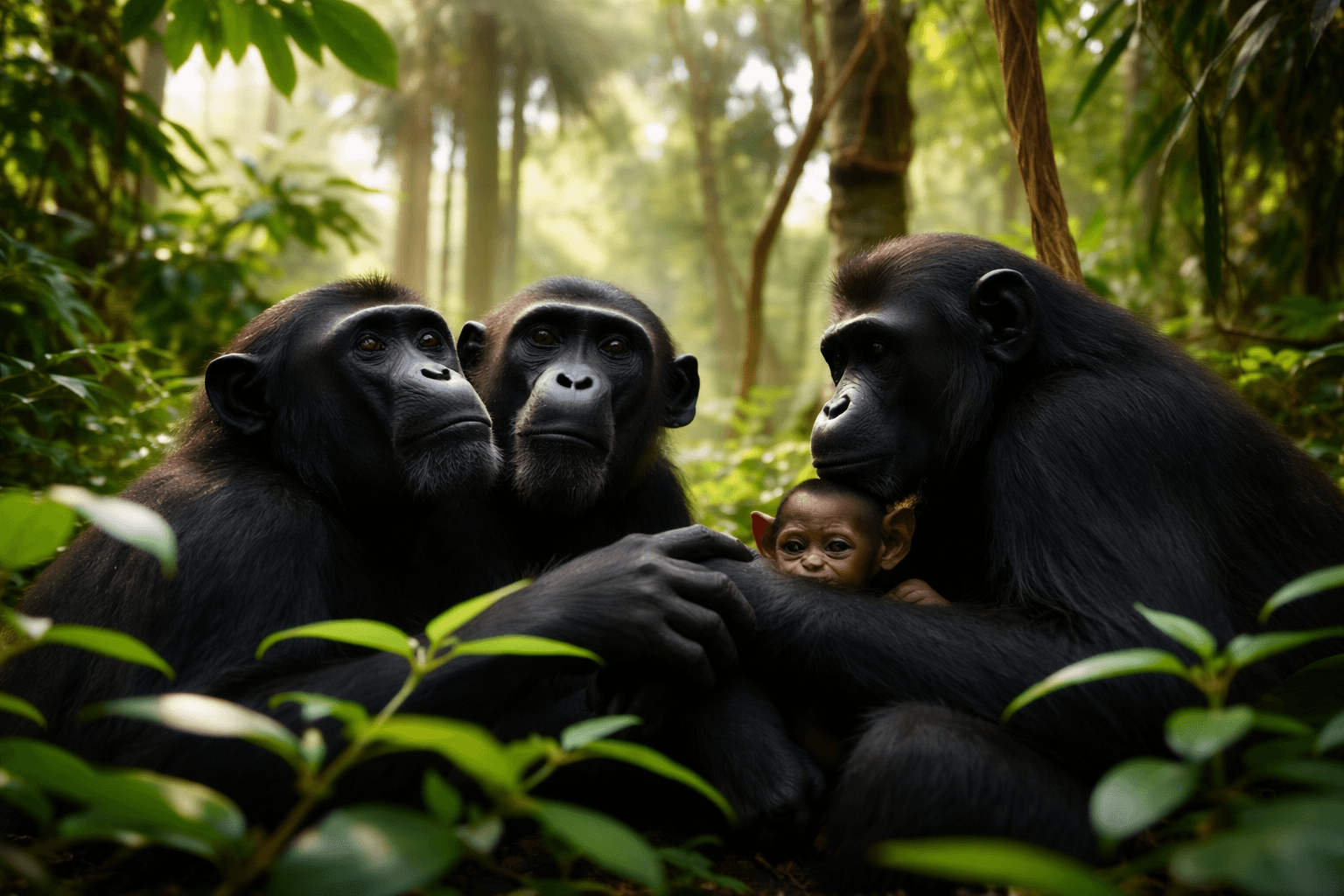
Physical Appearance and Size
You might mix them up at first – bonobos animals versus chimps – but take another moment, and distinctions pop out. Taller legs show, along with leaner frames, lighter builds, while their stance sits straighter than you’d expect. (Encyclopedia Britannica) Flatter facial planes appear, brows less heavy, lending an openness that feels oddly familiar. Height lands near 3 to 4 feet once grown, weight ranges from 31 to 39 kilograms, and is shaped by sex. (Encyclopedia Britannica)
Dark fur sets off their pinkish lips, also a neat parting of hair running down the skull. What stands out is how those small traits give bonobos a look unlike any other ape. Though built lighter than certain chimps, they twist and leap without effort. Through treetops they flow, balance sharp, posture often straight. A person might see one moving and pause – noticing something familiar, quiet in the motion, alert eyes, hands that speak.
Habitat and Distribution
Where Bonobos Animal’s Live?
Down below the Congo River, tucked in thick green woods, a type of ape survives that exists only there. Hidden deep in the wilds of the Democratic Republic of the Congo, they stay within one stretch of untouched land. Just a narrow strip of wet forest holds their whole world together. Unlike other primates wandering far and wide, these animals barely move beyond set bounds – so tiny changes strike with heavy force. When trees fall or land shifts, there is no backup home waiting. Survival depends entirely on what remains standing today.
Floating above, thick treetops weave a roof of leaves while creatures stir below in constant motion. Their world brims with green and sound – home to apes who find meals, safety, and company here. When forests fall, or violence spreads, these animals face great danger. Picture being stuck on a tiny shore – if trouble hits, escape isn’t possible.
Life in the Congo Basin forests
Under the knotted treetops of Central Africa’s Congo Basin, life hums without being seen. Quietly too, bonobo animals slip through muck and shadow, threading past tree after tree. Light cuts across open patches, catching flecks of brightness on wet ground and green fuzz below.
Trees crowd close, yet wide fields pop up without warning. Moist air hangs heavy thanks to steady rains – about two meters each year. This damp world feeds roots, vines, insects, birds, mammals, fungi – all tangled together differently every few steps.
This place does more than host bonobo animals – it steers how they act. Food shows up often, especially fruit, so clashes between them drop. Peace sticks around because of it, making their groups calmer than those of other great apes. Nature seems to nudge things toward balance here. With plenty to go around, tension fades, and these animals live right into that ease.
Diet and How Bonobos Animals Eat
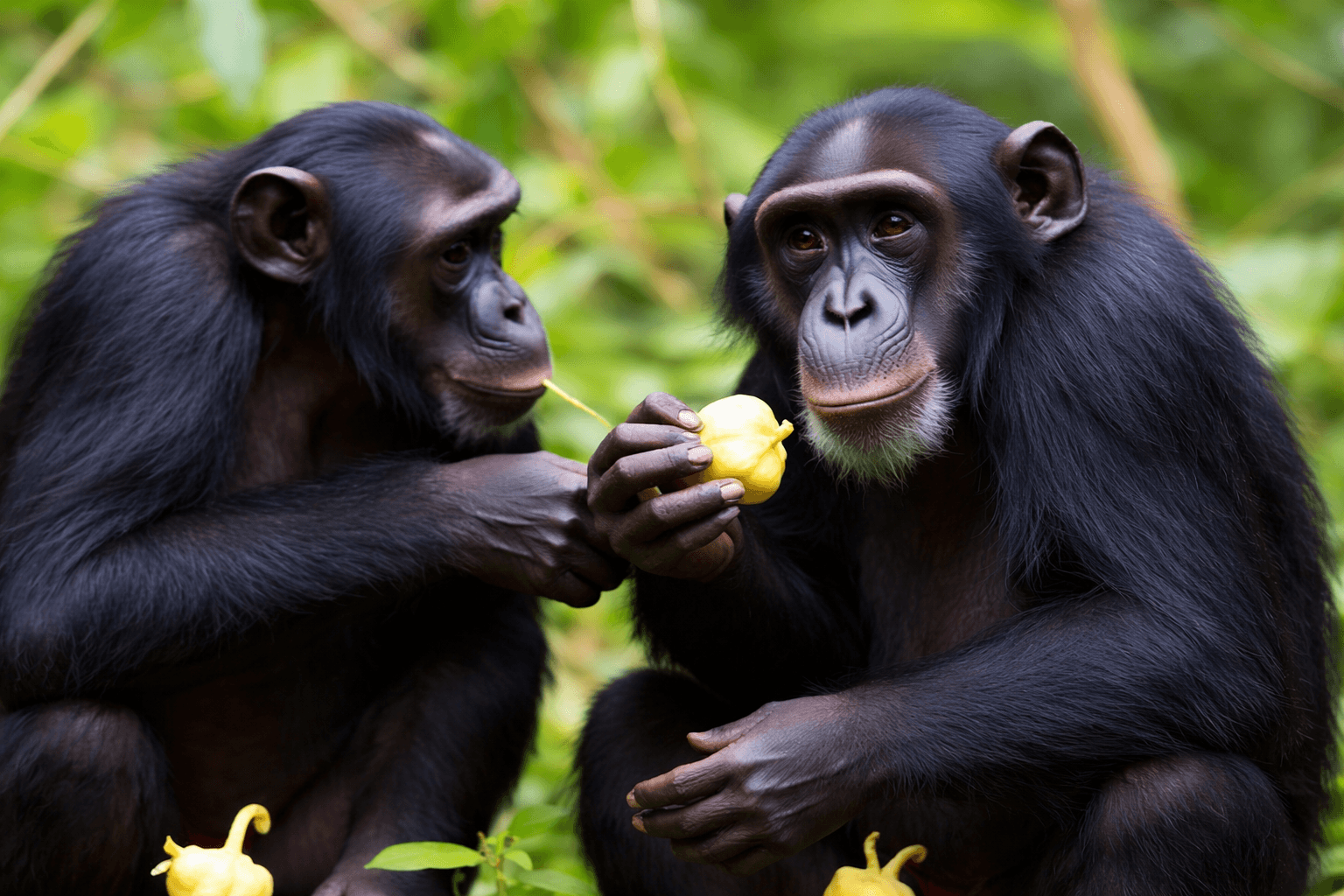
Bonobo Animals’ Diet Explained?
Fruit makes up most of what bonobos eat, though calling them strict herbivores misses the full picture. Sometimes meals include leaves, and at other times, seeds show up on the menu. Flowers get eaten, too, just like insects now and then. Even tiny animals appear in their feeding habits once in a while, according to National Geographic. All these pieces fit together so they gain essential nourishment. Their surroundings demand flexibility, which this mix provides naturally.
Now here’s something odd – bonobos sometimes eat earthworms or even tiny animals, but it does not happen very much. (Encyclopedia Britannica) Hunting other primates? Not really their thing, unlike chimps, who do that more often. Playing together instead – that seems to be how they prefer to spend time. What stands out most is how they lean on teamwork, not fights, when dealing with others.
Foraging Methods and Sharing Food among Bonobo Animals
What stands out about bonobos is the way they collect meals together. Through the day, they climb through treetops, reaching from limb to limb after sweet fruit. Once someone finds a meal, others get a portion – sometimes even those not close by blood or bond. (National Geographic)
Few animals give freely as these do. Picture a circle where each member passes food without pause. Because sharing happens, tensions ease, and connections grow stronger among them. A quiet moment at dinner might reveal deep roots of how humans learned to care and work together.
Social Structure and Behavior
Matriarchal Society Explained
Females rule the social ladder in bonobo animal communities. (Encyclopedia Britannica) Among primates, that setup stands out – males usually call the shots elsewhere. When it comes to choices, older females take charge here. Resource access bends to their will. Peace within the group? They’re the ones who steady things.
Females link up to hold things together. When they build tight connections, their group strength pushes past male power, despite weaker bodies. Power shifts when teamwork wins over fights. Old beliefs about who leads in nature get questioned by this setup.
Cooperation And Peaceful Interactions
Peace flows through bonobo life like a quiet river. Because tension rises, bodies touch – calm returns through shared warmth. (National Geographic) notes how closeness replaces combat every time. When friction appears, the connection answers back. Harmony grows not from strength but from soft moments between them.
Still, new research shows bonobos aren’t always calm. Though fights tend to be milder compared to chimps, tension sometimes rises, especially when group roles are at stake. (Reuters) That nuance shifts how we see them – not purely peaceful, yet keeping equilibrium.
Intelligence and Communication
Bonobo Animals Thinking Skills
Surprisingly smart, bonobos figure out puzzles and handle tools with ease. Mirror tests show they know their own reflection. Young humans get mentioned a lot when people talk about their thinking skills. Because they grasp how one thing leads to another, outcomes make sense to them. Emotions sometimes seem to guide their choices, much like feelings shape our actions.
Bonobo animals’ minds surprise us. One moment they’re watching, next they understand what another knows. Because of this, they predict moves before they happen. Their choices show insight, not just instinct. When one acts on an unspoken understanding, it feels less like animal behavior – more like thought. Lines blur – not because scientists say so, but because actions prove it. Questions appear: if they grasp hidden knowledge, where does awareness begin?
Words and Feelings
One of the things that is striking about bonobo animal talk is how multilayered it can be. They’re not just making noise, they’re mixing grunts with all sorts of other signals – gestures, shifts in facial expressions – to indicate what they feel and want. In labs, a few picked up symbolic systems – matching shapes to meanings – to interact with people. This shows their minds adapt in ways not seen in most animals.
What stands out just as much is their emotional depth. Bonobo groups include animals that sense sadness in others and offer reassurance while building strong friendships over time. Seeing them respond to one another sometimes brings a strange sense of recognition – as if you’re witnessing something close to how people connect, only shaped differently. Researchers keep returning to these apes when tracing where our own feelings might have begun.
Conclusion
What if peace came naturally? Bonobos live that way, moving through forests with calm minds and gentle bonds. Instead of fighting, they connect – through touch, through patience, through shared moments. These apes show how cooperation might shape a society, not as theory but daily practice. Danger surrounds them now, though, shrinking their world bit by bit. Each loss echoes beyond one animal – it dims a different vision of existence. Saving them means holding space for another kind of truth, quieter but deep.
FAQs
1. Is Bonobo Animal Aggressive?
Bonobos are not very aggressive (at least from what we could see on our visit), but peace is not always permanent on the Isle of Peace. Because they bond through grooming or sharing food, stress often fades before sparks fly.
2. What’s the current count of wild bonobos still around?
Fewer than twenty thousand bonobos likely exist today, yet numbers keep dropping. Around ten thousand might be left, though exact counts are hard to pin down. (National Geographic)
3. Why are bonobos not like chimps?
Females lead bonobo groups, showing how peace often wins over fights. Cooperation stands strong where others might clash. Social ties smooth tensions instead of force ever stepping in.
4. Why are bonobos endangered?
Few places left to live, being hunted, then unrest where they’re found – these push them closer to vanishing. A mix of lost homes, traps set by people, on top of shaky rule across their lands, weakens their hold each year.
5. Do bonobos talk with people?
It turns out a few bonobos picked up symbol-based ways to communicate. Human speech? They grasp parts of it. Not all, but certain pieces click.