
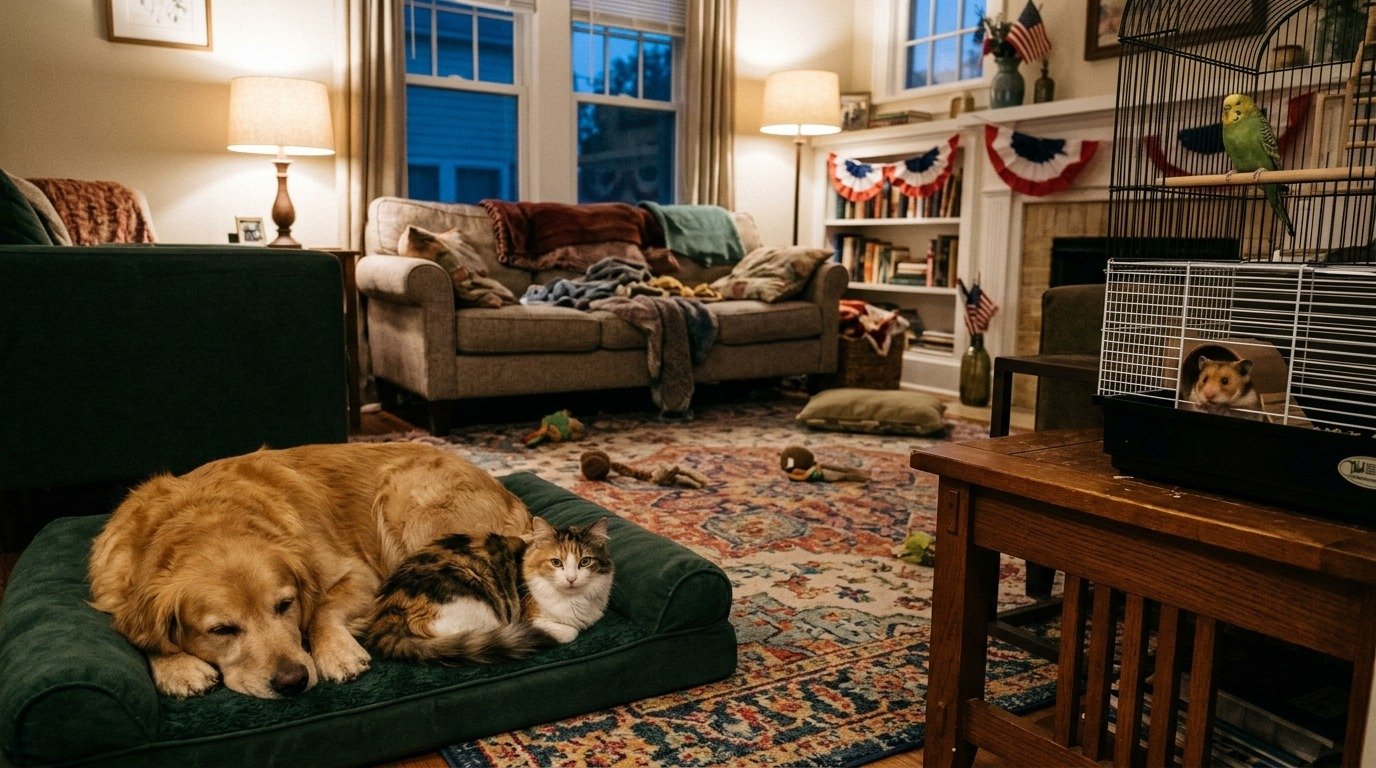
The best first step in firework noise control is to keep your pets indoors and prepare a quiet, secure room before fireworks start. A sudden burst can frighten even a pet that ignores traffic and household sounds. A scared animal may bolt through a door or fence while trying to escape.
During fireworks celebrations such as the Fourth of July, Bonfire Night, and Diwali, fireworks can upset pets that are not used to sharp noises. Desensitization gradually exposes a dog to a sound at a volume low enough to keep it relaxed. You raise the volume in small steps. Careful planning gives you more ways to lower fear and prevent harm.
Keep your focus on safety first, then adjust your plans to your pet’s needs. Start planning before the first display, since a fearful reaction can be difficult to manage once fireworks begin.
Key Takeaways
- Keep pets inside during fireworks.
- Prepare a familiar retreat before displays begin.
- Update your pet’s ID and microchip details.
- Practice sound training only while your dog stays relaxed.
- Check local rules before setting off fireworks.
What Can You Do Before Fireworks Begin?
Before the first burst, exercise your dog, finish dinner and bathroom breaks, update identification, and secure exits. Nearly one in five lost pets go missing after being frightened by loud noises such as fireworks or thunderstorms, according to an ASPCA survey reported by the Atlanta Journal-Constitution. A few steps taken early can lower escape risks and give your pet a steadier routine.
Noise fear can affect pets well before the main celebration date. A 2024 Dutch owner-report study included 3,009 dogs and 622 cats; 64% of respondents heard fireworks from September onward. That figure describes Dutch respondents, not an estimate for every country.
Set up routines and reduce escape risks
Use this four-part checklist before fireworks begin. Keep your usual schedule where possible, and make sure doors and gates stay secure.
- Exercise your dog earlier, then serve dinner before displays start.
- Take your pet out for bathroom breaks before fireworks begin.
- Check that ID tags and microchip contact details are current.
- Secure doors, windows, gates, and the yard against escapes.
After fireworks begin, use a leash for every trip outside, even in a fenced yard. Discuss anti-anxiety medication with your veterinarian well before the event. Ask about possible side effects and how the medicine may affect your pet’s behavior.
Build sound tolerance before the season
Sound practice can help some dogs, but the pace matters. Play a quiet fireworks recording, offer treats and praise, and raise the volume only while your dog stays relaxed. Stop if your dog shows distress; practice should never force them to endure fear.
Puppy noise habituation was linked with less reported adult fireworks fear in dogs, but not cats. Severe anxiety calls for help from a veterinarian or qualified behavior expert. If your veterinarian prescribes medication, test it on a quiet day rather than during the event.
Firework Noise Control Animals Need: How to Make Home Safer
If your dog startles at the first burst, take them to a familiar room farthest from the sound and close the windows. A familiar retreat, or safe space, gives your pet a place to hide or settle. Choose a room with few or no windows, then add bedding and familiar items.
Close curtains to block flashes, and let your pet choose whether to hide or stay near you. A crate can help only if your dog already sees it as safe. Never shut a frightened dog in a crate they fear.
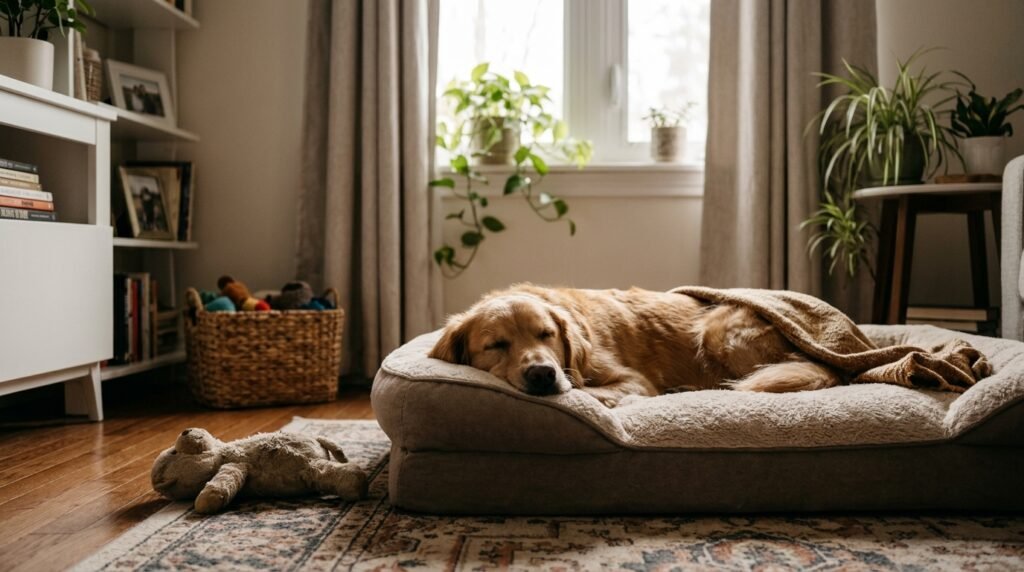
Create a familiar, quiet retreat
Keep the room easy to reach and let your pet move around freely. A pressure vest applies gentle, steady pressure, so introduce it before fireworks season. ThunderShirt is one option, with a patented “hugging” design. Try it ahead of time to see whether your pet accepts it.
Mask the sound and offer familiar distractions
Run white noise with music to soften sharp bursts. Cornell recommends combining both, and notes that calming classical music may help. Keep music at a moderate volume, and use a fan for its sound and vibration as background noise.
| Method | How to use it | What it can do |
|---|---|---|
| White noise | Run beside music | Mask sharp bursts |
| Music | Play calming or familiar songs at moderate volume | Offer steady sound |
| Fan | Run in the room | Add sound and vibration |
Offer a food puzzle, stuffed KONG toy, frozen treat, or long-lasting chew if your pet wants one. These distractions may keep a pet busy, but do not force play when anxiety takes over. If your pet ignores your attention and chooses to hide, let them settle and check on them periodically.
Diwali and Bonfire Night: Pet Safety Checklist
Fireworks are not limited to the Fourth of July. Bonfire Night falls on 5 November, and Diwali 2026 falls on Sunday 8 November, with celebrations running from about 6 to 10 November. In many places, fireworks go off for several days before and after the main night, so start preparing early.
- Walk dogs in daylight. Exercise your dog and finish toilet breaks before dusk, when displays usually begin.
- Keep cats indoors. Provide a litter tray and close cat flaps so a frightened cat cannot bolt outside.
- Protect small pets. Bring rabbit and guinea pig hutches or cages into a quiet, sheltered room or garage, cover part of the enclosure with a blanket, and add extra bedding to burrow in.
- Check identification. Make sure collar tags and microchip details are current in case your pet escapes.
- Stay calm and stay close. Do not scold a frightened pet, and stay at home with them if you can.
- Think about street animals. Never light crackers near stray dogs, cats, or cattle, since a sudden bang can send them running into traffic.
- Consider quieter celebrations. Diyas, lights, and rangoli, or low-noise fireworks and organised public displays, mean less stress for animals than loud crackers.
Rules differ by country. In England and Wales, fireworks may not be set off between 11pm and 7am, with later cut-offs on Bonfire Night (midnight) and on Diwali night (1am), according to council guidance such as Barnet Council’s fireworks page. Many Indian states and cities set their own limits on timing, noise, and types of crackers, so check the rules where you live.
How Can Your Community Protect Wildlife?
A neighborhood display can affect birds and other wildlife beyond the launch site, so noise, debris and fire risks all matter. Fireworks can startle nesting bald eagles, great blue herons, and other colonial nesting birds. Frightened animals may flee, hit obstacles, or abandon nests.
The RSPCA says fireworks can produce sound between 120 and 175 decibels, while sounds at 85 decibels or above can damage hearing in humans and other animals. Debris can choke wildlife or poison animals that eat it. Quieter public celebrations, silent fireworks, and drone light shows can reduce noise near wildlife.
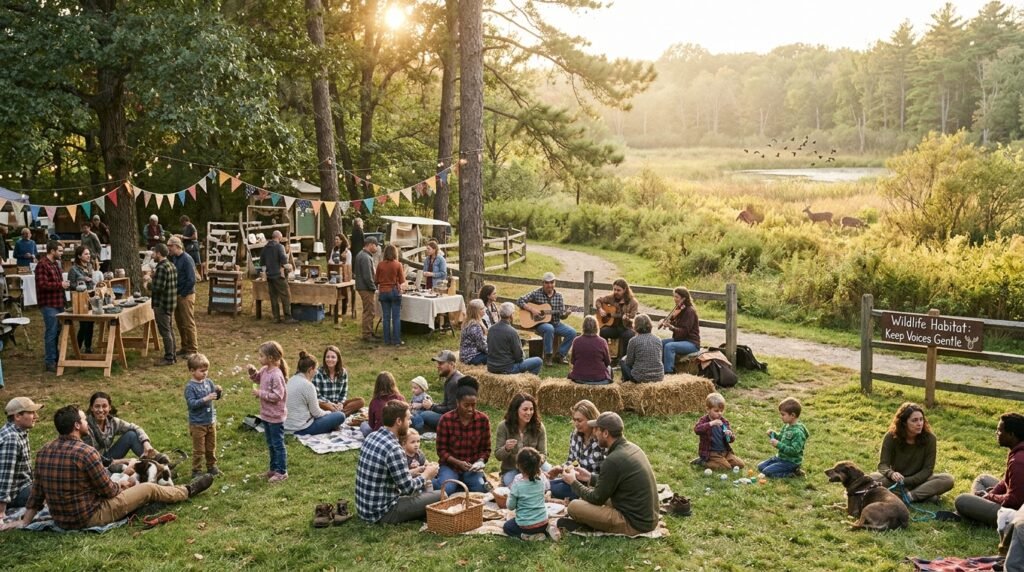
Under 50 CFR 27.41, possessing or using fireworks is prohibited on U.S. Fish and Wildlife Service refuge lands, also called Service lands. This rule does not ban every private display. Community groups can also clear debris and avoid dry brush to lower fire and wildlife risks.
Before setting off a display, check whether the site is Service land and consider a quieter alternative near wildlife.
Related Reading on Pets News Life
- Bald Eagle Jackie
- Miraculous Eagle With a Broken Wing Returns
- Herbie the Rabbit: 7 Facts About the World’s Oldest Rabbit
Conclusion
The safest plan is one you can put in place before the noise starts. Planning ahead gives you more choices than reacting after a pet becomes frightened. You can also decide who will help if your pet gets loose or needs care.
Save local animal-control and nearby shelter contact details in your phone before the next fireworks period. Add your pet’s current photo and key identifying details, so you can share them quickly if needed. Save your local animal-control and nearby shelter numbers now, before a frightened pet might need them.
FAQs
Can fireworks affect pets weeks before the main celebration?
Yes, fireworks can affect pets weeks before the main celebration. A 2024 Dutch owner-report study found that 64% of respondents heard fireworks from September onward. The study included 3,009 dogs and 622 cats, but it does not show how common early fireworks are in other countries. Watch for changes in your pet’s behavior as displays approach.
Can cats react to fireworks as strongly as dogs?
Yes, cats can show strong fear responses to fireworks, just as dogs can. Each animal may react in a different way, so hiding or fleeing does not tell the whole story. Some pets may freeze, pace, or avoid food. Watch your cat’s usual behavior and give them room to seek a place where they feel safe.
Can a dog’s fireworks fear spread to other sounds?
Yes, noise fear can spread to other sounds or situations, but it does not happen to every dog. A dog may begin reacting to thunder, alarms, or other sharp noises after fireworks distress. Watch for new signs of fear, and seek help if the reactions grow or interfere with daily life.
Are silent fireworks completely harmless to wildlife?
No, silent fireworks are not completely harmless to wildlife. Lower noise can reduce disturbance, but bright light, debris, and fire risks remain. Animals may still react to flashes or encounter scraps after a display. Choose a site away from wildlife, clear debris promptly, and avoid dry brush.
What should you do if your pet escapes during fireworks?
Contact local animal control and nearby shelters as soon as your pet escapes. Give them a clear description, a recent photo, and the place your pet was last seen. Make sure your pet’s collar tag and microchip record have current contact details. Ask neighbors to check nearby safe spots without chasing a frightened animal.
How early should you start helping a fearful dog get used to fireworks sounds?
Start well before expected displays, and let your dog’s comfort set the pace. Play a recording at a low volume that keeps your dog relaxed, then increase it in small steps. Pause or stop if your dog shows fear. A rushed schedule can push a dog into distress, so take as much time as needed.