
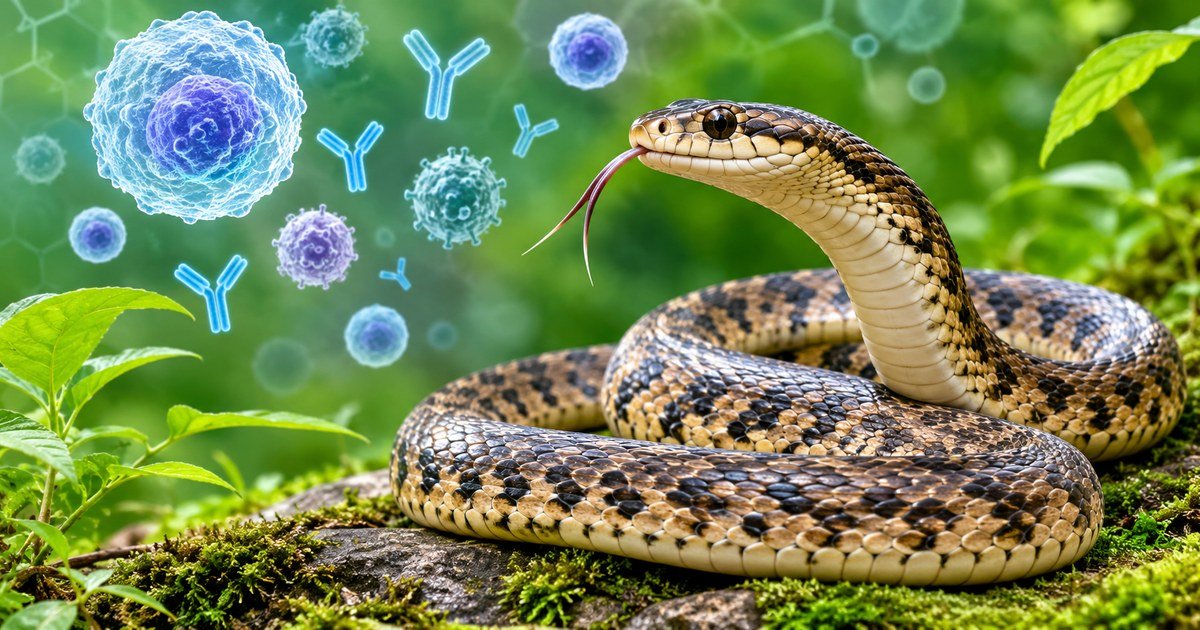
A snake’s health depends on several immune defenses working together to recognize, contain, and respond to threats. The immune system of snakes includes circulating cells, proteins, and tissues that help protect the body from infection. One striking fact is that snakes are ectothermic vertebrates, so their surroundings can affect some body processes. For you as an owner, that means health depends on both internal defenses and species-specific care. Environmental conditions can affect how well some immune responses work. The defenses do not act alone, and a change in one part of the body can affect the whole animal.
Snakes vary widely in size, habitat, and biology. To explore more species, read our guides to the longest snakes in the world, the largest reticulated python, and the unusual Achalinus mirabilis.
Many threats meet a protective boundary before they reach internal tissues. When microbes do get in, cells and proteins can help detect and contain them. You do not need to identify each immune process to notice when something seems wrong. A change in appetite, movement, breathing, or skin may have several causes, so one sign cannot confirm infection. This overview explains how the parts work together and why a snake’s species and surroundings matter.

Remember that a visible change in your snake’s health deserves attention even when its immune defenses are functioning.
Key Takeaways
- Innate immunity provides a rapid, broad response to possible threats.
- Adaptive immunity uses B and T cells to recognize specific antigens.
- Physical barriers stop many infections from gaining access to the body.
- Snake blood contains immune cells, red blood cells, and clotting cells.
- Species, age, season, stress, and surroundings can affect immune measures.
- A reptile veterinarian can assess health changes in the right context.
How the Immune System of Snakes Protects Against Infection
A snake’s immune defenses combine a rapid general response with a more targeted response that can remember earlier encounters. The first branch is innate immunity, which reacts quickly without needing prior exposure to a specific threat. Opsonization is coating a pathogen with molecules that help immune cells recognize and engulf it. Innate and adaptive defenses work together to protect the snake from infection.
The second branch, adaptive immunity, responds to particular antigens, which are substances the immune system can recognize. B and T lymphocytes help direct this branch. Some adaptive responses can form immunological memory, so a later encounter with the same antigen may prompt a quicker response. The strength and timing of that response can differ among snakes and other animals.
These branches share information and support one another. Innate defenses can help start a response, while adaptive defenses add more specific recognition. A snake’s body uses both branches rather than choosing one. Neither branch works as a stand-alone shield, and the result depends on the threat and the animal’s condition.
Treat the two branches as partners, not as separate systems that act alone.
What Does Innate Immunity Do First?
Innate defenses can begin responding as soon as cells or proteins detect signs of a threat. The innate immune system does not need to meet one particular pathogen first. Its pattern-recognition receptors respond to common features linked to pathogens or damaged tissue. This early immune response is broad, not a precise match to one microbe.
Pattern recognition detects a possible threat
Cells use pattern-recognition receptors to detect pathogen-associated molecular patterns and damage-associated molecular patterns. These signals can come from microbes or injured cells. Recognition helps the body respond to a possible threat before it knows the exact pathogen. The same signal can appear in more than one kind of threat.
Innate defenses include complement, antimicrobial peptides, natural antibodies, leukocytes, and cytokines. Cytokines are signal proteins that allow immune cells to communicate. Their presence can help coordinate a response, but each molecule has a different task. Recognition starts a process, not a final diagnosis of infection.
Cells and signals coordinate the response
Phagocytes are cells that can surround and take in microbes or other material. Some then break down what they engulf. Cytokine signals can attract or activate certain cells, depending on the signal and tissue. Different cells have different jobs, even when they respond to the same threat.
Other innate proteins can help mark targets or limit microbial growth. Natural antibodies can also contribute to early defense without the same history of exposure required for a tailored adaptive response. These actions can contain a threat while other defenses develop. They do not guarantee that every pathogen will be removed.
A rapid response is broad, so it does not identify every pathogen with the precision of adaptive immunity.
How Adaptive Immunity Builds Specific Defenses
Adaptive immunity adds antigen-specific responses through B and T cells. B cells can make antibodies, proteins that bind to particular antigens. T cells support other immune actions or respond to infected cells. These lymphocytes help the snake recognize a specific target.
Antibody activity is part of humoral immunity, which works through molecules in body fluids. T-cell activity is cell-mediated immunity, where T cells respond through direct cell contact or signals. The two forms can work together, but they do not do the same job. Antibodies can bind targets, while T cells can help guide or carry out responses to infected cells.
When a snake encounters an antigen again, memory cells may help produce a faster, more focused response. The exact timing and strength can vary. Reptile immune function should not be assumed to match mammalian responses in speed or strength. Similar cell names do not mean identical performance across these groups.
Natural antibodies can also contribute to defense without a prior encounter with the same antigen. They are not the same as a tailored response after exposure. Adaptive immunity adds specificity, but it cannot promise full protection against every related microbe.
A prior encounter can shape a later response, but it does not make a snake immune to every related pathogen.
Physical Barriers Keep Many Pathogens Out
Intact skin is a snake’s first physical boundary against many potential pathogens. The outer membrane works by preventing microbes from getting into it. Mucous membranes also assist in defending canaliculated areas of the body that are prone to contact with the environment. A damaged barrier gives microbes a possible route inside, but it does not prove infection.
The eyes, mouth, and nose have moist surfaces that face the outside world. These surfaces can be entry points if microbes reach them. A wound can also break the skin’s protection. The risk depends on the injury and the microbes present, not simply on seeing a cut.
Common openings or breaks that may allow microbes to enter include:
- Cuts or other breaks in the skin
- The eyes and their moist surfaces
- The mouth or nose
A damaged barrier deserves attention, but its presence alone cannot tell you whether microbes have caused illness. Watch for changes around an injury, such as swelling or altered behavior. Check a wound or damaged area for veterinary advice rather than assuming the barrier will repair without complications.
How Complement Tags and Destroys Targets
Complement protects in more than one way: it can mark targets for removal, support inflammation, or help destroy cells directly. The complement is a biochemical cascade of proteins that circulates in the blood. It can tag targets for opsonization, which helps immune cells recognize and engulf them. Three activation pathways converge on C3, a key complement protein.
The classical pathway responds to antibodies
The classical pathway is an ideal case where antibodies bind to targets. This link lets adaptive recognition activate a part of innate defense. The pathway then moves through a series of protein steps toward C3 activation. Complement can also support local inflammation.
Activation does not mean that a target is destroyed every time. Some complement effects help immune cells find or remove material. Others affect the area around a threat. The pathway’s activity depends on the proteins and signals involved.
The alternative and lectin pathways detect other signals
The alternative pathway can activate without antibodies and respond to surfaces that favor complement activity. The lectin pathway begins when lectin proteins bind certain patterns on microbes. Both pathways can lead to C3 activation. Different starting signals can reach a shared step.
All three pathways can lead to the formation of a membrane attack complex. This complex can make openings in a target cell’s outer membrane and cause direct lysis, or cell breakage. Complement can therefore mark, signal, or damage targets. The outcome depends on the target and the level of pathway activity.
C3 activation can lead to direct lysis
A 2025 study found antibacterial activity in plasma from wild cottonmouths, or Agkistrodon piscivorus. The full peer-reviewed cottonmouth innate-immunity study describes the laboratory findings and their limitations. The plasma acted against Gram-negative and Gram-positive bacteria in laboratory tests. It also lysed unsensitized sheep red blood cells. This finding points to potent complement-like activity in that test setting.
The hemolysis depended on plasma concentration, exposure time, and temperature. Heating plasma at 56 °C for 30 minutes, treating it with protease, or adding EDTA inhibited the activity. EDTA binds certain ions needed for complement activity. A 36 kDa protein found in material isolated with a mannan-agarose affinity column raised the possibility of lectin-pathway activity.
The study reported an EC50 for sheep-red-blood-cell hemolysis about 10-100 times lower than values reported for other reptile species described in that study. EC50 means the amount needed to reach half of a measured effect. These results concern a lab assay, not every snake species or a living animal’s infection.
Strong activity in a plasma assay does not mean that plasma can safely or effectively treat an infection.
Antimicrobial Proteins Add Another Layer
Snake defenses also include antimicrobial molecules that can interfere with microbes directly. Lysozymes, defensins, and cathelicidins are among the antimicrobial proteins found in reptiles. These molecules have different structures and actions. Their presence adds another kind of defense, separate from the complement system.
In general, antimicrobial molecules can limit the growth of some microbes or damage them. Their activity depends on the molecule and the organism being tested. The three classes include:
- Lysozymes, which can break down parts of some bacterial cell walls
- Defensins, small proteins that can disrupt microbial membranes
- Cathelicidins, proteins that can act against some bacteria and fungi
Researchers isolated cathelicidin-BF from the venom of the many-banded krait, Bungarus fasciatus. The original research paper on snake cathelicidin-BF reports its antimicrobial activity in laboratory testing. In tests, it acted against Gram-negative and some Gram-positive bacteria. It also showed activity against fungi, including Candida albicans. Those results describe activity in research tests, not a treatment for a pet snake.

Do not apply or seek out venom-derived peptides as home remedies for a pet snake.
Blood Cells Divide Immune Tasks
Snake blood contains several kinds of cells, and each has a different role in defense or circulation. Leukocytes are a type of immune cells present in the blood. Reptilian blood also contains erythrocytes, which carry oxygen, and thrombocytes, which help with clotting. A cell count needs context because cell types do not all serve the same purpose.
Some leukocytes engulf material, while others help with signaling or other defense tasks. Heterophils function in ways comparable to mammalian neutrophils, but the names are not interchangeable. Monocytes can enter tissues and become macrophages. There, they can engulf material, process antigens, and release cytokines.
| Cell | Typical role | Useful distinction |
|---|---|---|
| Heterophils | Engulf material and respond to threats | Comparable in function to mammalian neutrophils |
| Monocytes and macrophages | Engulf material, process antigens, release cytokines | Monocytes circulate; macrophages work in tissues |
| Eosinophils | May take part in responses to parasites or other signals | Exact roles in reptiles remain uncertain |
| Basophils | May release substances involved in immune signaling | Function can vary by species and is not fully defined |
| Azurophils | Can engulf material and take part in defense | A reptile cell type not directly matched to one mammal cell |
Blood cell types can look different across reptile species. Even cells with similar names may not behave in exactly the same way. A lab report describes what the lab counted, but a veterinarian must relate that result to the snake’s health and species.
A blood-cell count is most useful when interpreted alongside the animal’s species, age, and clinical condition.
What Boa Constrictor Blood Reveals
Boa constrictor research shows how detailed blood-cell identification can go beyond a simple total white-cell count. A study of 79 clinically healthy captive boa constrictors identified eight cell types in peripheral blood. The finding describes this species, not every snake. A boa result should not serve as a universal reference for other pet snakes.
The identified cells included heterophils, basophils, eosinophils, azurophils, monocytes, lymphocytes, thrombocytes, and erythrocytes. Peripheral blood refers to the blood that flows through the body. Identifying the cells present gives a more detailed picture than a single total count, but it does not show every immune function.
A 2023 study took a different approach by using specific marker expression to identify leukocyte subpopulations. It found T cells, B cells, and monocytes among those populations. Cell markers help distinguish groups that may look alike under a microscope. This is different from naming the cells seen in a blood smear.
The two approaches answer related but distinct questions. A smear can show which cell types appear in a sample, while markers can help identify particular immune-cell groups. Both add detail, yet findings from captive boa constrictors remain species-specific evidence.
Ask your veterinarian to interpret a blood result against the right species-specific context.
Where Snake Immune Cells Develop and Gather
Snakes have immune tissues, but they do not organize them into lymph nodes as mammals do. Reptile immune tissues include the thymus, spleen, gut-associated lymphoid tissue, and bone marrow. Some tissues support cell development, while others are places where immune cells can meet antigens. Reptiles lack lymph nodes, but they still have a lymphatic system.
| Tissue or structure | Immune role | Anatomical note |
|---|---|---|
| Thymus | Site where T cells mature | Present in reptiles |
| Spleen | Supports immune-cell activity and blood filtering | Often closely associated with the pancreas in snakes |
| Gut-associated lymphoid tissue | Supports immune activity near the digestive tract | Located along parts of the gut |
| Bone marrow | Supports blood-cell development | Found within bones |
| Lymph nodes | Not present in reptiles | Snakes still have lymphatic vessels and fluid |
The thymus is where T-cell development takes place. The spleen also supports immune activity, though its structure differs from a mammal’s. In most snakes, the spleen lies closely associated with the pancreas. The paired structure may be called the splenopancreas.
Reptiles also do not form germinal centers, which are structures found in mammalian lymphoid tissues. That difference affects how their immune tissues are organized. It does not mean a snake cannot mount immune responses.

Remember that a lack of visible lymph nodes is normal snake anatomy, not by itself a sign of illness.
Inflammation Contains Injury and Infection
Inflammation brings immune activity to an injured or infected area, but its visible form can differ among animals. Heterophils can gather in response to pathogens outside cells. Intracellular pathogens can prompt histiocytic granulomas, which are organized groups of immune cells around a threat. Reptile inflammation may form a caseous mass rather than liquid pus.
Inflammation can involve changes in nearby tissue as cells gather and signals guide their activity. A granuloma can help contain a threat that is difficult to clear. Caseous material is often thick and solid, unlike the liquid pus often linked with mammalian infections. Appearance alone cannot show the cause.
A simplified response can include these stages:
- Immune cells gather near the affected area.
- Local tissue changes as the response develops.
- The response contains or removes the threat.
These stages can overlap, and the process may not look the same in every snake. A visible lump or discharge can have more than one cause. A veterinarian may need to examine the animal and the affected tissue to assess what is happening.
Do not use the appearance of discharge alone to decide whether a snake needs veterinary care.
Temperature Changes Immune Function
Because snakes are ectotherms, the temperature around them can affect how their bodies function, including some immune responses. Their body processes depend partly on outside heat. Temperature can change immune activity, but the effect and useful range differ among species. One reptile’s lab range is not a safe target for every snake.
Ectothermy ties body processes to surroundings
Ectothermy means an animal’s body temperature is shaped by its environment. Temperature can affect chemical reactions, cell activity, and other body processes. A shift in surroundings may change how quickly some responses work. The result is not the same for every species or immune process.
Immune activity has a working temperature range
One study found antimicrobial and amoebicidal activity in alligator serum from 5°C to 40°C. The activity declined below 15°C and above 30°C. These values describe alligator serum in a test, not a universal range for snakes. That distinction matters when comparing reptiles.
A snake’s appropriate temperature range depends on its species and care needs. It should follow veterinary husbandry guidance for that animal. Lab measures of a protein’s activity do not set a safe enclosure temperature. They also do not predict the response of every tissue in a living snake.
Seasonal behavior can change exposure and response
Season can affect when a snake is active and how often it encounters possible threats. Changes in activity can also affect the conditions under which immune responses occur. These patterns differ across species and habitats. A lab result at one temperature cannot capture every seasonal condition.
Use species-specific care guidance rather than treating another reptile’s laboratory range as a snake’s target.
Stress, Reproduction, and Resources Shape Defense
A snake’s immune response reflects more than the presence of a pathogen; it can also be shaped by physiology and conditions. Ecoimmunology studies immune responses in relation to an animal and its environment. Different pressures can interact, and no single effect applies to every species or situation. An immune measure makes more sense when you know the animal’s recent context.
A 2022 review tracked eight factors: sex, age, chronic stress, acute stress, resource limitation, reproduction, immune challenge, and season. Read the review of reptilian innate immunology and ecoimmunology for the wider research context. The review shows how many influences researchers may consider. It does not mean each factor changes immunity in one fixed direction. An animal’s state and the type of measure both matter.
| Factor | Relevant context | What to consider |
|---|---|---|
| Stress | Acute event or ongoing strain | Timing and duration can affect measured responses |
| Reproduction | Breeding or reproductive activity | Energy demands may shift available resources |
| Resource availability | Food and other needed resources | Limited resources can create competing demands |
| Sex | Biological differences among animals | Patterns may depend on species and study conditions |
| Immune challenge | Exposure to a pathogen or other trigger | The kind and timing of the challenge matter |
Stress can affect immune measures, but a stressed animal does not always show the same change. Reproduction can use energy that the body might otherwise direct elsewhere. Resource limits may also create tradeoffs. These links are possible influences, not a way to diagnose illness from one event.

Interpret an immune measurement alongside the animal’s recent stress, reproductive state, and access to resources.
Age and Season Can Shift Immune Measures
A blood-cell percentage can differ with age or season, so one result does not automatically define a snake’s normal pattern. A 2023 study of boa constrictors found higher eosinophil percentages in snakes aged three years or older than in younger snakes. This was a result for boas, not a rule for all snakes. Age and season belong in the context of a blood result.
Reptile immune tissues can also change with the season. In some reptiles, the thymus and the spleen’s white pulp may be well developed in autumn, become smaller during winter, and redevelop by late spring. Summer patterns can differ by species. These cycles are not identical across reptiles.
When comparing immune results, check these three details:
- Age class of each snake
- Season when each sample was taken
- Species represented in each result
A difference between two results may reflect the animals’ context rather than a new illness. Researchers and veterinarians need to know whether samples came from similar animals at similar times of year. The same measure can have a different meaning across age groups or species.
Compare like with like by noting the snake’s species, age, and season when reviewing immune results.
What Scientists Can Measure in Snake Immunity
Snake immunity is studied through tests that measure different cells, proteins, and functions. Each method answers a different question, so no single test describes the whole immune system. One result is one piece of the picture. Reptilian immunity remains less studied than mammalian immunity.
A 2022 review analyzed 259 peer-reviewed reptile-immunology papers. It counted 119 studies on Testudines, 73 on Squamata, 61 on Crocodilia, and 6 on Rhynchocephalia. One of these groups is turtles; snakes, lizards, crocodilians, and tuatara. The totals show how research was spread across reptile groups.
| Method | What it measures | Main limitation |
|---|---|---|
| Blood smear | Cell types and their appearance | Does not measure every cell function |
| Microbial-killing assay | How a sample limits microbes in a test | Lab activity may not predict protection in an animal |
| Lysis or agglutination assay | Cell breakage or clumping activity | Shows a specific reaction, not total immune health |
| Flow cytometry | Cell groups marked by measured features | Needs suitable markers and careful interpretation |
| Protein characterization | Properties of proteins in a sample | Does not alone show how a protein works in the body |
A blood smear can show which cells are present, while an assay can test a specific action. Flow cytometry measures cells using markers and other features. Protein characterization helps identify or describe molecules. These tools differ in what they can reveal and what they leave unanswered.
Results from a lab test may not match what happens inside a living animal. The test conditions, sample, species, and method shape the finding. Comparing studies requires attention to those details, especially when reptile research is less extensive than mammal research.
Treat any single assay as one part of an immune picture, not a complete verdict on health.
How to Support Your Pet Snake’s Health
The most reliable way to support your snake’s defenses is to meet its species-specific needs and notice changes early. A ball python (Python regius) and a corn snake (Pantherophis guttatus) have different care needs. Use care guidance made for your snake’s species.
Match routine care to the species
Good routine care supports general health, even though it cannot prevent every infection. Use this checklist to review the basics:
- Verify species-appropriate temperature and humidity.
- Provide clean water.
- Maintain enclosure hygiene.
- Offer an appropriate diet.
- Record feeding and health changes.
These steps help you spot a change from your snake’s usual pattern. A record can also show when a change began and how it has progressed. Species needs matter because one snake’s care conditions may not fit another.
Get veterinary help for concerning changes
Contact a reptile veterinarian promptly for a persistent or worsening change. A single sign cannot prove that an infection is present. Reduced appetite, a skin change, or altered behavior can have different causes. Diagnosis depends on the whole animal, including its species and care history.
A reptile veterinarian can assess health changes in the context of the snake’s species and husbandry. Do not wait for several signs to appear before seeking help if the animal is getting worse. A clear history of care and symptoms can help guide the assessment.
Keep a record of husbandry and symptoms so your reptile veterinarian can make a more informed assessment.
Conclusion
A snake’s defenses combine fast general responses with targeted immune activity, and both depend on the animal’s broader condition. Cells, proteins, tissues, and outer barriers support different parts of defense. Their activity can shift with the snake’s species, age, surroundings, and life stage. Immune function is part of health, not a guarantee against illness.
Pay attention to changes and avoid treating one symptom or lab result as a full diagnosis. A reptile veterinarian can help you understand what is normal for your snake and when a change needs care. Building that relationship before a health concern arises makes it easier to act when needed.
Save your veterinarian’s contact information and ask for species-specific advice at your snake’s next wellness visit.
FAQ
What does a complete blood count reveal in a snake?
A complete blood count shows the types and proportions of circulating blood cells in a snake. It can help a veterinarian spot patterns that need more attention, but it cannot diagnose every illness by itself. Interpretation depends on the snake’s species, age, clinical signs, and suitable reference information. The vet may compare the count with an exam and other test results.
Are reptile white blood cells counted the same way as mammal cells?
No, reptile white blood cells include cell types and naming patterns that do not match mammal counts one-to-one. Reptiles have heterophils and azurophils, among other leukocytes. Heterophils have a role comparable to mammalian neutrophils, but the names and cell features differ. A veterinarian should interpret the count using reptile-specific knowledge and context.
Does cottonmouth plasma research mean snake blood can treat bacterial infections?
No, cottonmouth plasma research does not show that snake blood is a safe or effective treatment for bacterial infections. The antibacterial and red-cell lysis findings came from laboratory tests under specific conditions. They do not establish safety, dose, or benefit in a living animal. Never use snake plasma or venom-derived products to treat a pet.
How often should you take a pet snake for a wellness exam?
An annual wellness exam is a common rule of thumb for a pet snake. A reptile veterinarian can set a schedule that fits the individual animal’s age, health, and history. A younger snake or one with ongoing health concerns may need a different plan. Call sooner if you notice a persistent or worsening change.
Should you put over-the-counter antibiotic ointment on a snake’s wound?
No, do not use an over-the-counter antibiotic ointment on a snake’s wound unless a reptile veterinarian recommends it. The right care depends on the wound, its location, and the animal’s condition. Some products may be unsuitable or may hide signs that need assessment. Have a reptile veterinarian examine the wound and advise you on treatment.
Can blood-test results be compared across different snake species?
Do not compare blood-test results directly across different snake species as if they shared one standard range. Species, age, season, and test methods can all affect how a result should be read. A value that is common in one species may not mean the same thing in another. Ask your veterinarian to use the right reference context.