Introduction: What is a Hunting Competition?
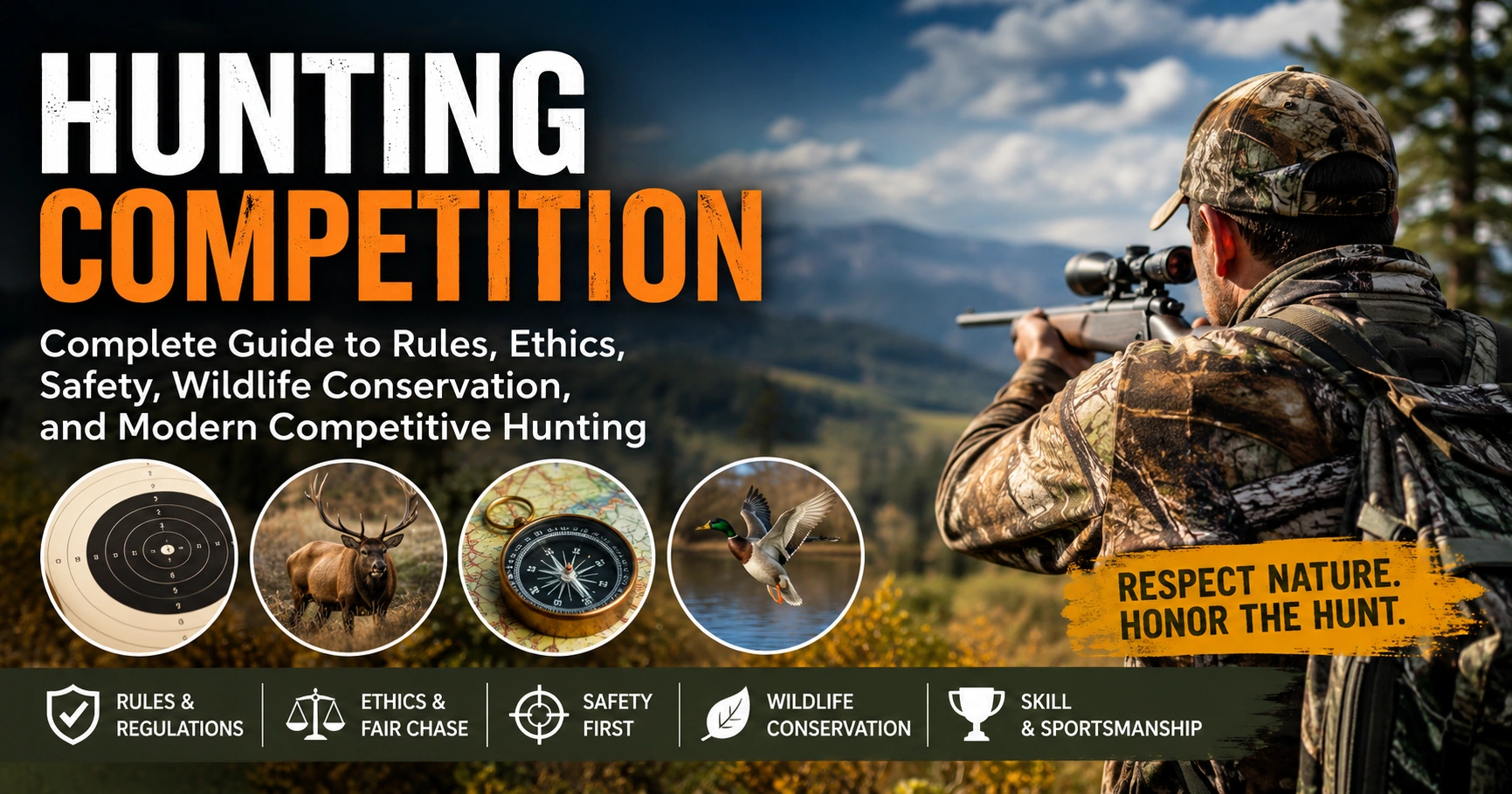
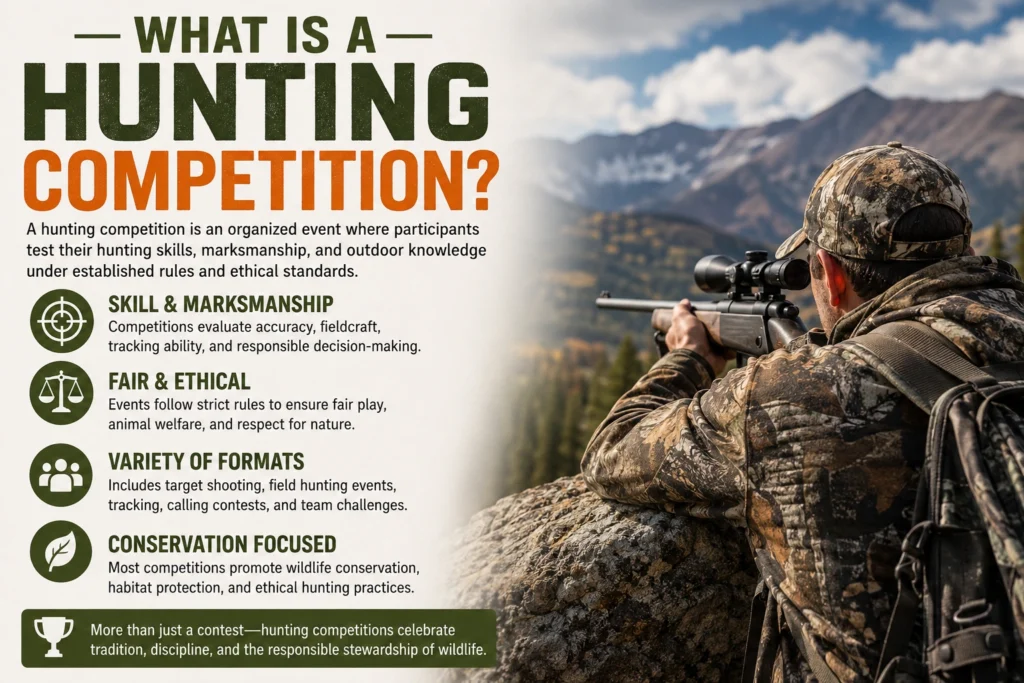
A hunting competition may be defined as a competition or a race with specific aims, such as shooting particular wildlife species or bringing the largest number of animals of a given species within a specified framework. This sporting activity involves the participants hunting for animals based on certain rules, regulations, and legal acts. The hunting competitions could be different depending on the goals, the species to be hunted, and the territory where they are held to suit particular conditions and local wildlife legislation.
Organizing hunting competitions has become a common practice worldwide, with numerous competitions being held in different countries regularly. Events are designed to promote awareness of the shooting sports, conservation, and safe shooting. Moreover, contest hunting has also become a significant motivation for sportsmen and wannabe hunters to hone their skills, with many contests rewarding ethical conduct, sportsmanship, and marksmanship, rather than the number of animals the contestant has taken.
Definition and Purpose
The main purpose of hunting competitions can be different for each competition. For some, it is about honing one’s skills, while for others, it is about helping control the overpopulated species that have been placed under a government program for that very reason.
During the activities, hunters are required to follow species, area, equipment, and scoring restrictions. These competitions promote the attributes needed to live in the wild — discipline, skill, navigation, patience, and teamwork.
In addition, responsible organizers ensure that animals are not constantly hunted or allowed to flee, so as not to break the ethical code that hunting competitions are meant to uphold. In fact, ethics are at the heart of every respectable hunting competition that takes place around the globe.
Brief History of Competitive Shooting Sports
Competitive shooting sports have a long history that dates back thousands of years, when hunting was a necessary and vital activity for survival. With the development of advanced civilizations, hunting evolved and became a popular sport with a prestigious history.
In the 20th century, the emergence of hunting clubs, as well as competitions where organizers- clubs set rules, became popular. Wildlife agencies then started to participate in these events to promote responsible hunting.
At this point, many competitions include activities related to conservation education, restoration, and census in addition to shooting.
Different Types of Hunting Competitions
Big Game Competitions
Big game competitions are usually held on a legal basis involving animals like deer, elk, or boar that can be hunted within the borders of the specific county. In addition, it is essential to possess knowledge and skills in tracking, patience, and precision to achieve favorable results at the time of shooting, not just rely on speed.
There are strict rules and legislation about seasons, quotas, authorized equipment, and reporting obligations.
Bird Hunting Events
Bird hunting competitions may involve upland game birds or waterfowl where legally authorized. Many events include retrieving dogs that demonstrate exceptional training and obedience.
Judging frequently considers shooting accuracy, safe firearm handling, dog performance, and compliance with hunting regulations.
Predator Hunting Contests
The trap and fur industries also participated in contest hunting, but this was limited to those areas where wildlife officials considered the species to be workable. Such events are still controversial today, as they are banned or limited to a few states and have been criticized from an ethical and wildlife protection perspective. Contestants need to check the local regulations and rules for competing in each contest.
Archery Hunting Competitions
Bowhunting contests are a test of precision, camouflage, and tracking and hunting in brief ranges. The equipment used in bowhunting is bows and arrows, hunted with skill and knowledge, not with guns or vehicles, and hunters are required to train to the point that they know that they can do so ethically and safely. Bowhunting is a favorite for many hunters because it requires patience, discipline, and accuracy.
Regulations
There are rules for everything in a bona fide hunting contest, dictated by the organizers and local wildlife authorities.
Common requirements include:
| Requirement | Purpose |
| Valid hunting license | Legal compliance |
| Species restrictions | Wildlife conservation |
| Bag limits | Sustainable harvest |
| Approved weapons | Participant safety |
| Mandatory reporting | Population monitoring |
| Safety report | Accident control |
Non-compliance with rules may lead to debarment and a fine or up to the extent of the law.
Conditions of Licenses
Hunters are generally required to:
- Valid hunting license
- Government-issued identification
- Required species permits
- Firearm or archery certifications where applicable
- Competition registration
Some countries also require hunter education certificates before participation.
Competition Rules
Although each event differs, common rules include:
- Hunt only designated species.
- Respect private property.
- Follow competition boundaries.
- Report harvested animals promptly.
- Observe legal hunting hours.
- Follow firearm safety protocols.
- Avoid unethical hunting methods.
Compliance protects both wildlife and participants.
Fair Chase Principles
The fair chase principle is a code of ethics that governs outdoor practices and is designed to ensure that the hunted animal has a fair opportunity to escape, thereby fostering ethical hunting and deterring the use of equipment and practices that could provide hunters with an unfair advantage.
The fair chase is respectful of wildlife and isn’t about turning the hunter and the animal into competitors.
Hunting necessities
The right gear makes safety and efficiency much easier to attain. You will usually find equipment like this, either as real or play weapons (each part is optional and depends on your game role and what you’re comfortable with):
- Hunting rifle or bow (if legal)
- Ammunition or arrows
- Blaze orange clothing
- Binoculars
- Rangefinder
- GPS device
- First-aid kit
- Hunting knife
- Backpack
- Water and emergency supplies
Hunters should inspect all equipment before competition day.
Firearms and Archery Gear
The selection of suitable equipment is governed by local regulations and the species in question.
Today’s firearms have better safety mechanisms, and very accurate compound bows are also excellent quality. Maintenance is maintenance, you know; it makes the vehicle run like it should in the field.
Contestants have a lot of practice before they get into the reg competition.
Apparel and Safety Tools
Hunters stay comfortable when they weather the elements for many hours.
Important safety equipment is:
- Blaze orange vest
- Protective eyewear
- Hearing protection
- Waterproof boots
- Gloves
- Emergency whistle
- Flashlight
- Communication device
Proper clothing reduces injury risks while improving visibility.
Wildlife Conservation and Ethical Hunting
Responsible hunting competitions can contribute to wildlife management when conducted under scientifically established regulations.
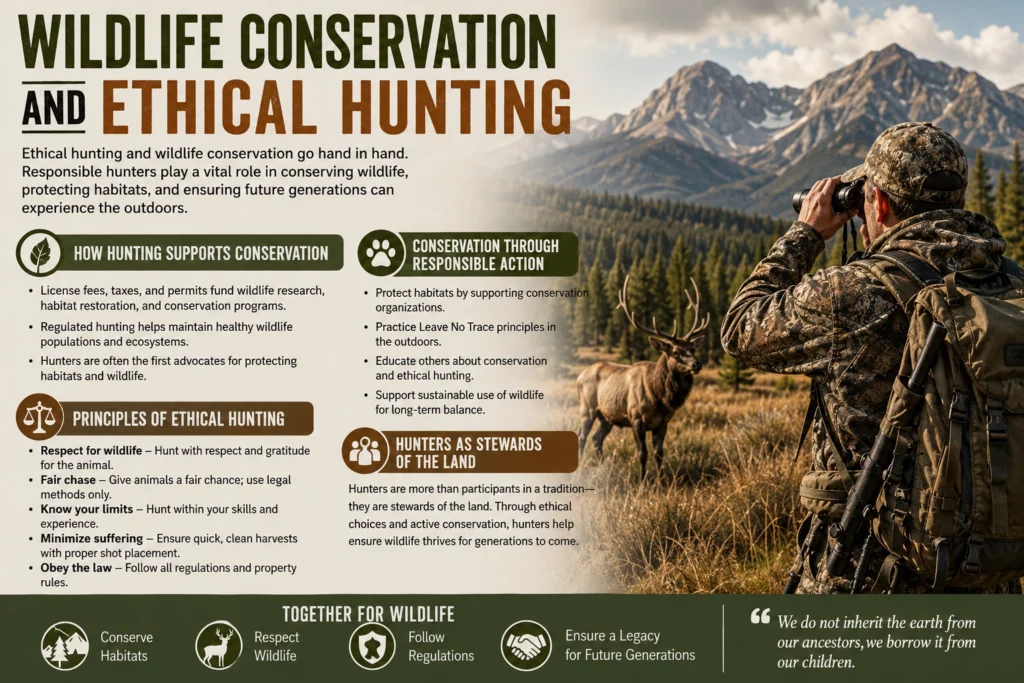
License fees and competition registrations often support:
- Habitat restoration
- Wildlife research
- Conservation education
- Population surveys
- Anti-poaching programs
Ethical hunters understand that conservation remains more important than competition results.
Conservation Benefits
Wildlife agencies make hunting seasons based on biological factors.
In addition, hunting can be used as a method to control disease, prevent damage to habitats and other animals, and reduce conflicts with humans when populations peak beyond the area’s sustainability.
Furthermore, competition organizers are now partnering with conservation experts to promote responsible management of wildlife.
Duties of Ethical Nature
Every participant shares responsibility for:
- Respecting wildlife
- Obeying laws
- Making humane shots
- Recovering harvested animals
- Leaving no litter
- Respecting landowners
- Supporting conservation initiatives
Ethical behavior protects the future of hunting traditions.
Tips for Participants’ Safety
Safety first, always. Hunters should:
- Be certain of your target before shooting.
- Never let the muzzle cover anything you are not willing to destroy.
- If used, wear blaze orange.
- Inform someone about hunting locations.
- Carry emergency communication devices.
- Avoid risky weather conditions.
- Never consume alcohol while hunting.
Preparation helps make accidents less common and response to them more effective.
Firearm Safety
Safe Handling of Firearms Is …
Always treat any gun as loaded.
- Finger off the trigger until ready.
- Store firearms securely.
- Inspect firearms before use.
- Use proper ammunition.
- Follow range and competition rules.
These principles protect everyone involved.
Preparation for Emergencies
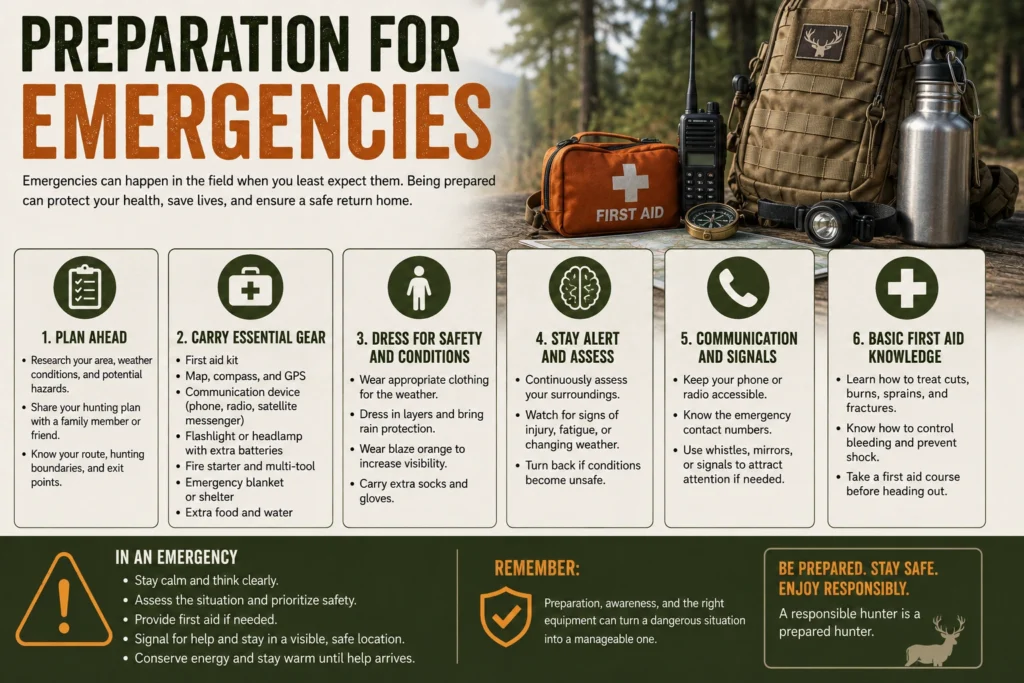
Things outside can change fast.
Hunters should carry:
- GPS
- Maps
- Compass
- First-aid supplies
- Extra food
- Drinking water
- Emergency shelter
- Fire-starting materials
Preparation allows participants to respond effectively to unexpected situations.
External Links
- International Union for Conservation of Nature (IUCN)
- Safari Club International
- Boone and Crockett Club
- U.S. Fish & Wildlife Service
Internal link
For readers interested in responsible hunting and wildlife management, explore our comprehensive guide to Hunting Competition. It covers competition rules, hunting ethics, safety guidelines, conservation principles, equipment, and responsible participation.
Conclusion
When properly managed, hunting contests are a fun and competitive way to test your outdoor know-how. Contemporary events focus more on the strict adherence to legal requirements, safety of participants, and the design and conduct of the hunt – over the characteristics of simply killing game. Informed hunters who play by the rules, have the right gear, and practice fair chase are the ones who keep hunting traditions alive. A sensible attitude and responsible participation in it promote wildlife management and respect for nature, competitors, and the environment.
Hunting Competition: FAQs
1. What is a hunting competition?
A hunting competition is a type of shooting sport that involves the pursuit and killing of a particular wild animal species on terms of consent and under agreed and authorized conditions.
2. Are hunting competitions legal?
Hunting competitions take place within the framework of the law, subject to all restrictions and requirements imposed by local legislation on hunters. Therefore, such competitions are legal only in places where hunting is generally allowed and regulated.
3. What kind of equipment is necessary?
Participants in air gun shooting competitions, as a rule, are also equipped with weapons, ammunition, hunting gear, and other equipment authorized by local laws. In addition, it is mandatory to have first aid kits, means of individual protection, and other equipment.
4. What is fair chase?
Fair chase is the sportsman’s philosophy that necessitates the hunter to provide the animal with a reasonable opportunity to escape, thereby promoting ethics in the field.
5. How do hunting competitions promote conservation?
Most competitions are about generating revenue from hunters through licenses, which in turn fund restoring natural habitats, wildlife research, conservation education, and responsible hunting of animals to maintain healthy populations of species.