
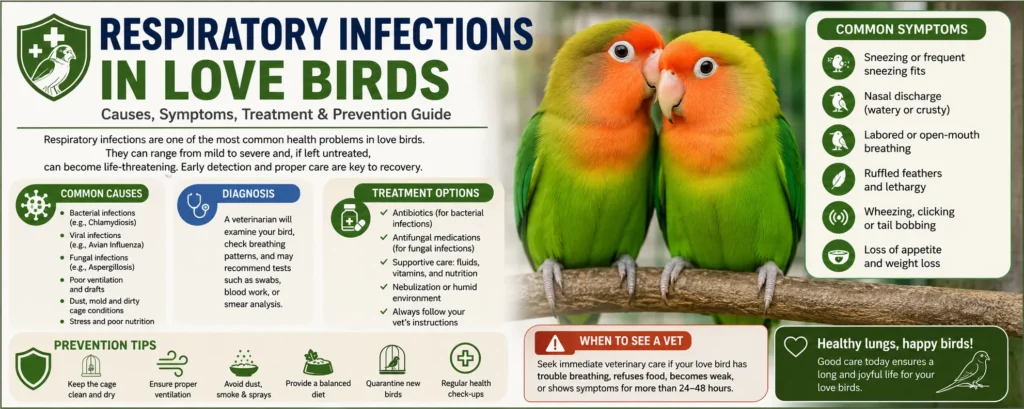
Introduction: Lovebirds’ Diseases and Treatment
Love birds are certainly among the most colorful, loving, and intelligent birds to have as pets. They are regarded by many as the best birds for your own home or aviary thanks to their interesting nature and devotion to their owners. However, even if these pets’ overall attitude is friendly, their health can go downhill quite fast as a result of neglect, delayed medical intervention, or poor environmental conditions.
A few typical lovebird illnesses can be fatal without treatment. Plus, as the birds are silent pets, maybe not be easy to know what is wrong. An animal will always hide its weakness in the wild because it would be extremely vulnerable if its predators knew that it was weakened. So the disease may be pretty far along by the time the owner realizes that something is amiss. That is why it is very useful if you can learn some information about the treatment and prevention of common love bird diseases.
The current article aims to provide an insight into the specific issues that may arise in the process of keeping a love bird and give a detailed description of the proper course of action in each situation.
Importance of early disease detection
Detecting disease early can save you a lot of trouble with potential life-threatening situations. Love birds have evolved to conceal vulnerability; therefore, minor behavioral alterations can be early signs of disease. Bird owners should be vigilant at least once each day for their birds during eating, breathing, making vocations, and bird stools. Activity level, feather condition, breathing, and vocalization of the bird should be observed as well.
Active, curious, and busy lovebirds want and need to be flying from one thing to another all day long, and generally that’s a good sign of health. Bright eyes also indicate a healthy liver in a lovebird, and they stay clean. They usually have regular droppings. One should remain alert anytime there is a change in the birds’ activities, including being silent, sleeping long hours, and loss of appetite. Monitoring the birds on a regular basis allows one to detect disease at early stages. One should also seek veterinary advice on a regular basis, ensure that they are feeding their parrots the right diet, and that they keep their birds’ environments clean to avoid some of the common sicknesses.
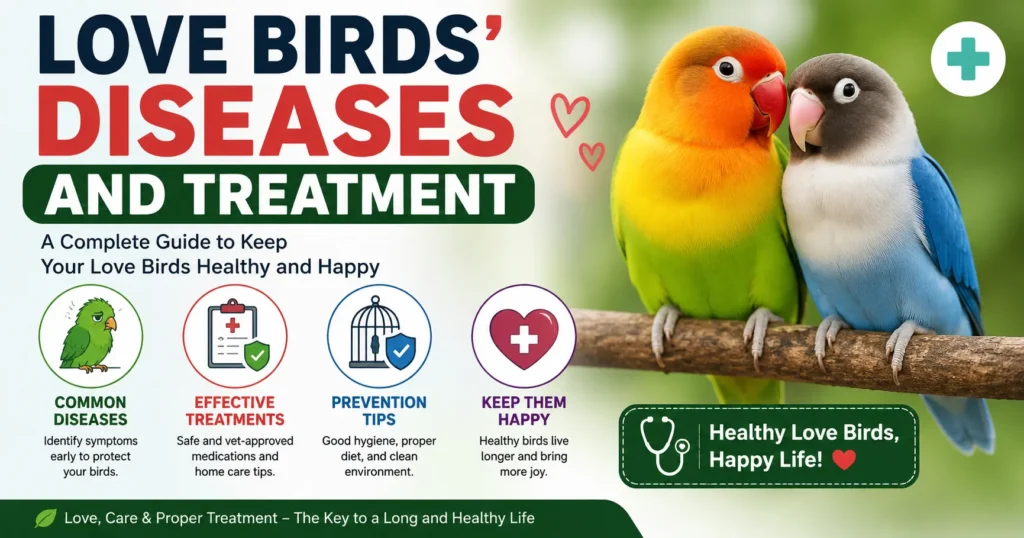
Typical indications of sickness in love birds.
Early identification of symptoms allows for better chances of successful treatment. Several conditions have the same or similar signs, so veterinary diagnosis is necessary. Many signs are common across diseases, such as:
- Fluffed-up feathers for long periods
- Loss of appetite
- Weight loss
- Difficulty breathing
- Tail bobbing while breathing
- Sneezing
- Nasal discharge
- Watery eyes
- Diarrhea
- Changes in droppings
- Feather plucking
- Weakness
- Lethargy
- Sitting at the bottom of the cage
- Loss of balance
- Excessive sleeping
Birds showing multiple symptoms require immediate veterinary attention.
Major Causes of Diseases in Love Birds
It is hard to say exactly what causes diseases in love birds, since most ailments have several causes and symptoms. But you can pick out the big factors that make the avian sick. Recognizing them helps in establishing an appropriate environment and reducing health issues.
Poor Quality of Diet
Feeding seeds to lovebirds is one of the very worst things that owners can do for them. This is because these nuts are fatty, and not all the vitamins and minerals the birds need are present in nuts. This can cause them to have vitamin A deficiency, obesity, fatty liver disease, immunosuppression, and reproductive failure.
The diet of the bird is a combination of good quality pellets, vegetables, leafy greens, fruits, sprouted seeds, and seeds. In addition, they must be given clean water. This would enable the birds to strengthen their immune system and would reduce the probability of them getting infected.
Sick Home or Environment Illness
Mites, bacteria, fungi, viruses, and parasites can all reside on a cage. The food bowl could be moldy. The water container might be contaminated. All of these are dangerous to birds since they easily contract infections.
The problem can be solved by changing the water several times a day and cleaning the cage on weekends. This way, most germs and microbes will be removed, reducing the chances of an animal getting sick.
Stress
Stress etched into the bodies of birds can compromise their health. These include overpopulation, loud sounds, extreme temperatures, mistreatment, social seclusion, and transportation.
Pets: In Young’s opinion, this amounts to stress. Importance of the topic: A pet owner must understand that creating a stress-free environment for their pet is crucial in keeping the animal healthy and disease-free. “It’s just, you’ve got to focus on their welfare, and keep them as calm as you can.”
Parasites
Birds are affected by internal parasites, mites, and worms. They’re very common, and pets are getting them right and left, especially those living in unsanitary conditions or around other animals. These affections of the body can lead to anemia, dermatitis, emaciation, poor condition of the feathers, weakening of the immune system, etc. The bird must be taken to the vet for routine examinations to verify that it is parasite-free.
Respiratory Infections in Love Birds
Respiratory infections are the most commonly diagnosed conditions in pet love birds. They can be caused by bacterial, viral, and fungal infections, as well as by poor ventilation and cold drafts.
Symptoms
- Sneezing
- Wheezing
- Open-mouthed breathing
- Bobbing tail
- Nasal discharge
- Swollen eyes
- Anorexia
- Fatigue
The birds are quiet and hunched under their feathers most of the time when having respiratory diseases.
Treatment
Therapy is primarily determined by the cause. The vet can also administer antibiotics and antifungals, and extend the level of treatment: from fluids to supplying oxygen and food. The bird’s owner should never administer antibacterial drugs at home without consulting an avian veterinarian; an inappropriate choice of antibiotic may aggravate the situation. It is also important to keep the bird warm and to offer water at all times.
Psittacosis (Parrot Fever)
Parrot fever or psittacosis is one of the fatal bacterial infections that you may chance upon in love birds. The disease is caused by the bacterium Chlamydia psittaci, which is transmissible between different parrot species, like between love birds, for example. As it is a zoonotic disease, one can also catch it from their pet bird, so the diagnosis and care for the bird are of utmost significance.
Psittacosis can also lie latent in the body of a bird for extensive periods of time, and several asymptomatic carriers exist. Further, the infection can be found in the bird’s feces, trachea, and also in its feathers. So the pets must be kept separate from other birds until the disease is completely resolved. The disease might be in a new bird as well, so a quarantine period is recommended. Under good bird husbandry and for a well-nourished bird, psittacosis will almost certainly be prevented. However, if your lovebird does have symptoms of this disease, it is best to take it to a veterinarian to select the most suitable treatment.
Symptoms
The signs of psittacosis in lovebirds include:
- Labored breathing
- Sneezing
- Nasal discharge
- Swollen eyes
- Green or yellow droppings
- Weight loss
- Loss of appetite
- Fluffed feathers
- Depression
- Weakness
Treatment
A long-term course of doxycycline will be prescribed by the vet to eliminate the bacteria. Usually, you give the antibiotic for 30-45 days. The sick bird ought to be isolated from the rest of the flock during this period of time. You have to wash and disinfect all the things that were inside the cage ( that includes toys and perches) with a disinfectant that is safe for birds. And be sure to wear gloves when you clean – and for heaven’s sake, don’t catch the bug. You might want to also wash your hands often after playing with the pet.
Avian Polyomavirus
Avian polyomavirus is more common in young birds but can also affect adult lovebirds. The probability of disease in young birds is higher because their immune system is still immature. The virus is spread rapidly by infected feathers and feces, by nest material, and from one bird to another.
You would be a lot less likely to see them in this species. These carrier birds might infect chicks or new birds brought in. Good breeding hygiene and regular veterinary testing are essential for prevention in breeders and multi-bird homes.”
Symptoms
Signs may include:
- Sudden death in young birds
- Swollen abdomen
- Delayed feather development
- Tremors
- Weakness
- Poor growth
- Breath Shortage
Treatment and Care
At present, there is no specific antiviral for avian polyomavirus. Treatment is supportive care that includes:
- Maintaining body temperature
- Fluid therapy
- Nutritional support
- Preventing secondary bacterial infections
- Reducing stress.
Stringent sanitation and quarantine remain the most effective means of controlling outbreaks.
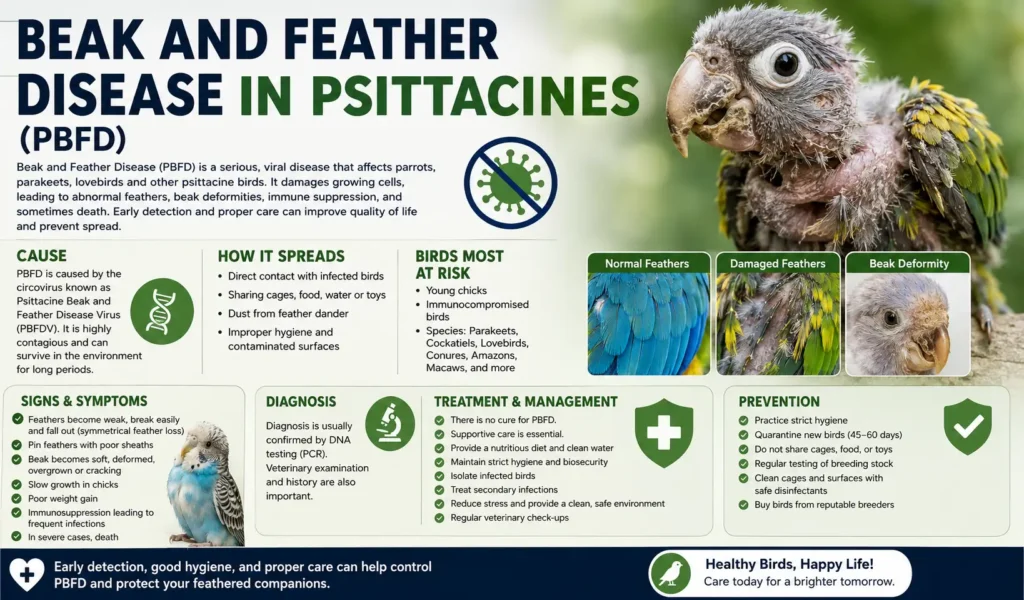
Beak and Feather Disease in Psittacines (PBFD)
PBFD is one of the most destructive viral diseases for parrots, including lovebirds. It invades the feather, beak, and skin follicles; the immune system; and the cells that produce the beak. Circovirus disease is spread by feather dust, feces, fomites, and close contact.
Young birds are usually more severely affected than adults. Unfortunately, numerous birds that become infected eventually develop chronic immune suppression and get a multitude of secondary infections.
Symptoms
Common symptoms include:
- Abnormal feather growth
- Broken feathers
- Feather loss
- Curved or cracked beak
- Slow feather replacement
- Frequent infections
- Weight loss
- Weak immune system
Treatment
There is currently no cure for PBFD. Treatment aims to improve quality of life by:
- Providing excellent nutrition
- Preventing secondary infections
- Maintaining excellent hygiene
- Minimizing stress
- Making appointments for periodic veterinary examinations
Birds that have been affected should be kept separate to prevent infection of the healthy birds.
Digestive Disorders in Love Birds
The lovebird line is extremely prone to digestive disturbances. Digestive disorders are common in love birds and can be caused by a variety of factors, including bacterial infections, fungal overgrowth, parasites, toxins present in spoiled food, and dietary errors. “Because of birds’ fast metabolism, digestive diseases can progress rapidly if the owners don’t notice it in time,” Ritchie says.
But it’s very hard to get that across because to the owners of these animals, a mild case of diarrhea or a day or two of not eating and drinking is really of no consequence. However, chronic digestive failure may lead to severe dehydration, electrolyte imbalance, and profound weight loss with equal rapidity.
Symptoms
Digestive disorders often cause:
- Diarrhea
- Vomiting
- Regurgitation
- Poor appetite
- Weight loss
- Weakness
- Dirty feathers around the vent
- Increased water consumption
Treatment
The underlying cause must be treated for the treatment to be effective.
Veterinarians might suggest:
- Fecal examinations
- Antibiotics for bacterial infections
- Antifungal medications
- Anti-parasitic drugs
- Fluid therapy
- Easily digestible foods
- Probiotics when appropriate
Never attempt to treat digestive disease with human medications unless specifically directed by an avian veterinarian.
Crop Infections (Sour Crop)
The crop temporarily stores food before digestion. When bacteria or yeast grow too much within a bird’s crop, they develop a condition known as sour crop. Stasis of the crop allows the bacteria to grow, which leads to inflammation and pain.
Inadequate sanitation, contaminated food, compromised immunity, and improper hand feeding methods are the most frequent reasons for the formation of crop infections in baby birds.
Symptoms
Typical signs include:
- Swollen crop
- Foul odor from the mouth
- Regurgitation
- Loss of appetite
- Slow crop emptying
- Weight loss
- Lethargy
Treatment
Veterinary treatment may include:
- Crop flushing
- Antifungal medications
- Antibiotics if bacterial infection is confirmed
- Fluid therapy
- Nutritional support
- Careful monitoring of crop emptying
Early treatment makes recovery much more likely.
Internal Parasites
Digestion and nutrient absorption are interrupted by internal parasites. Not as common in indoor pet birds as in outdoor aviaries, they are still a very significant health risk. Possible parasites are:
- Roundworms
- Tapeworms
- Protozoa
- Giardia
Symptoms
Internal parasites may cause:
- Weight loss
- Poor feather quality
- Diarrhea
- Weakness
- Reduced appetite
- Poor growth in young birds
Treatment
The vet looks at a sample of your pet’s poop under the microscope to see the type of parasites and which dewormer is appropriate. In addition, owners should not try to use livestock and poultry dewormers on their own without the advice of a veterinarian, as the wrong dose could be potentially toxic to the person.
External Parasites
These parasites live on the skin and feathers, causing irritation. Mites are the most common external parasite found in pet birds.
Symptoms
Signs include:
- Constant scratching
- Feather damage
- Restlessness
- Crusty skin
- Feather loss
- Thickened scales on legs or beak
Treatment
Typically, treatment involves the following:
- Drug to treat the parasite, available by prescription
- Cage disinfection
- Replacing contaminated nesting materials
- Cleaning perches and accessories
- Treating all birds housed together when recommended
Normal cage cleaning also discourages reinfestation.
Egg Binding
Egg binding is the inability of a female lovebird to lay an egg. This is a genuine emergency for your avian friend and can kill it within a matter of hours.
Risk Factors:
- Calcium Deficiency
- Obesity
- Young breeding birds
- Oversized eggs
- Weak muscles
- Chronic reproductive problems
Symptoms
Birds experiencing egg binding often show:
- Sitting on the cage floor
- Straining
- Labored breathing
- Swollen abdomen
- Weakness
- Tail pumping
- Reduced appetite
Treatment
Immediate veterinary treatment may involve:
- Calcium supplementation
- Warm supportive care
- Lubrication
- Fluid therapy
- Hormonal therapy
- Assisted egg removal
- Surgery in extreme cases
Never attempt to remove an egg by yourself, as you may harm the bird.
Fatty Liver Disease
While fat is needed in the liver to keep it working properly, it can also cause liver disease. To be specific, a layer of fat that develops within the cells of the liver causes gradual loss of liver function.
Notably, birds fed primarily on sunflower seeds may be especially susceptible to this type of liver disease. Also, obesity as well as vitamin deficiency can cause fatty liver condition.
Symptoms
Common signs include:
- Obesity
- Overgrown beak
- Poor feather condition
- Lethargy
- Difficulty breathing
- Enlarged abdomen
- Reduced activity
- Abnormal droppings
Treatment
Approach to enduring lifestyle modifications, such as:
- Transitioning to a balanced pelleted diet
- Increasing fresh vegetables
- Limiting fatty seeds
- Encouraging exercise
- Regular veterinary monitoring
- Liver-supportive medications when prescribed
Weight reduction should always be gradual and supervised.
Vitamin Deficiencies
Deficiencies of vitamins develop insidiously in a bird but have the potential to severely suppress its immune system and cause changes in its eyes, skin, feathers and internal organs. Birds that eat only seeds are particularly vulnerable to such dietary deficiencies.
Vitamin A deficiency is the most commonly diagnosed nutritional disease in the pet parrot.
Symptoms
Deficiencies may cause:
- White plaques inside the mouth
- Poor feather quality
- Frequent respiratory infections
- Eye discharge
- Dry skin
- Poor appetite
- Weak immunity
Treatment
Treatment includes improving the bird’s diet by offering:
- High-quality pellets
- Dark leafy greens
- Carrots
- Sweet potatoes
- Bell peppers
- Pumpkin
- Broccoli
Vitamin supplementation can be given if a deficiency is proven on laboratory testing. Over-supplementation should be avoided as some vitamins can be toxic in too large a dose; veterinary advice should be sought at all times.
Diagnosis of Love Bird Diseases Research
A proper diagnosis is always the basis of treatment. Diseases of the love bird often have the same symptoms: loss of activity, loss of weight, decreased appetite, respiratory problems, and changes in droppings. Therefore, it is almost impossible to determine the disease only based on symptoms. Your vet can make the diagnosis through testing, lab work, and a physical evaluation. Because diagnosing and treating the disease early means the bird not only has a better chance of recovery, but it also means that the disease is not spread to other birds.
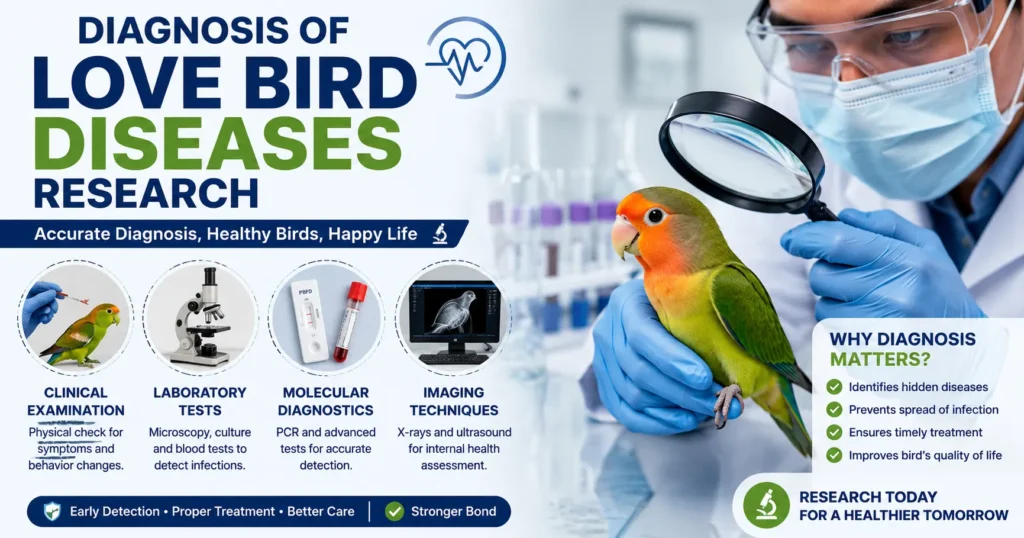
The vet will weigh the bird and have a look at the plumage, beak, and eyes, listen to the lungs, heart, and abdomen, feel the muscles, and much more. The vet may ask for information about the bird’s living conditions, diet, and behavior, and examine the bird’s droppings. Sometimes the cause of the disease is in the appearance or the behavior of the bird; for example, if the bird has started to eat much worse or, on the contrary, to eat more than usual. It is essential to keep track of the bird’s weight, diet, and droppings to know if something is wrong.
Common Diagnostic Tests for Love Birds
An avian veterinarian usually recommends some diagnostic tests to establish the precise cause of illness in a lovebird. The tests enable the vet to develop an appropriate treatment plan for the avian patient. Here are common avian diagnostic tests.
Diagnostic tests Purpose
Physical examination: This test helps to determine the bird’s overall health, body condition, and breathing ability. This can also detect obvious abnormalities or trauma.
Blood test: This test is used to detect infections, anemia, diseases of the liver and kidney, inflammation, and malnutrition.
Stool test: This test assists in diagnosing parasites, bacteria, yeast infections, and other problems of the tract.
Gram stain: It tells us the balance of bacteria in the tract and may indicate bacterial infections.
Crop swab: This test helps diagnose bacterial and fungal infections in the crop and stomach.
X-ray: This diagnostic procedure helps identify egg binding, broken bones, tumors, swollen organs, and foreign objects in the bird’s body.
Polymerase chain reaction (PCR) test: This test helps diagnose viral infections, including PBFD and Avian Polyoma.
Culture and sensitivity test: This test identifies the bacteria causing the infection and the most suitable antibiotic to treat it.
The diagnostic tests listed above help vets identify the bird’s health issue and develop a suitable treatment plan. The tests also help the bird heal fast, prevent further complications, reduce the use of ineffective medications, and promote good health in the long run.
Treatment Options for Love Bird Diseases
Diseases in love birds can be treated in different ways, depending on the severity of the illness and the bird’s condition. Less severe cases can be controlled with a round of medication, but severe cases usually require treatment for a longer duration as well as lifestyle modifications. And to the bird’s food and its living environment. Don’t give love birds human or other animal medication since many of those medicines are toxic to them. Effective treatment is generally a combination of the right medications, dietary changes, supportive care, and regular veterinary visits.
Parrots may be anorexic and dehydrated when they are presented, and receiving fluids, hand feeding, warmth, and nutritional support. The ill bird should be kept warm and quiet with several drops of fresh water. In addition, stress and unnecessary handling of the sick bird should be minimized, as stress can induce immunosuppression and delay recovery.
The following treatments may be used in the management of lovebird illness:
1. Antibiotics for infections caused by bacteria.
2. Antifungal agents for fungal infections.
3. Drugs for parasitic and anti-parasitic infections.
4. Painkillers and analgesics.
5. Fluid replacement for the treatment of dehydration.
6. Vitamin supplements and minerals.
7. Nutritional care and assisted feeding.
8. Oxygen therapy for respiratory diseases.
9. Surgery relating to egg binding, tumors, and trauma.
It is crucial for the owner of the bird to comply with the medication and the course of therapy, even if the signs are no longer apparent. This will prevent recurrence and the development of resistance to certain medications.
Home Nursing Care during Recovery
Home nursing is very important during the convalescence of a sick lovebird. After initiation of veterinary care, providing comfort for the patient and minimizing stress may accelerate the recovery period. To this end, it is also a good idea to keep the ill bird in its hospital cage for the majority of the time, as this limits the amount of activity and the bird is forced to use them any more than is necessary.
The hospital cage must have comfortable perches, food, and water available to the bird at all times. Since sick birds cannot thermoregulate as well as healthy ones can, the most critical environmental factor is temperature. Most avian vets recommend that the temperature in the room where the sick bird is kept should be maintained between 800F and 85oF unless the vet gives different instructions.
The bird’s food and water are to be placed in clean bowls with the food being soft, fresh and nutritious to entice the sick bird to eat. Watch the bird closely – be sure to monitor its appetite, water intake, droppings, breathing, weight and general behavior daily. If the bird gets any worse, surgical intervention is needed straight away. To sum up, handle the sick bird with care and disturbance should least possible.
Diseases Prevention in Love Birds
Prevention is the best medicine. Good husbandry, nutrition, hygiene, and a clean environment will prevent the majority of diseases. Preventive care will promote a healthy bird, reduce veterinary costs, and may increase your pet’s lifespan.
Quarantine your new birds for a minimum of 30 days before introducing them to established homes. They are to be closely monitored for signs of illness, and they will also be seen by an avian veterinarian. It’s really just a quick and easy little precaution to take that really can help prevent you from inhaling infectious diseases, such as psittacosis or PBFD, or even parasites.
Disease Prevention Checklist
- Provide a good diet – feed a balanced diet that includes a high proportion of good quality pellets, some fresh vegetables, and some seeds.
- Give them clean fresh water daily.
- Clean your food and water bowls every day.
- Clean the feces and stale food frequently.
- Wash the cage, toys, and perches with bird-friendly cleaners weekly.2. Don’t crowd.
- No overcrowding, please.
- They need to get a lot of exercise and mental stimulation.
- Reduce stress as much as you can by making the routine predictable.
- Plan regular veterinary wellness examinations.
- Isolate your sick bird immediately. Biosecurity measures should be in place to ensure that infectious diseases do not spread between birds and that sick birds are isolated immediately.
Preventive care not only prolongs the life of a bird but also contributes to it being a better life.
Best Diet for Healthy Love Birds
It helps maintain the immune system, feather quality, bone strength, and body weight. However, most pet lovebirds are fed a poor diet consisting mostly of seeds—which can be high in fat and lack many vitamins, minerals, and amino acids. But you also need to provide some good quality pellets (about 60-70%), fresh vegetables (20-30%), some fruit (5-10%), and a few seeds. They are also a source of vitamin A, so let them eat your dark green leafy vegetables, carrots, bell peppers, broccoli, squash, peas, and sweet potatoes.
My birdify is the constantly changed water, which may be fresh. Your lovebirds should never be fed chocolate, avocado, alcohol, caffeine, onions or garlic, or any kind of salt. “Nutrition affects reproduction, ecdysis, and uterine function.” “Good nutrition will solve a lot of problems and make your lovebird recover much faster if it gets sick.
Cage maintenance and environmental management
A clean environment is necessary to avoid diseases. The presence of food crumbs, feces, and moisture along with bedding creates a perfect medium for bacteria, fungi, and parasites to proliferate, some of which can be harmful to the bird. To avoid the perils of infection, you need to set a regimen for cleaning — and keep it.
As you clean, the bowls for food and water should be cleaned thoroughly with warm water under running water and a bird-safe detergent. In addition, a routine change of the cage liner is needed to retard the growth of microbes. The toys and perches should also be cleaned and examined for wear and tear. The cage must be placed in a well-ventilated area but not under a draft or near heating or air-conditioning vents.
It goes without saying that attention should be paid to the bird’s welfare by offering it ample opportunities for exercise and entertainment. Providing the pet with various toys and perches and allowing it to explore the house safely outside the cage will keep it physically active and mentally stimulated. It will also prevent obesity and related health issues, as well as reduce the bird’s stress levels.
Prognosis and Long-Term Care
The prognosis for a lovebird depends on the kind of disease and when it is detected and treated. Birds seldom die from starvation, bacterial infection, or parasites when these are diagnosed on time. However, it is nearly always poor for an individual avian to contract a virus such as PBFD. In general, PBFD needs lifelong care and treatment as there is no known cure for the disease.
To discontinue treatment of medication or therapy, a prognosis is rarely mandatory to finish it. Surviving a severe illness or infection mandates continued regular checkups, including weight monitoring and feeding advice, for an extended period. It is advisable to seek the expertise of an experienced avian vet to provide the necessary treatment and regular follow-up. Moreover, a bird provided with adequate care, housing, and sustenance has a very high chance of living a long and happy life. Most lovebird species can live up to ten to twenty years.
External Resources
- World Organisation for Animal Health (WOAH)
- Association of Avian Veterinarians (AAV)
- Merck Veterinary Manual (Avian Section)
Internal Link
- Love Birds’ Diseases and Treatment
- Complete Love Bird Health Guide
- Common Love Bird Diseases
- Love Bird Disease Prevention Tips
- How to Keep Love Birds Healthy
- Love Bird Illness Symptoms and Treatment
- Love Bird Care and Health Guide
Conclusion
While love birds can live in a diverse range of conditions, the owners of these birds need to know what to look for in terms of signs of illness in order to give them quality care and keep them healthy. The most important measures for preventing clinical deterioration are observation of the bird’s behavior, instituting proper hygiene, providing a balanced diet, and seeking advice from a competent avian veterinarian.
Furthermore, interventions for treatment on time contribute to curing diseases rather than allowing them to evolve into advanced stages. It is, therefore, vital to motivate doting pet owners to devote a little more care to their feathered friends.
FAQs
1. What is lovebird disease?
These include respiratory problems, malnutrition, digestive problems, and parasitic and bacterial infections to name a few in lovebirds.
2. Can lovebird diseases be transmitted to humans?
Indeed, a few illnesses that lovebirds can pass on to humans. But most of them are treatable with proper medication along with precautions like normal cleaning of the cage and early treatment after detection.
3. How to Recognize Sick Lovebirds?
Lovebird feather puffing and lethargy could be signs of illness, among many other signs of illness including loss of appetite and/or weight loss, breathing difficulty, nasal discharge, abnormalities in feces, sleeping for excessive amounts of time, sitting at the bottom of the cage, and many more subtle signs that are rarely noticed.
4. Are Lovebirds Good For Solo Care?
The bird owner can stay at home with a loving and knowledgeable avian veterinarian to care for a sick lovebird. If you can, have the medication administered by a vet so that you don’t inadvertently put the bird in danger.
5. For what reasons should you take a lovebird to the vet?
How Long Can a Lovebird Live? Every year or more; therefore, your lovebird needs to be examined by a veterinarian routinely. Ill or old lovebirds may demand even more visits depending on how sick they are.